
High-stakes event management strategies demand a single accountable team handling every detail from concept to breakdown. EMRG Media, a Manhattan-based agency operating since 2001, deploys in-house planners, producers, designers, and AV specialists to eliminate subcontractor risk for brand-critical galas and corporate conferences.
What defines a high-stakes event?
A high-stakes event carries direct consequences for brand reputation, revenue, and executive relationships. Failure at these gatherings costs organizations more than the event budget. It erodes client trust and market positioning that took years to build.
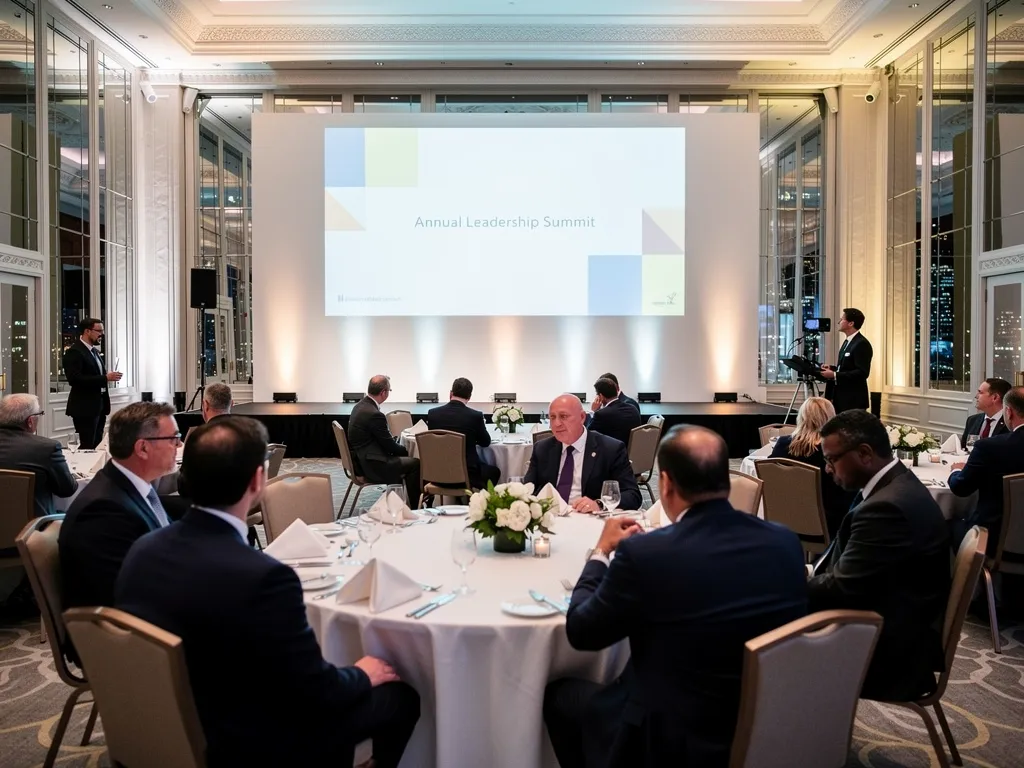
High-stakes events span corporate conferences, galas, product launches, and brand activations. EMRG Media has produced these gatherings since 2001 for Fortune 500 companies and luxury brands. The client roster includes Google, Bloomberg, Netflix, and Condé Nast. Each engagement demands flawless execution because the audience consists of decision-makers, media, and stakeholders who judge the brand by every detail.
Why do some events carry higher stakes than others?
The difference lies in visibility and consequence. A private dinner for 20 executives carries different weight than an internal team meeting. When journalists, investors, or C-suite leaders attend, every element becomes a reflection of organizational competence. A single AV failure during a product demo or a catering delay at a gala becomes a story that circulates far beyond the ballroom.
What role does event strategy play in high-stakes planning?
Event strategy functions as the roadmap connecting goals to measurable outcomes. According to Cvent’s 2026 guide, an effective strategy seeps into every aspect of business, from initial objectives through success measurement. Without this framework, planners react to problems rather than preventing them. The strategy dictates vendor selection, contingency planning, and the decision-making hierarchy that keeps complex events on track when pressure mounts.
How do you ensure quality across multiple events?
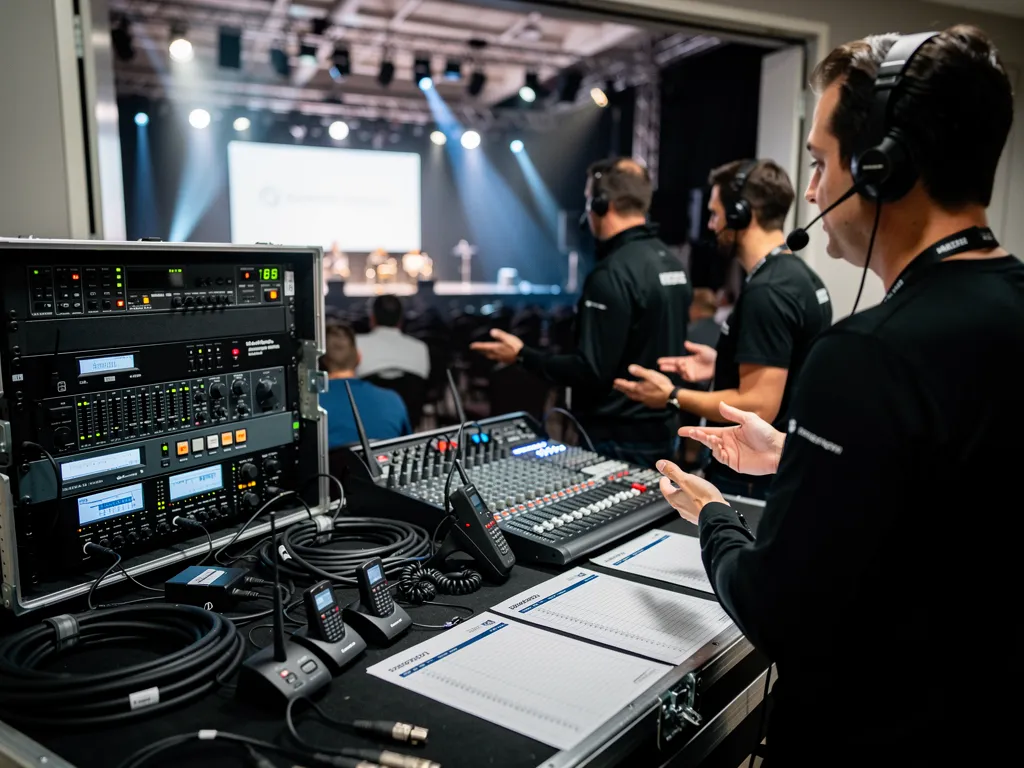
Quality across multiple events comes from eliminating handoffs. EMRG Media runs every engagement through a single in-house team covering planning, production, design, and AV. No subcontracts. No outside vendors guessing at brand standards.
That structure is the difference between consistent execution and unpredictable results. When separate vendors handle separate pieces, details slip between the cracks. A 20-person in-house team removes those cracks entirely.
Why does a single point of contact matter for high-stakes events?
A single point of contact means one accountable voice for every decision. Corporate event directors avoid the chaos of chasing multiple vendors when timelines tighten. One team, one budget, one point of contact keeps execution uninterrupted from concept through breakdown.
The stakes are real. A gala for a Fortune 500 brand cannot afford a lighting vendor who never spoke to the AV team. EMRG Media’s model prevents that failure before it starts.
What breaks consistency when managing simultaneous events?
- Vendor handoffs create gaps in brand standards and run-of-show timing
- Separate budgets obscure total cost and force last-minute compromises
- Multiple contacts slow approvals and bury urgent decisions
- Fragmented production leaves audio visual and event production details uncoordinated
EMRG Media has operated in Manhattan since 2001, producing more than 1,100 events for clients including Google, Bloomberg, Netflix, and Condé Nast. That longevity rests on one structural choice: keeping every capability under one roof. The company’s in-house specialists handle venue sourcing, creative direction, technical AV, catering, and on-site execution without subcontracted handoffs.
For enterprise meeting planners, the loss is measurable. Fragmented event management stretches timelines and introduces errors that never appear in a proposal. A unified team closes that exposure before the first guest arrives.
What risk mitigation strategies work best?
Risk mitigation for high-stakes events starts with goal clarity. Auctria’s event management guidance identifies establishing and communicating the most important goals as the first step before any planning begins. Without defined objectives, teams cannot prioritize resources or spot emerging threats.
How Do You Ensure Quality and Consistency When Managing Multiple High-Stakes Events? The answer lies in a concrete plan tied directly to those goals. Auctria emphasizes creating a concrete plan to meet stated objectives. That plan becomes the reference point when schedules slip, vendors underdeliver, or budgets tighten.
What role does a single accountable team play in reducing risk?
A single accountable team eliminates the most common failure point in event production: fragmented responsibility. EMRG Media structures its service around one team handling venue sourcing, creative direction, vendor management, production design, technical AV, talent, catering, run-of-show, and on-site execution. No subcontracted handoffs occur. When one team owns every deliverable, accountability never diffuses across multiple vendors.
How do planners prevent last-minute failures?
Planners prevent last-minute failures by locking goals and plans before execution begins. Auctria’s framework places goal communication ahead of all other planning activities. The concrete plan then translates those goals into actionable checkpoints. EMRG Media’s model reinforces this by keeping execution under one roof. A single point of contact catches inconsistencies before they reach the event floor.
The strongest risk mitigation combines clear objectives, a written plan, and unified execution. Events without these three elements carry exposure that surfaces only when it is too late to correct.
How do you integrate vendor oversight effectively?
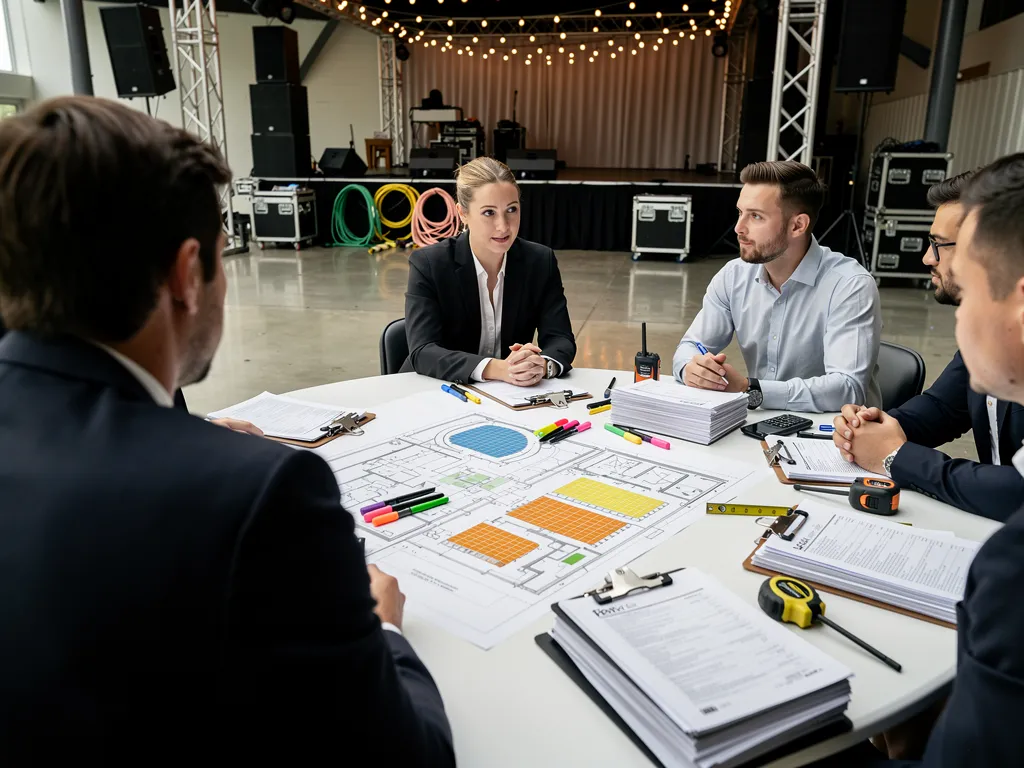
Integrated vendor oversight eliminates the single biggest risk in multi-event management: fragmented accountability. EMRG Media achieves this by keeping every vendor relationship under one roof. No subcontracted handoffs occur. The in-house team manages each vendor directly, creating a single point of contact and a unified budget for every event.
This approach prevents the quality drift that plagues events relying on third-party coordinators. When one team controls venue sourcing, production design, technical AV, talent, and catering, consistency becomes automatic rather than aspirational. The same standards apply across every touchpoint.
What does single-team vendor management actually look like?
A single accountable team handles the full vendor lifecycle. Creative direction, run-of-show planning, and on-site execution all stay within the same group. No external party interprets client needs secondhand. The team that scopes the work also executes it.
How do metrics strengthen vendor oversight?
Collecting and analyzing event metrics sharpens vendor performance over time. Post-event data reveals which partners delivered on time, stayed within budget, and met quality benchmarks. Those insights directly inform vendor selection for future events. Without this feedback loop, planners repeat the same mistakes across multiple high-stakes programs.
For organizations managing complex corporate event planning cycles, this integrated model removes the coordination tax that fragmented vendor rosters impose. One team, one budget, one standard. The result is repeatable quality across galas, conferences, and brand activations alike.
What role does experience play in consistency?
Experience is the structural foundation that makes consistent event delivery possible across multiple high-stakes programs. Without deep institutional knowledge, even the most talented team falters when managing simultaneous galas, product launches, and conferences.
EMRG Media has produced more than 1,100 events since 2001. That volume creates pattern recognition no playbook can replicate. The team identifies friction points before they surface because similar challenges have been solved dozens of times before. Venue quirks, vendor reliability patterns, and timeline bottlenecks become predictable rather than surprising.
How does event volume translate to reliability?
Each completed event adds to a living knowledge base. The company’s planners draw on 25 years of documented outcomes when building run-of-show documents, contingency plans, and vendor shortlists. A conference for a Fortune 500 client benefits from lessons learned across hundreds of prior corporate programs. The result is fewer last-minute scrambles and tighter execution.
Why do repeat clients signal consistent quality?
Longevity tells one story. Repeat business tells a better one. EMRG Media maintains trusted relationships with clients who return year after year for brand-critical events. These organizations do not gamble on unproven planners when millions in brand equity hang on a single evening. The founder, Erica Maurer, earned recognition as the #1 Most Influential Event Planner in NYC, a distinction reflecting a quarter-century of delivering at the highest level.
The pattern holds across sectors. Financial institutions, media conglomerates, and luxury houses all demand identical standards regardless of event type. Experience ensures those standards stay locked in place from the first site visit through final breakdown.
FAQ
What defines a high-stakes event?
Failure erodes client trust and market positioning built over years.
How does EMRG Media ensure quality across multiple events?
No subcontracts or outside vendors guess at brand standards.
What risk mitigation strategies does EMRG Media use for high-stakes events?
Risk mitigation starts with clear goals and a concrete plan, backed by a single accountable team that owns every deliverable so nothing slips through a vendor handoff.
How does EMRG Media manage vendor oversight across simultaneous events?
One in-house team controls venue sourcing, production design, technical AV, talent, and catering under a unified budget, so the same standards apply at every touchpoint.
Why does experience matter when choosing an event production team?
EMRG Media has produced more than 1,100 events since 2001, giving the team pattern recognition for venue quirks, vendor reliability, and timeline bottlenecks before they become problems.
What is EMRG Media’s track record in NYC corporate event planning?
EMRG Media has operated in Manhattan since 2001 for clients including Google, Bloomberg, Netflix, and Condé Nast, led by founder Erica Maurer, recognized as the #1 Most Influential Event Planner in NYC.
Conclusion
For event directors managing brand-defining programs, the path to consistent execution requires three non-negotiable elements: clear objectives, a written plan, and unified execution under one accountable team. Organizations that lock these fundamentals in place before planning begins eliminate the coordination tax that fragments quality across multiple events. The next step is evaluating whether your current vendor structure diffuses accountability or concentrates it in a single point of contact.