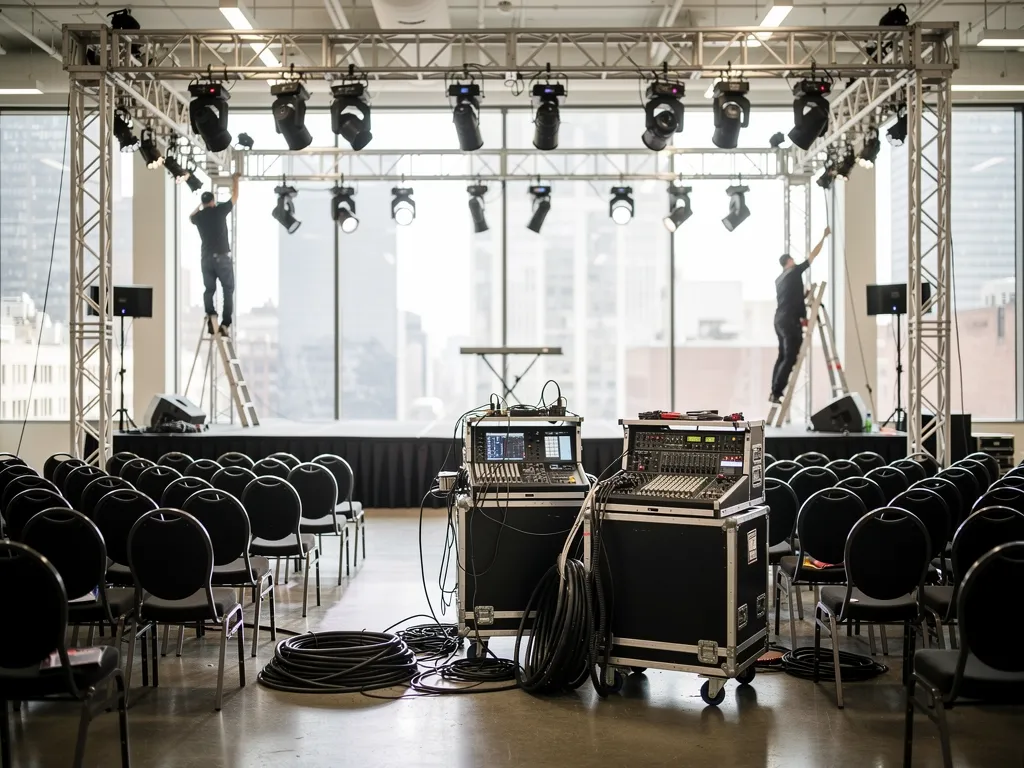

Flawless event execution requires a single accountable team managing every detail from concept to breakdown. EMRG Media, a Manhattan-based event planning agency operating since 2001, uses an in-house team of planners, producers, designers, and AV specialists, managing every vendor directly to ensure seamless, high-stakes corporate events.
What makes event production different from planning?
Event production focuses on the technical execution that brings an event concept to life. Planning handles the strategic framework, while production manages the audiovisual, staging, lighting, and live operations that attendees actually experience.
The distinction matters because one without the other creates failure points. A meticulously planned conference collapses when the sound system fails during a keynote. A beautifully designed stage means nothing if the run-of-show lacks coherent flow. Corporate Event Production is a sub-section of the broad Live Event Production market, distinct from planning in its emphasis on technical delivery. Organizations that treat production as an afterthought lose the very impact their planning work was meant to create.
What does a full-service production team actually handle?
A full-service team manages every technical and creative element from concept through breakdown. EMRG Media operates with a single accountable team covering venue sourcing, creative direction, vendor management, production design, technical AV, talent, and on-site execution. One accountable team. One point of contact. From concept through breakdown. We manage every vendor directly, backed by relationships with 100+ of the best venues and services in NYC. The company’s planners, producers, designers, and AV specialists run events end-to-end, avoiding the coordination gaps that plague multi-vendor productions.
Why do in-house production capabilities matter for corporate events?
In-house capabilities prevent the fragmentation that derails complex events. When one company owns planning, production, design, and AV under a single roof, accountability stays centralized. EMRG Media has operated in New York City since 2001 with exactly this structure. Corporate clients avoid the risk of vendors blaming each other when something goes wrong. The team that designs the creative vision also executes the technical build, which means the original intent survives through to the live experience. Before committing to any production partner, decision-makers should ask the right questions about in-house services and specialization, as outlined in guidance on hiring an event production company in NYC.
How do agencies manage technical AV and logistics?
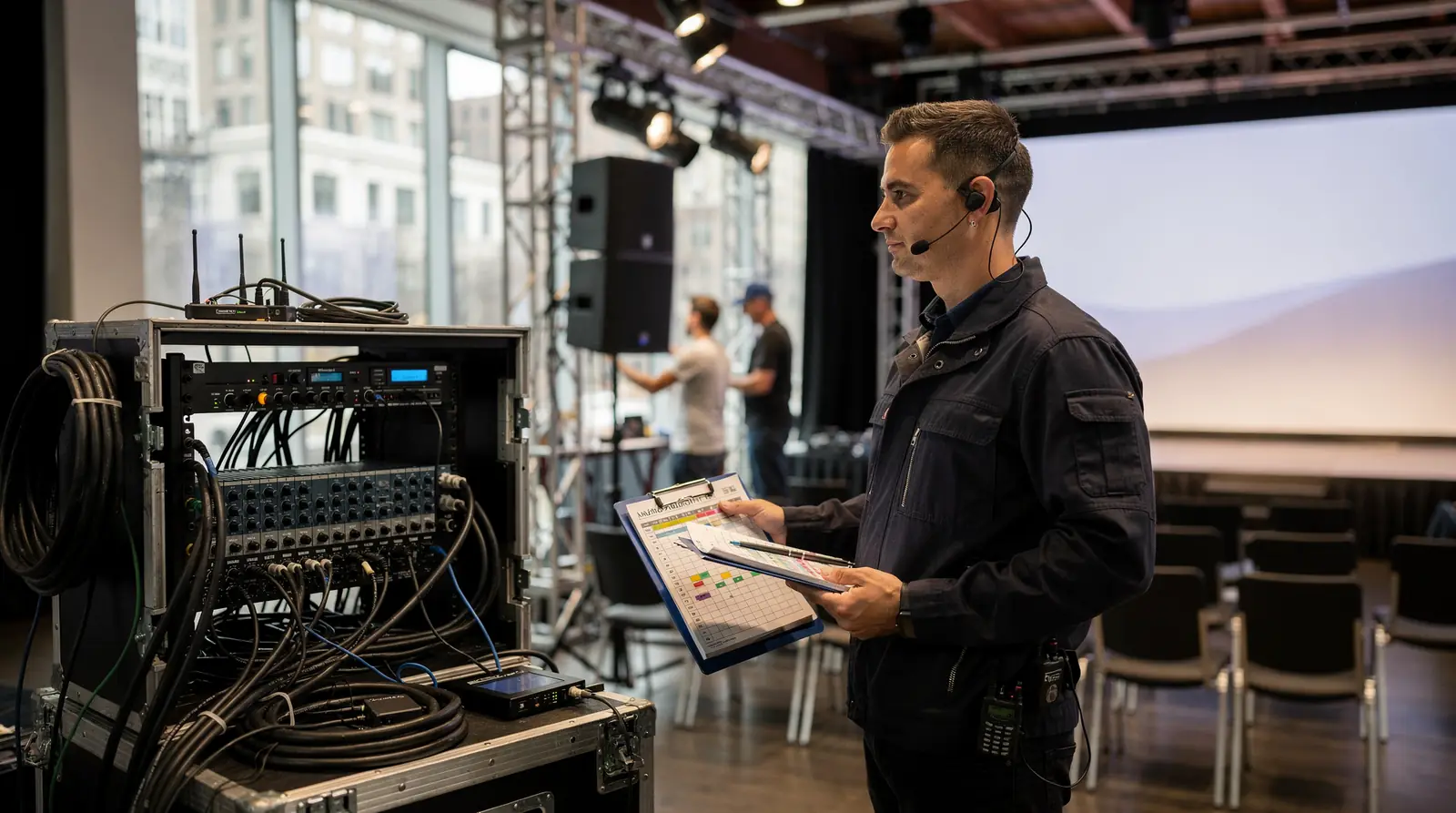
Technical AV and logistics form the invisible backbone of every successful corporate event. Agencies coordinate venue selection, vendor management, and on-site logistics to deliver a smooth attendee experience. Without disciplined execution, even a strong creative concept collapses under operational friction.
A reliable event production company in NYC relies on a single accountable team rather than fragmented handoffs. EMRG Media handles venue sourcing, creative direction, vendor management, production design, and technical AV entirely in-house. That structure eliminates the coordination gaps that plague multi-vendor productions.
What does behind-the-scenes logistics actually involve?
Behind-the-scenes event planning coordinates many details simultaneously. The work includes choosing a venue, managing vendors, and handling logistics so attendees never see the complexity. Every element, from sound and video to load-in schedules, must align before doors open.
Why does in-house AV matter for corporate events?
Managing technical AV directly keeps every detail aligned with the rest of the production. EMRG Media’s team runs production design and technical AV under one roof, which keeps run-of-show timing tight. The company has produced more than 1,100 events over 25 years for Fortune 500 brands, global media companies, financial institutions, and luxury houses. That volume builds operational muscle that shows up in fewer last-minute failures.
Agencies that treat AV and logistics as separate workstreams invite breakdowns. A single accountable team, by contrast, owns the full production chain from concept through breakdown.
What does a run-of-show look like behind the scenes?
A run-of-show is a minute-by-minute operational blueprint that keeps every vendor, cue, and transition synchronized. Flawless events do not happen by accident. Behind every corporate event people remember sits invisible complexity: vendor negotiations, production timelines, and contingency planning for failures that have not happened yet but absolutely could.
EMRG Media runs events end-to-end, from concept through breakdown. A single point of contact manages the run-of-show, so no detail falls between teams. One team. One point of contact. Concept to breakdown. The company’s in-house team covers planning, production, design, and AV, ensuring minute-by-minute execution and managing every vendor directly.
What does a run-of-show document actually contain?
A production-grade run-of-show captures far more than start times. It sequences every load-in, sound check, speaker cue, lighting shift, and catering transition.
- Vendor call times with exact arrival windows and load-in paths
- Technical cues for AV, lighting, and stage transitions
- Contingency triggers for delays, no-shows, or equipment failure
- Client and talent touchpoints for approvals and green-room timing
How does a top event planning agency prevent run-of-show failures?
The prevention lives in the gap between what attendees experience and what it took to build. EMRG Media’s Event Production Services NYC model assigns one accountable team to venue sourcing, creative direction, vendor management, and on-site execution. That structure eliminates the handoff risk that derails high-stakes corporate events. When a product launch lands exactly right, the run-of-show behind it was rehearsed, pressure-tested, and owned by a single team from first cue to final breakdown.
How do agencies handle risk and contingency planning?
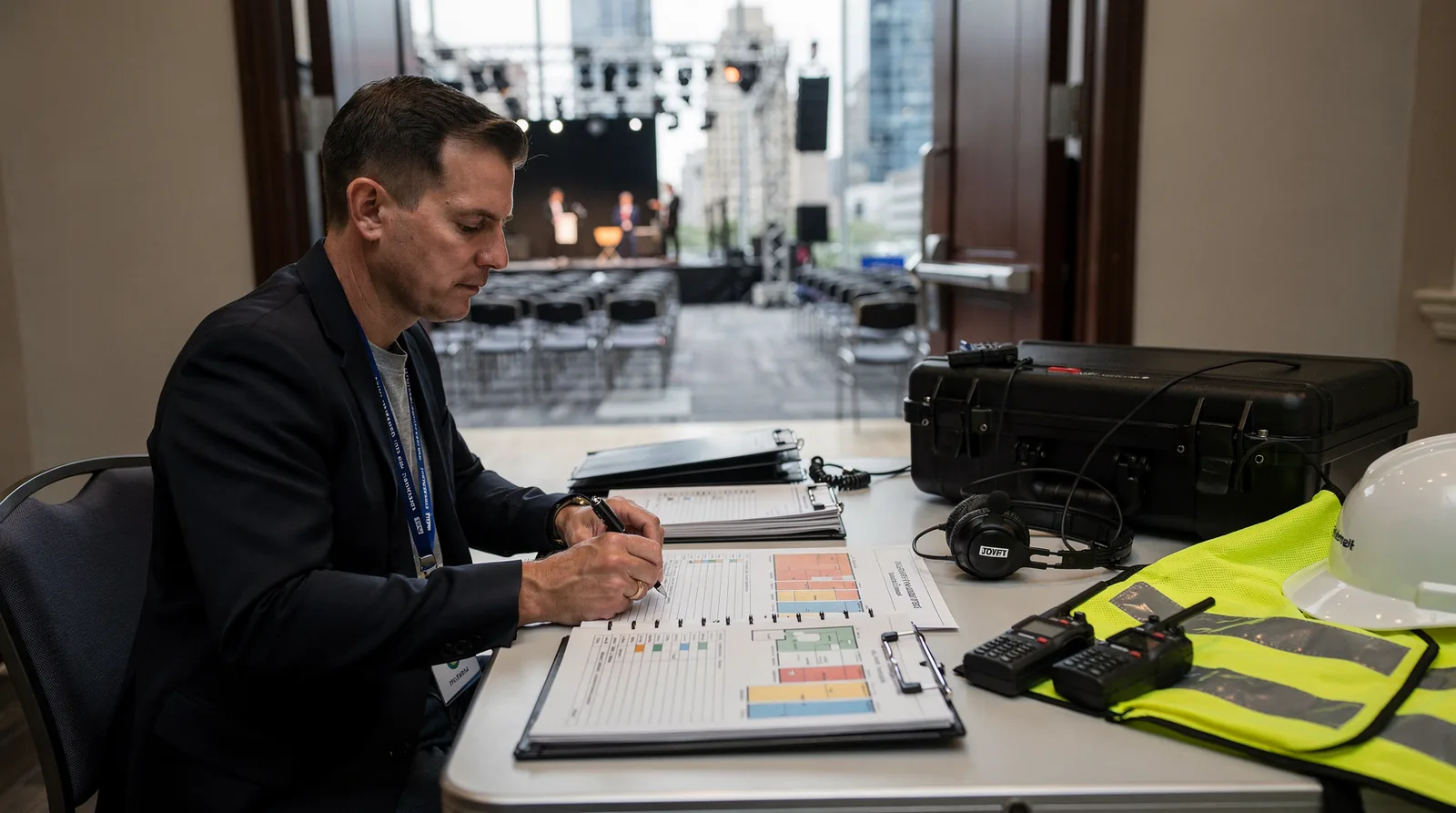
Risk management separates professional event production from amateur execution. Agencies build contingency frameworks before a single vendor contract is signed. The process starts with identifying failure points that attendees never see: vendor cancellations, AV system failures, weather disruptions, and security incidents. Contingency planning for things that haven’t gone wrong yet, but absolutely could, forms the backbone of event production expertise. Without these protocols, a single equipment failure cascades into a ruined brand experience and wasted budget.
What does a contingency plan actually cover?
A comprehensive risk plan addresses four domains. Technical contingencies include backup power systems, redundant AV equipment, and offline presentation copies. Vendor contingencies maintain pre-vetted replacement suppliers on standby for every critical service category. Logistical contingencies map alternative load-in routes, weather shelters, and crowd-flow adjustments. Communication contingencies establish emergency notification chains so stakeholders receive real-time updates without panic.
How does team structure reduce event risk?
The single-team model eliminates the most common failure point in event production: handoff gaps. When planning, production, design, and AV operate under one roof, accountability stays centralized. One team, one budget, one point of contact means problems get solved fast, not argued over. Decisions move faster because the entire production chain reports through a unified structure. EMRG Media has operated this way since 2001, building trusted relationships with repeat clients across finance, law, tech, and media. Those long-term client partnerships reflect a track record of events that finished without visible disruption, precisely because the contingency work happened months earlier.
Why choose a full-service agency for your next event?
A full-service agency eliminates the single biggest risk in corporate event production: fragmented accountability. When venue sourcing, AV design, and on-site execution sit with separate vendors, the gaps between them become failure points. EMRG Media operates differently. The company handles every phase, from concept through breakdown, with one accountable team and one point of contact.
Seamless event execution demands this integrated model. High-stakes corporate events, galas, and brand activations cannot survive the friction of multiple disconnected teams. One missed cue, one vendor arriving late, one technical failure cascades into reputational damage that no post-event apology repairs.
What does a full-service agency actually control?
The scope extends far beyond basic planning. EMRG Media’s in-house team covers planning, production, design, and AV. Venue sourcing, creative direction, vendor management, technical production, talent booking, catering, and run-of-show execution all live under one roof. One accountable team. No finger-pointing when something goes wrong.
Who trusts full-service agencies with their most critical events?
Fortune 500 companies and luxury brands do not gamble on fragmented production. EMRG Media’s client roster includes Google, Bloomberg, Netflix, and Condé Nast. These organizations stake their brand reputation on flawless execution. They choose integrated teams because the cost of failure, measured in brand equity and executive credibility, dwarfs any perceived savings from piecemeal vendors.
The agency’s leadership reflects this standard. Founder Erica Maurer earned recognition as the #1 Most Influential Event Planner in NYC, a distinction built on 25 years of delivering zero-failure events backed by relationships with 100+ of Manhattan’s best venues and services. For corporate teams producing events in the Financial District, the company’s specialized Wall Street event planning expertise addresses the unique logistical and security demands of that environment.
What happens when production isn’t unified?
Disjointed production creates invisible liabilities. A venue coordinator who never speaks to the AV team. A designer whose vision the production crew cannot execute. These disconnects surface during the event, not before. Full-service integration prevents them entirely. One team, one budget, one point of contact means problems surface in planning, not in front of 500 guests.
FAQ
What makes event production different from event planning?
Event production manages the technical execution (audiovisual, staging, lighting, and live operations) while planning handles the strategic framework. Production brings the concept to life; without it, a planned event collapses on technical failure points.
Conclusion
Flawless execution is not a matter of luck, it is the result of a unified team that owns every detail from concept to breakdown. For organizations that cannot afford visible failure, the decision is straightforward: choose an integrated production partner that eliminates handoff gaps and builds contingency into every phase. That structure turns risk into reliability, and reliability protects the brand experience that high-stakes events exist to deliver.