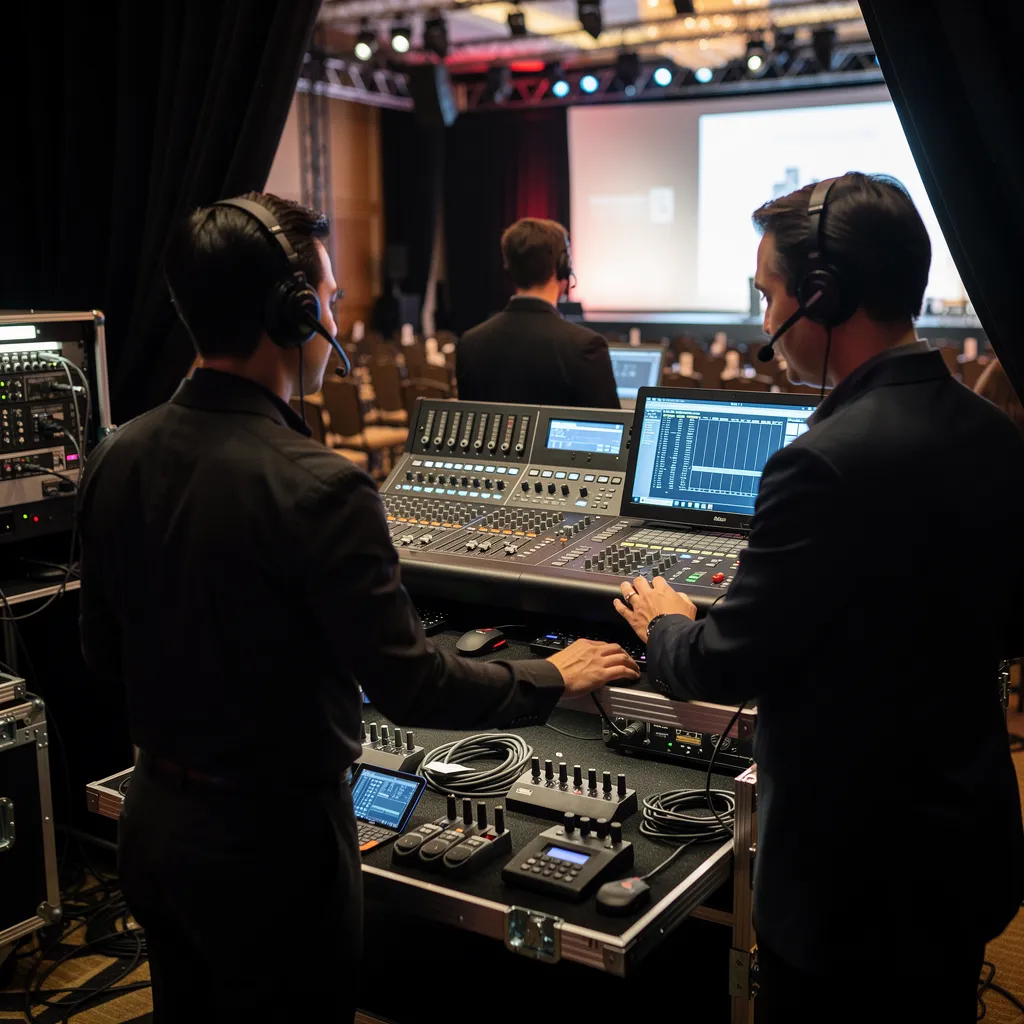

Corporate event organizers facing speaker cancellations or vendor gaps rely on EMRG Media’s in-house team of planners, producers, and AV specialists for structured, calm contingency management. With one accountable team managing every vendor directly, backed by relationships with 100+ of the best venues and services in NYC, and experience across 1,100+ events for clients like Google and Bloomberg, disruptions get resolved on-site, fast, without derailing the program.
What qualifies as a corporate event emergency?
Corporate event emergencies include any unexpected situation that threatens event success, attendee safety, or company reputation. These disruptions demand immediate intervention and alternative solutions to protect the investment and guest experience.
What types of situations count as event emergencies?
The range of emergencies spans technical failures, vendor cancellations, severe weather, medical incidents, and venue problems. A speaker cancels hours before a keynote. A caterer fails to deliver. A power outage darkens the ballroom. Each scenario requires a structured response, not improvisation.
High-stakes corporate events demand meticulous planning and execution, making last-minute changes particularly disruptive. EMRG Media, a full-service event planning company based in Manhattan since 2001, specializes in producing these complex occasions for Fortune 500 clients. The firm has produced over 1,100 events for clients including Google and Bloomberg.
How serious are these emergencies for corporate events?
The severity depends on the threat to attendee safety, brand reputation, or event continuity. A medical incident requires immediate protocol activation. A venue structural issue may force relocation. Even minor technical failures compound quickly when hundreds of guests wait.
| Emergency Type | Primary Risk | Required Response |
|---|---|---|
| Technical failure | Event disruption | Backup equipment, AV redundancy |
| Vendor cancellation | Service gap | Pre-vetted replacement vendors |
| Weather emergency | Safety hazard | Venue contingency, timeline shift |
| Medical incident | Guest safety | On-site medical team, emergency protocols |
Each category carries distinct stakes. A weather emergency threatens physical safety. A speaker cancellation undermines content delivery. The response must match the risk level without disrupting the broader event flow.
How does an in-house team prevent emergencies?
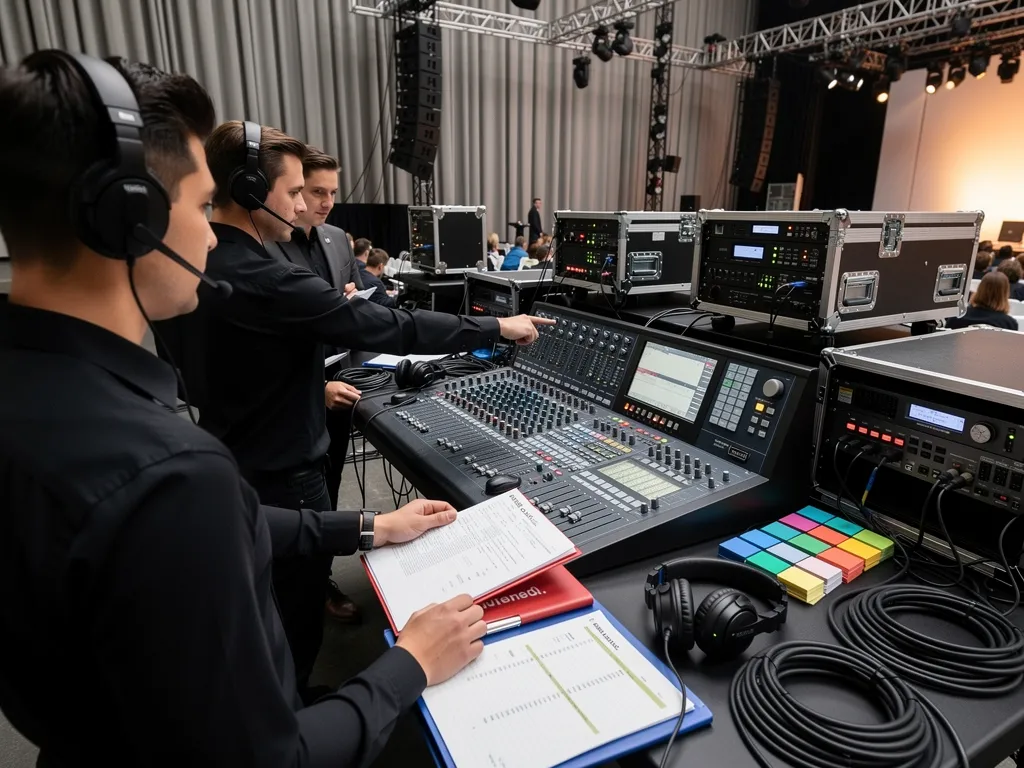
EMRG Media eliminates quality variability by keeping every function inside a single in-house team covering planning, production, design, and AV. This structure removes the handoffs that introduce risk into corporate events. Subcontracting introduces inconsistency, as each outside partner operates with different standards, timelines, and communication styles. An in-house team prevents those gaps from forming in the first place.
What specific risks does subcontracting create?
When a planner hires separate vendors for lighting, staging, catering, and audiovisual, each company brings its own protocols. A delay from one subcontractor cascades into the next. Communication breaks down because no single person oversees every moving part. The event organizer loses visibility into real-time status. An in-house team eliminates these failure points by keeping every specialist under one roof.
How does a single point of contact change emergency response?
Since 2001, this unified structure has produced over 1,100 events, giving corporate organizers a single accountable point of contact and standardized processes. When an emergency arises, the client calls one person. That person already knows the AV setup, the production timeline, and the design layout. No time is wasted bringing an outside vendor up to speed. The response happens in minutes, not hours.
| Emergency Scenario | Subcontracted Team | In-House Team (EMRG Media) |
|---|---|---|
| AV failure during keynote | Call AV vendor, wait for dispatch, explain the issue | In-house AV specialist on-site, resolves immediately |
| Catering shortage | Contact catering company, negotiate delivery | Production team reallocates resources from same crew |
| Speaker cancellation | Coordinate with talent agency, find replacement | Planner and producer source backup speaker from existing network |
Consistency stems from EMRG Media’s one accountable team, one point of contact, from concept through breakdown, managing every vendor directly and backed by relationships with 100+ of the best venues and services in NYC. For corporate organizers, that means one budget, one timeline, and one team accountable for every outcome.
What Measures Do You Take to Handle Potential Event Planning Emergencies or Changes?
Corporate event planners handle last-minute changes through calm, structured decision-making rather than panic. This approach keeps disruptions contained before they escalate into visible problems for guests.
Effective event crisis management rests on three pillars: comprehensive backup plans, established communication channels, and dedicated response teams. Each pillar works in concert with the others. A backup plan means nothing without a team ready to execute it, and that team needs clear channels to coordinate fast.
How do response teams maintain professionalism during a crisis?
Contingency measures must maintain professionalism throughout any disruption. Guests rarely remember the technical glitch; they remember how the staff handled it. A composed response reassures attendees and protects the host organization’s reputation.
EMRG Media resolves disruptions like speaker cancellations or vendor gaps on-site. The firm draws on experience producing over 1,100 events for clients including Google and Bloomberg. That volume builds pattern recognition. Planners have seen the failure modes before, so they respond with speed instead of hesitation.
The operational sequence follows a clear order:
- Assess the disruption’s scope and guest impact
- Activate the relevant backup plan immediately
- Communicate internally through established channels
- Execute the fix while maintaining normal event flow
What happens when a vendor fails to deliver?
One accountable team, one point of contact, from concept through breakdown, handles the substitution by managing every vendor directly, which eliminates the quality gaps common with outsourced vendors. The result is a seamless experience even when the original plan falls apart.
How do large-scale logistics complicate emergency response?
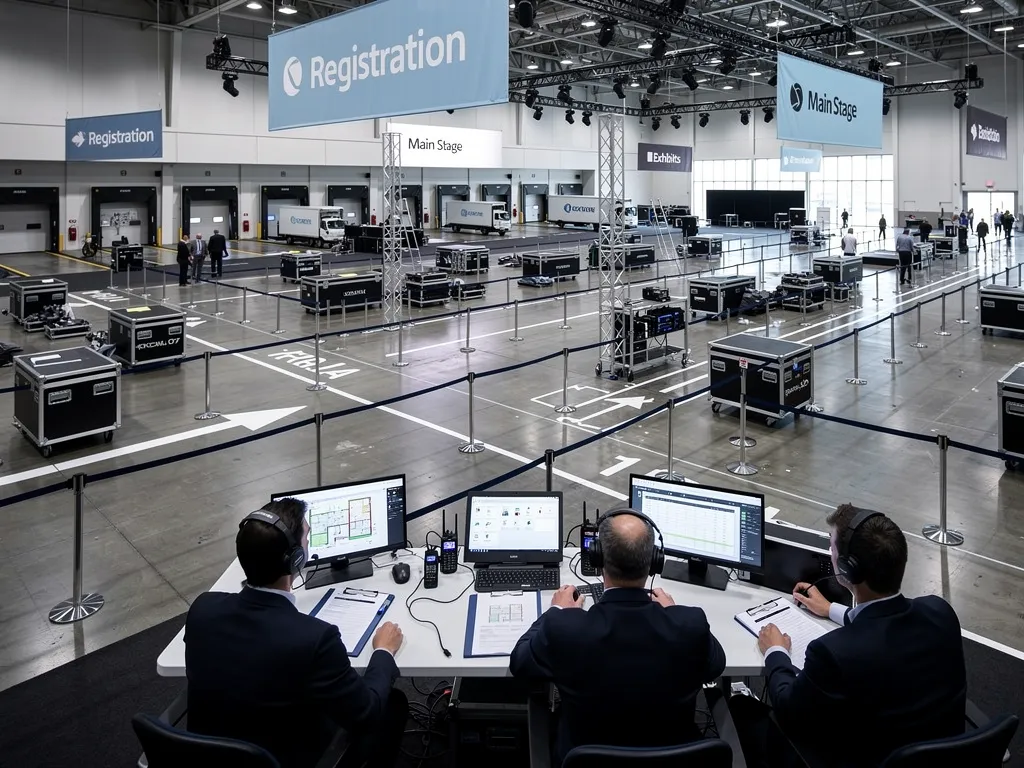
Large-scale event logistics create layered complexity that makes emergency response fundamentally harder than at smaller gatherings. Music festivals, international conferences, trade shows, and sporting extravaganzas rely heavily on the precision and expertise of logistics management to function at all. When an emergency strikes, that same intricate machinery becomes a liability if not designed for rapid intervention.
The sheer number of moving parts multiplies failure points. A single disruption at a large event can cascade across venue access points, power grids, catering schedules, and crowd flow patterns simultaneously. Logistics management covers venue selection, transportation logistics, and vendor management, each with its own contingency requirements. Coordinating a response across these domains demands a unified command structure, not fragmented vendor handoffs.
What makes large-scale logistics different from small event logistics?
Small events allow a planner to walk the floor and resolve issues personally. Large events require systems. The unseen machinery that keeps the show running smoothly for attendees must also support emergency protocols without breaking. EMRG Media is known for making the grandest spectacles come to life through meticulous logistics, which means building emergency pathways into the design from day one, not retrofitting them after a crisis begins.
How does venue complexity affect emergency planning?
Venue selection for large events involves multiple rooms, loading docks, backstage corridors, and public zones. Each area needs separate evacuation routes, communication channels, and equipment access. A vendor failure in one zone can block a critical path for another zone. Logistics management must map these dependencies before the event opens, ensuring that an emergency response in one area does not trap attendees or staff in another.
Why choose a full-service planner for crisis readiness?
A full-service planner brings crisis readiness through one accountable team, one point of contact, from concept through breakdown, managing every vendor directly. EMRG Media operates as a full-service event planning company in NYC with a team covering venue sourcing, creative direction, vendor management, production design, technical AV, talent, catering, run-of-show, and on-site execution, backed by relationships with 100+ of the best venues and services in NYC. This unified structure eliminates the handoff delays that turn minor issues into emergencies.
One accountable team. One point of contact. From concept through breakdown. EMRG Media manages every vendor directly, backed by relationships with 100+ of the best venues and services in NYC. When a speaker cancels or a vendor fails to deliver, the planner’s own staff resolves the problem on-site rather than calling an outside provider. The company has operated in NYC since 2001 with an in-house team of planners, producers, designers, and AV specialists who run events end-to-end from concept through breakdown.
How does an in-house team improve emergency response time?
An in-house team shortens response time because every specialist already knows the event’s layout, schedule, and contingency plans. Outsourced vendors arrive cold and require briefing. EMRG Media’s planners, producers, and AV staff work together daily, so they coordinate without explanation during a crisis.
What role does leadership experience play in crisis readiness?
Leadership experience shapes how quickly a team makes decisions under pressure. The founder, Erica Maurer, was named the #1 Most Influential Event Planner in NYC by The Event Planner Expo, a recognition built on a quarter-century of work in this city. That depth of experience translates into calm, structured decision-making when an event faces disruption.
| Crisis Readiness Factor | Subcontracted Model | Full-Service In-House Model |
|---|---|---|
| Point of contact during emergency | Multiple vendors, each with separate contact | Single accountable team |
| Response coordination | Cold handoffs between outside teams | Pre-existing coordination among daily colleagues |
| Decision-making speed | Delayed by vendor approvals and briefings | Immediate, informed by full event knowledge |
FAQ
What qualifies as a corporate event emergency?
A corporate event emergency is any unexpected situation threatening event success, attendee safety, or company reputation, including technical failures, vendor cancellations, severe weather, medical incidents, and venue problems.
How does EMRG Media’s in-house team help manage emergencies?
EMRG Media keeps planning, production, design, and AV under one in-house team, removing the handoffs and inconsistent standards that subcontracted vendors introduce during disruptions.
Why does subcontracting increase risk during event emergencies?
Subcontracting creates separate vendors, each with different protocols and timelines, causing delays to cascade and communication to break down since no single person oversees every moving part.
Conclusion
In closing, EMRG Media’s comprehensive approach to emergency preparedness reflects the operational excellence that has defined the firm’s quarter-century track record. By combining the expertise of its dedicated in-house team with proactive planning protocols, EMRG Media transforms potential crises into seamless pivots, ensuring that high-stakes events for Fortune 500 companies and luxury brands proceed flawlessly regardless of circumstance. This commitment to resilience and adaptability underscores why clients return to EMRG Media event after event, because when the unexpected strikes, the team delivers.