


Why Innovative Event Concepts Are Reshaping Corporate Events
Innovative event concepts are changing how companies launch products and energize sales teams, moving far beyond traditional boardroom presentations to create immersive, interactive experiences that drive real business results. Here’s what defines today’s most successful event concepts:
- Experiential over passive: Attendees become active participants, not just listeners
- Technology-improved: VR/AR demos, AI personalization, and interactive installations
- Personalized journeys: Custom agendas and content custom to individual attendee goals
- Unconventional formats: From gamified challenges to “unconference” models where participants shape the agenda
- Multi-sensory immersion: Themed environments that tell your brand story through sight, sound, touch, and taste
The shift is driven by clear data: 78% of millennials would rather spend money on live experiences than material things. Your attendees—whether they’re sales reps, channel partners, or media—now expect more than a stage and slides. They want to feel something, learn by doing, and walk away with memories that stick.
The event industry is constantly evolving, with a growing demand for virtual events and more interactive experiences. Today’s audiences are increasingly seeking immersion and interaction, moving away from traditional passive event formats. Experiential events push boundaries, favoring novel formats, technologies, and unconventional strategies that create emotional connections and drive measurable outcomes.
As Jessica Stewart, Vice President of Marketing & Sales for EMRG Media and The Event Planner Expo, I’ve spent over a decade changing corporate events for brands like Google, JP Morgan, and Estee Lauder, proving that innovative event concepts aren’t just creative—they’re strategic business tools. Whether you’re launching a product to 50 people or energizing 2,500 sales reps, the principles of innovation remain the same: surprise, engage, and deliver value that extends far beyond the event day.
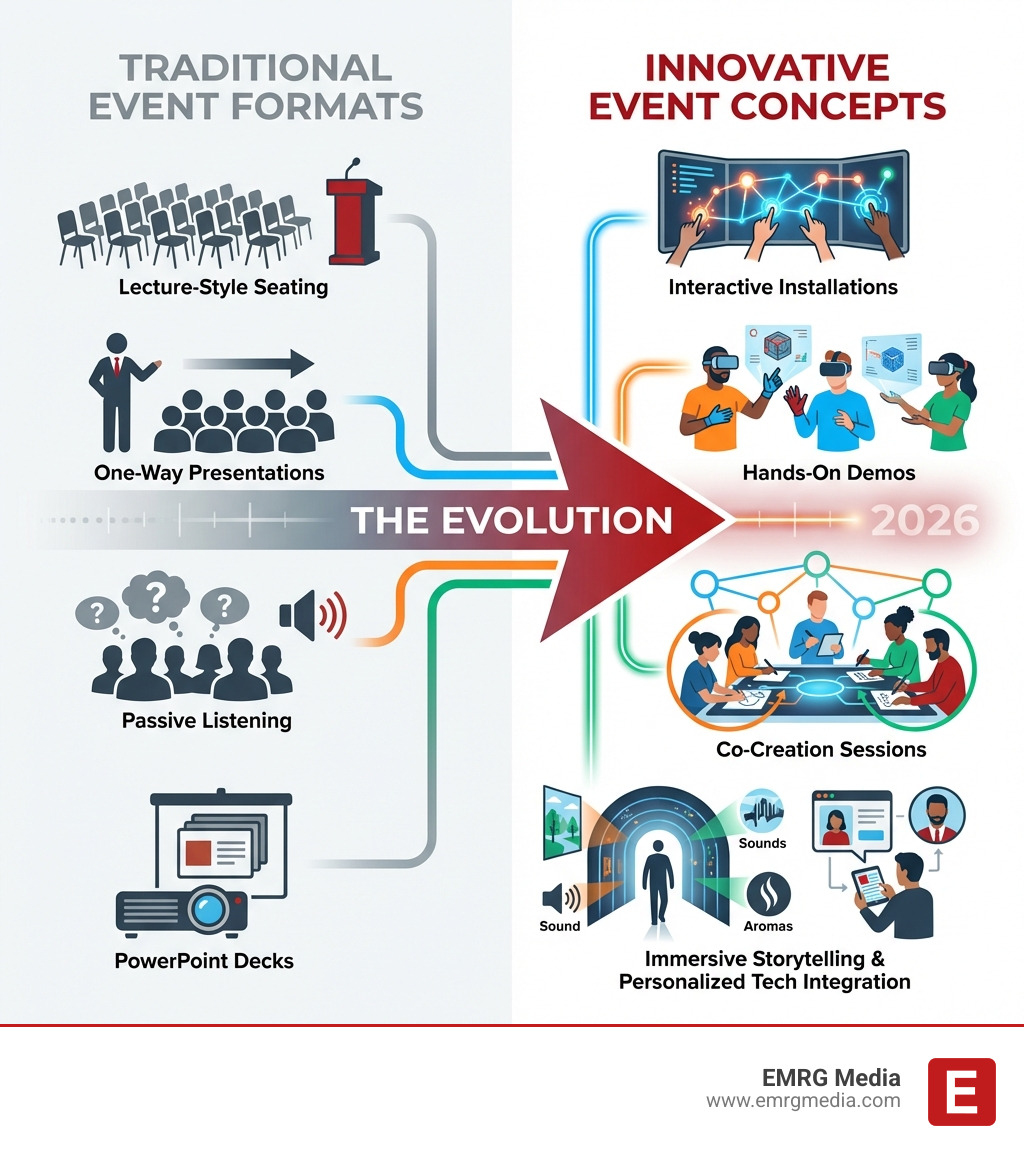
The New Standard: What Defines an Innovative Event Today?
What truly defines an innovative event concept in today’s dynamic landscape? It’s about moving beyond the expected and creating an experience that resonates deeply with your audience. We’re talking about events that prioritize immersion and interaction, forge emotional connections, offer personalization, and tell a compelling story. The days of simply sitting in a stuffy boardroom, passively absorbing information, are rapidly fading.
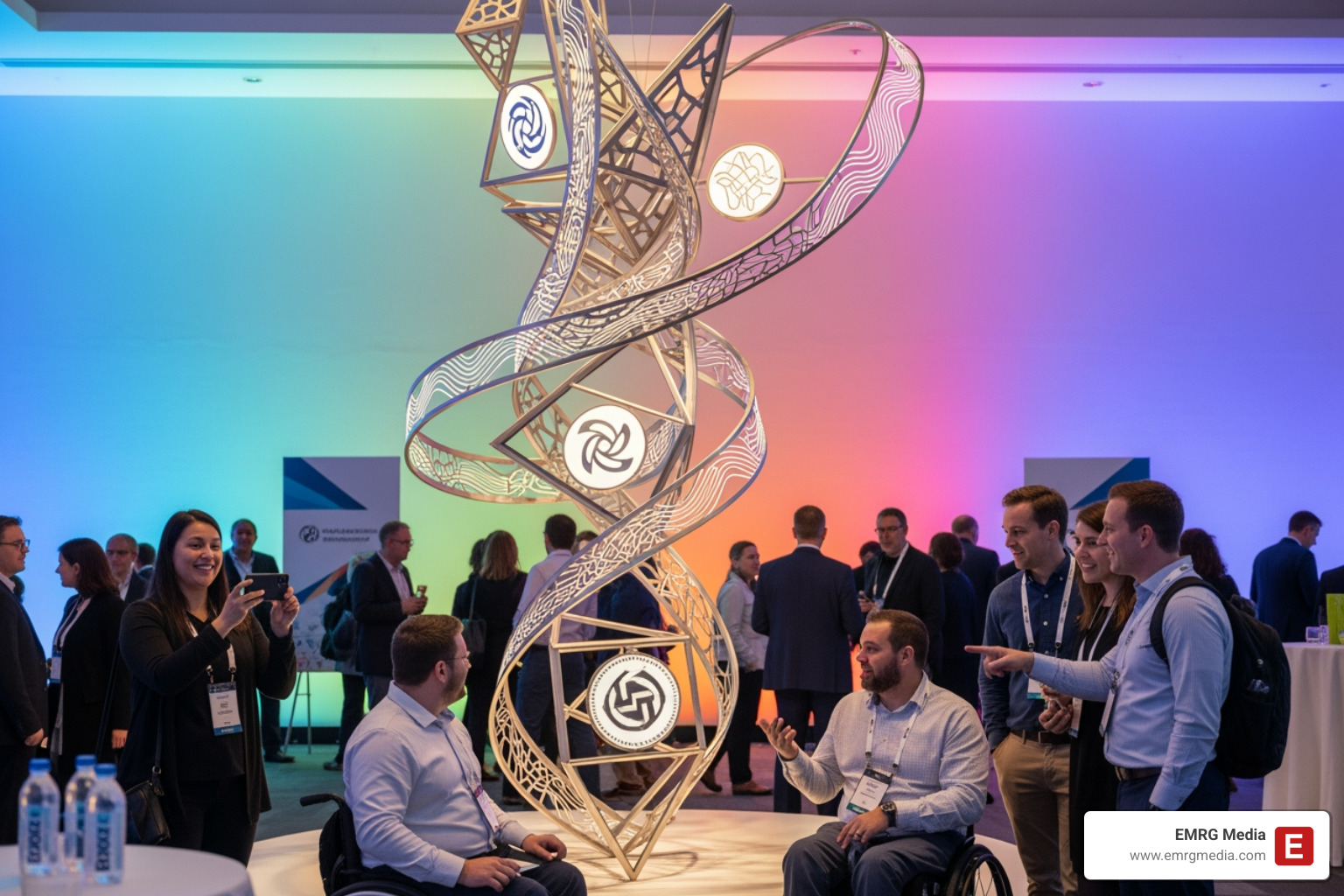
Today, an innovative event is an active journey, not a static presentation. It’s about creating an atmosphere where attendees don’t just observe; they participate, find, and connect. Our approach at EMRG Media, deeply rooted in the vibrant energy of New York City, focuses on crafting these unforgettable experiences.
The Shift to Experiential
The biggest shift we’ve seen is towards what we call the “Experience Economy.” Research shows that 78% of millennials prefer spending on live experiences over material goods, and this trend has become universal. Attendees are no longer content with being passive observers; they want to be active participants.
Experiential events are about “taking risks, thinking up new, creative formats, and engaging your audience.” This means incorporating sensory stimulation—think bespoke lighting, evocative soundscapes, or even custom scents—to create truly memorable moments. These events are designed to build brand loyalty and activate your audience on a deeper, more emotional level. They push boundaries, favoring novel formats, technologies, and unconventional strategies that leave a lasting impact. We aim to create events where the audience is not just present, but truly feels part of something special.
The Role of Technology
Technology is no longer a mere add-on; it’s an integral part of developing and executing innovative event concepts. However, its role isn’t to replace human connection but to improve it, creating “wow” factors and streamlining logistics. From virtual reality (VR) and augmented reality (AR) to artificial intelligence (AI) and mobile apps, technology can lift an event from ordinary to extraordinary.
For instance, Microsoft Ignite showcased mixed reality with immersive VR experiences, allowing attendees to explore complex technologies virtually and interact with 3D hologram speakers. Adobe MAX’s Creativity Conference introduced an interactive “Creative Park” where attendees could test new software hands-on, fostering experimentation and providing instant feedback. IBM Think featured a “Cognitive Studio” where guests explored AI solutions through interactive demos and expert-led sessions. These examples demonstrate how technology can make abstract concepts tangible and memorable, while also facilitating data collection and improving the overall attendee experience.
Personalization at Scale
In our quest for truly innovative event concepts, personalization is paramount. Attendees today expect events to cater to their individual needs and interests. This means moving beyond a one-size-fits-all approach and leveraging data and technology to create customized experiences at scale.
We can achieve this through AI-powered recommendations for sessions, personalized agendas based on pre-event surveys, or custom content delivered directly to attendees. The goal is to make every attendee feel valued and seen. Qualtrics X4’s Dream Team exemplified this by taking over 2,000 requests from attendees to improve their experience, ranging from specific dietary needs to celebrity meet-and-greets. This level of responsiveness and customization fosters a deeper connection and ensures the event is impactful for each individual. By understanding our audience’s preferences before they even arrive, we can tailor elements of the event to create a truly unique and impactful journey.
Beyond the Ballroom: 10 Innovative Event Concepts for Maximum Impact
Forget dull conference rooms and predictable schedules. Today, the most impactful corporate events are happening in unexpected places and in unimaginable ways. We’re changing spaces and perceptions to deliver experiences that captivate and convert.

1. Immersive Brand Worlds
Imagine stepping directly into your brand’s narrative. Immersive brand worlds create multi-sensory environments where every detail—from decor and sound to interactive elements—tells a story. The Van Gogh Immersive Experience, for example, uses digital projections and soundscapes to fully envelop attendees in art. Similarly, brands like IKEA have turned everyday objects into climbing walls, and M&M’s created themed rooms, demonstrating how physical spaces can become extensions of a brand. Lululemon’s Sweatlife Festival brought their brand to life with a full day of yoga, workouts, and wellness workshops, creating a holistic brand experience. For our clients in NYC, we’ve created custom immersive launch events that transport guests into the heart of a product’s universe, leaving an indelible mark.
2. Gamified Learning & Skill-Building
Who says learning can’t be fun? Gamification injects excitement and competition into educational and training events, driving engagement and knowledge retention. Salesforce’s TrailblazerDX is a prime example, where attendees earn badges through workshops and interactive challenges, emphasizing practical skill-building. Juniper NXTWORK 2019 even gamified panel conversations with theCUBE, introducing scoring for panelists and audience participation. These strategies encourage active participation, foster collaboration, and make complex information more digestible and memorable. At EMRG Media, we design interactive sales training activations that incorporate competitive elements, leaderboards, and hands-on labs to energize teams and embed key takeaways.
3. The “Unconference” Model
Sometimes, the best content comes from the attendees themselves. The “unconference” model flips traditional conference structures on their head, allowing participants to drive the agenda. As BarCamp co-founder Ryan King noted, these events are built on the premise that “there is much more expertise in the audience than there possibly could be onstage.” Kathleen Craig aptly described unconferences as “all a corridor,” where the most productive moments often happen in informal discussions. By fostering collaborative sessions and peer-to-peer learning, unconferences encourage organic networking and leverage the collective intelligence of the group. This format is perfect for fostering genuine connections and generating fresh ideas among your team or partners in New York City.
4. Tech-Forward Showcases
When you’re launching a cutting-edge product, your event should be equally cutting-edge. Tech-forward showcases integrate the latest innovations to demonstrate your offerings in a truly engaging way. Dell Technologies World, for instance, brought its brand to life with hands-on labs, training courses, and “Ask the Expert” sessions. LinkedIn Talent Connect included an “Innovation Lab” where attendees explored emerging talent solutions through interactive tech showcases. These events leverage VR/AR for product demos, mixed reality experiences, and AI-powered interactive zones to create a dynamic and memorable interaction with your technology. For our NYC clients, we craft tech-forward product showcases that not only highlight innovation but allow attendees to actively experiment and provide feedback.
5. Festivalization of Corporate Events
Why limit your event to a single format when you can create a multi-faceted experience? “Festivalization” transforms corporate gatherings into vibrant, engaging festivals with diverse content and activities. Lululemon’s Sweatlife Festival, for example, featured a full day of yoga, workout sessions, and wellness workshops, creating a holistic brand experience. HubSpot INBOUND and Splunk .conf are other great examples of events that integrate diverse content tracks, multiple stages, and interactive zones to keep attendees engaged. IKEA even hosted a sleepover event with immersive sleep-themed activities, proving that even corporate brands can accept playful festival vibes. We specialize in designing multi-experience corporate festivals in New York City, incorporating wellness zones, live entertainment, and even themed food truck villages to create a dynamic “campus” feel that energizes and inspires.
6. Disruptive Presentation Formats
“Death by PowerPoint” is a highly infectious disease in the corporate world, but there’s a cure! Disruptive presentation formats ditch the static slides for more dynamic and engaging ways to share information. The SaaStr Annual Conference famously replaced presentations with onstage interviews, making content more conversational and compelling.
Here are three quick-fire presentation formats we love:
- PechaKucha: Speakers show 20 images, each for 20 seconds. The images advance automatically, forcing concise and impactful storytelling. PechaKucha events are held in over 700 cities globally.
- Ignite Talks: Similar to PechaKucha, but typically 20 slides, 15 seconds per slide, making it even faster and more energetic.
- Fishbowl Conversations: A few panelists discuss a topic, with one empty chair. Audience members can take the empty seat to join the discussion, fostering a truly dynamic and inclusive dialogue.
7. Secret & Immersive Pop-Ups
Harness the power of mystery and exclusivity with secret and immersive pop-up events. The Lost Lectures hosts enchanting talks in undisclosed locations, like abandoned theaters, creating a sense of adventure and intrigue. Cinema Royal similarly uses abandoned venues for film projections, enhancing the atmosphere with live actors. In New York City, we’ve seen mobile activations like customized tuk-tuks for movie premieres, distributing themed treats and creating buzz. The Peacock SneakEasy, a ski chalet-inspired lounge, also demonstrates how temporary, themed spaces can transport attendees. These pop-ups build anticipation, generate social media buzz, and create unique, memorable brand interactions.
8. Interactive Art & Co-Creation
Engage your audience’s creative side by integrating interactive art installations and co-creation opportunities. The FRESH conference, dedicated to meeting designers, functions as a lab and incubator where participants co-create art and test new technologies. At COP28, the “Tree of Life” was an interactive digital art installation that educated visitors and collected pledges, demonstrating how art can serve a purpose beyond aesthetics. Imagine a wall where attendees contribute to a digital mural, or a sculpture that reacts to movement. These activations not only provide stunning visual appeal but also allow guests to actively participate, making them feel like an integral part of the event’s artistic expression.
9. Sustainable & Eco-Conscious Activations
In an era of increasing environmental awareness, integrating sustainability into your event is not just responsible; it’s an innovative event concept that resonates with attendees. There’s a growing demand for sustainability in event planning. This can range from implementing zero-waste catering and using recyclable materials to designing activations for reuse, like modular walls or rental furnishings. Making climate actions visible, such as on-site refill stations for water bottles or digital swag, shows genuine commitment. Sustainable activations are a creative constraint that breeds smarter design, aligning your brand with eco-friendly values and offering attendees a meaningful, forward-thinking experience.
10. Personalized Culinary Journeys
Food is more than sustenance; it’s an experience waiting to be innovated. Personalized culinary journeys transform dining into an interactive, memorable event. Think DIY pasta-making nights, sushi rolling workshops, or wine pairing dinners with sommeliers. We can create gourmet picnic setups with live music in Central Park, build-your-own dessert bars, or even chocolate tasting nights. For example, a partnership with Searchlight Pictures offered movie-themed pastries from a custom food truck. These concepts allow attendees to engage with food and drink on a deeper level, fostering connection and creating lasting memories. We curate these experiences, often collaborating with top New York City chefs, to provide unique and delicious adventures custom to your event’s theme.
From Idea to Impact: The Blueprint for Planning & Measuring Your Event
Bringing innovative event concepts to life requires more than just a great idea; it demands strategic planning, meticulous execution, and a clear understanding of how to measure success. For us, it’s about crafting a blueprint that ensures every detail aligns with your objectives and delivers tangible results.
Fostering Creativity and Risk-Taking
Developing truly novel event ideas means fostering an environment where creativity thrives and calculated risks are encouraged. We believe in creating a psychologically safe space for brainstorming, where every idea, no matter how unconventional, is considered. This means encouraging our team and our clients to step outside their comfort zones, learn from perceived “failures,” and accept experimentation. After all, experiential events are inherently “about taking risks.” We facilitate cross-departmental collaboration to bring diverse perspectives to the table, ensuring a rich mix of ideas. This collaborative spirit, combined with a willingness to test new concepts, is how we continually push the boundaries of event innovation.
Key Considerations for Planning Innovative Event Concepts
Planning an innovative event is a multi-faceted endeavor. Here are our key considerations:
- Understanding Your Audience: This is fundamental. We dig deep into your attendees’ needs, interests, and pain points to ensure the concept resonates with them.
- Aligning with Brand Goals: Every element of the event must reinforce your brand messaging and contribute to your strategic objectives.
- Venue Selection: In a city like New York, the venue itself can be an innovative element. We carefully select spaces that improve the event’s theme and functionality, from industrial lofts to iconic landmarks.
- Vendor Partnerships: We collaborate with a network of trusted, creative vendors who can bring even the most ambitious visions to life, from cutting-edge tech providers to artisan caterers.
- Seamless Logistics: This is where our decades of experience truly shine. Innovation can be chaotic if not flawlessly executed. We anticipate challenges, manage timelines, coordinate vendors, and ensure smooth transportation, so you can enjoy a stress-free event.
Measuring the Success of Innovative Event Concepts
Measuring the success of innovative event concepts goes far beyond traditional metrics like attendance. While headcounts are important, we focus on the quality of engagement and long-term impact. Our measurement strategies include:
- Social Media Sentiment Analysis: Tracking mentions, hashtags, and overall sentiment to gauge buzz and brand perception.
- Engagement Scores: Monitoring interactions with activations, gamified elements, and session participation, including dwell time at specific zones.
- Post-Event Surveys: Gathering direct feedback from attendees, partners, and staff to understand their experience and insights. Qualtrics X4’s Dream Team, for example, actively solicited over 2,000 requests to improve attendee experience, demonstrating the power of direct feedback.
- Lead Quality and Conversion: For product launches and sales kick-offs, we track the quality of leads generated and their conversion rates post-event.
- Long-Term Impact: Assessing brand loyalty, employee morale, and changes in behavior or perception over time.
By focusing on these comprehensive metrics, we can demonstrate the true return on investment for your innovative event.
The Future is Now: Emerging Trends in Event Planning
The event industry is a constantly evolving landscape, and staying ahead of the curve is essential for creating truly innovative event concepts. We’re always looking to the horizon, integrating emerging trends to ensure our events are not just memorable, but future-proof.
- Hyper-personalization: Beyond general customization, AI and data analytics will allow for even more granular personalization, tailoring every touchpoint to individual attendee preferences and behaviors. Imagine agendas that adapt in real-time based on your interests, or networking suggestions based on your specific professional goals.
- AI in Event Management: AI is moving beyond chatbots to power everything from smart content delivery and predictive analytics for attendee flow to AI concierges that can troubleshoot issues or recommend experiences. The future of events is increasingly connected and engaging, driven by AI and interactive experiences.
- Growing demand for sustainability: Eco-conscious practices are no longer optional. We’re seeing a push for zero-waste events, sustainable sourcing, and transparent reporting of environmental impact. This isn’t just about compliance; it’s about aligning with attendee values and creating meaningful experiences.
- Advanced Hybrid Models: Hybrid events, combining in-person and virtual elements, are here to stay. Future models will offer more seamless and equitable experiences for both audiences, leveraging VR, AR, and live streaming to bridge the physical and digital divide.
- Community-Building Platforms: Events are becoming hubs for ongoing community engagement. Platforms that facilitate year-round connection, content sharing, and collaboration will extend the life and impact of your event far beyond its scheduled dates.
Conclusion
The landscape of corporate events has irrevocably changed. To truly launch like a legend, whether it’s a groundbreaking product or an invigorated sales team, you must accept innovative event concepts. The days of passive presentations are over; today’s audiences demand immersion, interaction, and personalization. We’ve explored how a shift to experiential design, leveraging cutting-edge technology, and a commitment to creativity can transform your events into unforgettable, impactful experiences.
From immersive brand worlds and gamified learning to unconference models and personalized culinary journeys, the possibilities for innovation are endless. But a great idea is only the beginning. Successful execution requires meticulous planning, a willingness to take calculated risks, and a comprehensive approach to measuring impact beyond traditional metrics.
At EMRG Media, we pride ourselves on being at the forefront of this evolution. With over two decades of experience in New York City, we understand how to blend strategic vision with creative flair and flawless execution to create events that not only meet but exceed your objectives. We don’t just plan events; we craft experiences that resonate, inspire, and drive real business results.
Ready to transform your next product launch or sales kick-off into a legendary event? Let’s plan your next legendary corporate event in NYC.
