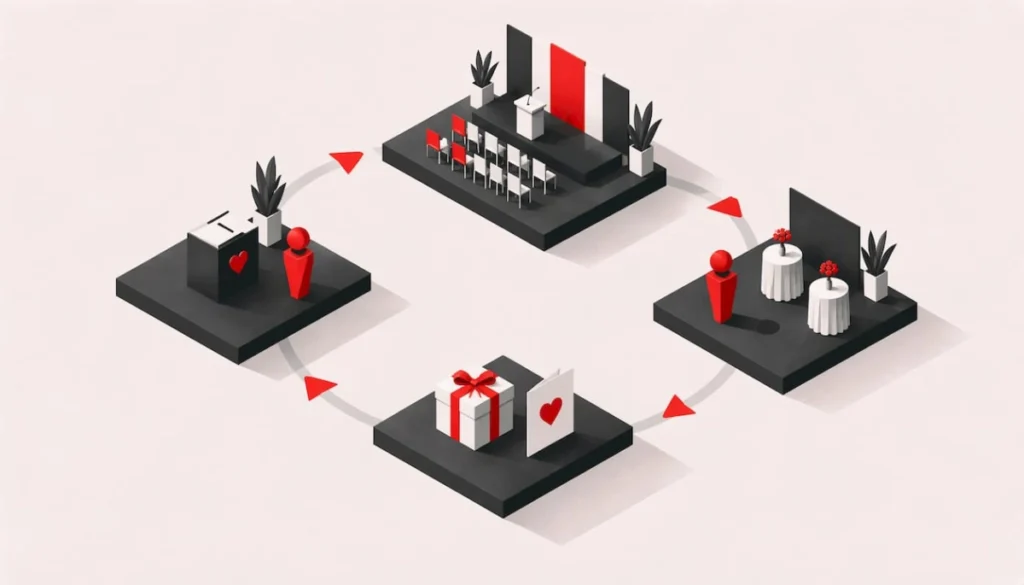

Nonprofit donor engagement is everything that keeps a supporter connected to your cause before, between and after their gifts: relevant communication, participation, listening and clear next steps. It works as a repeating cycle of identifying, cultivating, asking and thanking, and in-person events are one of the few formats where all four stages can happen in the same evening. This guide covers the cycle, the metrics that show whether it works, and how to design events that deepen relationships rather than just collect checks.
TL;DR
- Donor engagement is broader than stewardship: it covers interactions before, after and between gifts, while stewardship is the care you give after a gift.
- The cycle has four stages: identification, cultivation, solicitation and stewardship. Skipping the middle and the end is what makes donors lapse.
- Track retention, repeat giving and event attendance, not just dollars raised. Donors who give repeatedly are retained at far higher rates than one-time donors.
- Events let you cultivate, solicit and steward in one room, but they only work when each guest has a defined next step afterward.
- A single accountable team across venue, AV and program reduces the handoffs that weaken the donor experience.
Table of Contents
- What nonprofit donor engagement actually means
- The donor engagement cycle, stage by stage
- What good stewardship looks like in practice
- How to measure donor engagement
- Where donor engagement events fit
- Show what the money did
- A year-round engagement calendar
- Perspective: why event execution is part of donor relations
- Planning a donor event in New York
- Common mistakes to avoid
- FAQ
- Sources
What nonprofit donor engagement actually means
Donor engagement is the ongoing process of helping a donor stay connected to your organization through relevant communication, participation, listening and meaningful next steps. Everraise frames it as broader than any single gift: it includes the interactions before, after and between donations that keep someone close to the mission.
That definition has a practical consequence. Engagement is not a newsletter schedule. The same source argues that it is not simply sending more communication; it happens when a message moves the relationship somewhere, so each response tells you what should happen next. A donor who opens every email but never replies, attends or volunteers is informed, not necessarily engaged.
The goal is a supporter who feels connected, involved and part of a shared purpose, someone who gives repeatedly and eventually brings friends. CUNY’s guide to donor engagement makes the same point: engaged donors give more, give longer and bring others with them.
Engagement versus stewardship versus retention
These three terms get mixed up, and the difference changes how you work.
- Engagement is the whole spectrum of how a supporter interacts with your organization. Bloomerang describes it this way, and separates it from stewardship, which is the relationship-building that happens after a gift is made.
- Stewardship is thanking, reporting impact, recognizing and caring for the relationship once someone has given.
- Retention is the result: it tells you whether those relationships are continuing.
When retention drops, the answer is not automatically another appeal. Trace the relationship backward and find where engagement stopped. Maybe the thank-you arrived late, or the donor never heard what the gift accomplished, or the only contact was an ask.
There is also a scholarly angle. A 2025 definitions paper on donor relations and stewardship notes that some practitioners see stewardship as an internal function that ensures gifts are used as intended, while donor relations is the wider, donor-facing effort. In day-to-day practice, the useful takeaway is simple: someone must own the experience of the donor, not just the gift.
The donor engagement cycle, stage by stage
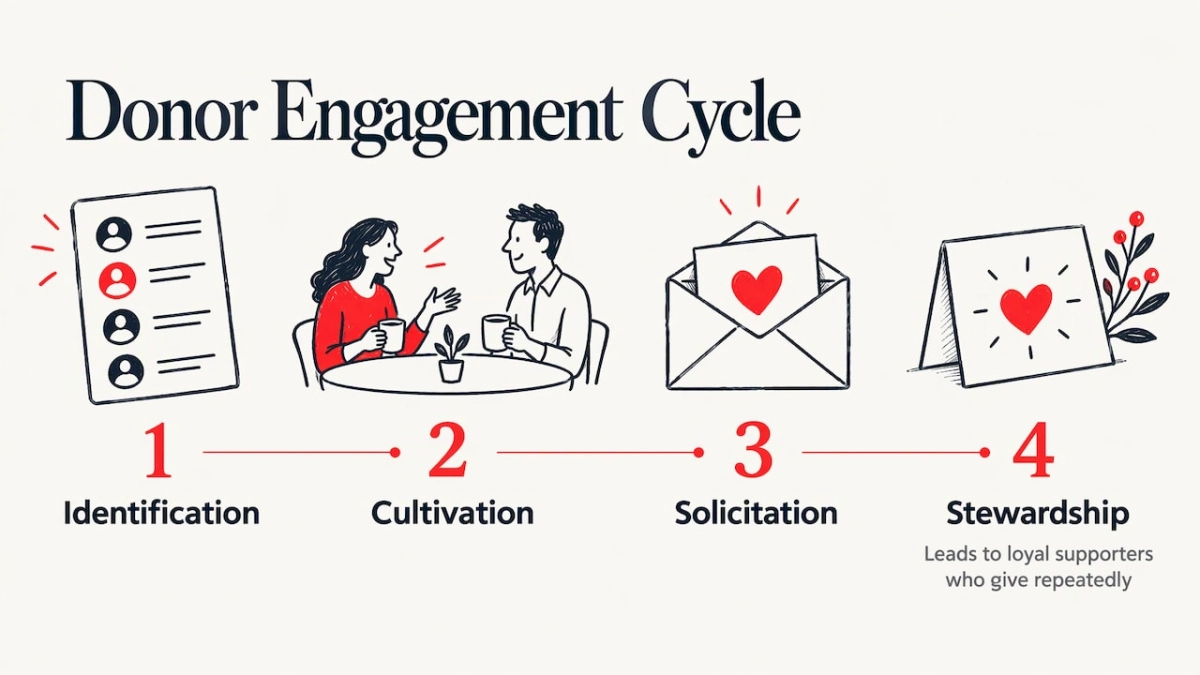
Most frameworks describe four stages. Kindsight’s donor engagement guide lists them as identification, cultivation, solicitation and stewardship, with the end goal of loyal supporters who give repeatedly. The professional association CASE describes the same four phases in its donor cultivation resource.
1. Identification
Find the people most likely to be inclined and able to support you. This includes current donors who could give more, board contacts, volunteers, event guests and corporate partners. Record how each person came to you, because that source shapes every later conversation.
2. Cultivation
Cultivation builds closeness to the cause before you ask. CASE reports that development directors often describe their time as roughly 25% research, 60% relationship-building, 5% request and 10% recognition. The exact split varies by organization, but the proportions make the point: the ask is the smallest part of the work.
Cultivation touchpoints include site visits, program briefings, small-group conversations with leadership, volunteer days and, importantly, events.
3. Solicitation
Ask in a way that fits the relationship. A first-time guest at a gala and a six-year monthly donor should not receive the same request. Timing, amount and channel should come from what you know about the person.
4. Stewardship
Thank, report and recognize, then feed the donor back into cultivation. CASE adds a warning worth taping to a wall: stewardship and cultivation cannot just be preparation for the next ask, because donors who only hear from you when you want money disengage quickly.
What good stewardship looks like in practice
Speed matters. One fundraising guide advises acknowledging gifts within 48 to 72 hours, and notes that receipts for charitable donations must meet IRS regulations. Have your finance lead confirm receipt wording for your organization.
Beyond the thank-you, Double the Donation separates passive stewardship (a thank-you letter, a standard tax receipt, a generic newsletter) from active stewardship, which is proactive, personalized and treats the relationship as just beginning. RKD Group outlines a repeatable five-step stewardship cycle: acknowledge, recognize, report impact, engage regularly and ask again with timing and personalization.
A simple rule for mid-level donors, who tend to expect recognition and meaningful engagement in return for their support: give them access, not just acknowledgment. An invitation to meet a program lead or sit near the stage at an event often means more than another letter.
How to measure donor engagement
Dollars raised is the lagging indicator. Engagement shows up earlier, in behavior. Salesforce lists engagement KPIs such as events attended, hours volunteered, survey responses, website visits, email opens and clicks, years as a donor and past giving patterns. FundraiseUp adds gift matching eligibility and communication preferences.
Then watch retention, because that is where engagement pays off. According to the Fundraising Effectiveness Survey report from the Urban Institute, donor and gift retention rates have consistently been below 50 percent over a decade of data. Data from the Fundraising Effectiveness Project, cited by Givebutter, puts retention for one-time donors at 19.2% and for donors who give seven or more times at 87.3%.
That gap is the business case for engagement: the work is mostly about getting a second and third gift.
| Metric | What it tells you | How events feed it |
|---|---|---|
| First-to-second gift rate | Whether new donors feel welcomed | Invite new donors to a small, personal event within months of the first gift |
| Repeat giving | Depth of loyalty | Pair recognition moments with a clear next step |
| Event attendance and repeat attendance | Interest beyond giving | Track RSVPs, check-ins and guests per donor |
| Volunteer hours | Willingness to participate | Offer a role at the event itself |
| Upgrade rate | Readiness to give more | Segment guests by giving level and follow up personally |
An event gives you attendance data that a mailing never will: who came, who brought a guest, who stayed to the end, and who spoke with a board member. Capture it in your donor database the next morning.
Where donor engagement events fit
Special events can serve every stage of the cycle. They can help identify and qualify prospects, cultivate existing donors, solicit support and steward relationships. That is why a gala is rarely just a fundraiser; the best ones are a year of relationship-building concentrated into a few hours.
Match the event to the stage
- Identification: open-house receptions, community nights and corporate partner mixers where guests bring a friend.
- Cultivation: small-format briefings, behind-the-scenes program visits and leadership dinners for prospects who have not yet been asked.
- Solicitation: galas, benefit dinners and live appeals where giving is part of the program.
- Stewardship: donor appreciation evenings, impact showcases and recognition receptions held with no ask at all.
If you are choosing a format for a New York audience, our list of nonprofit fundraising event ideas in NYC goes through options by goal and guest count. For the largest format, see how to plan a charity gala in NYC.
The planning decisions that matter most
Good event planning for fundraising starts with objectives, not a venue. Set what the event must do (raise a dollar target, introduce 50 new prospects, recognize your top donors), then choose format and audience, decide how giving will happen on the night, and build a budget against your revenue goal. Work your calendar backward from the event date, and treat the venue or virtual platform as a core decision, not an afterthought. Our event planning timeline shows how far ahead New York planners typically need to start, and the seven stages of the event planning process lay out the sequence.
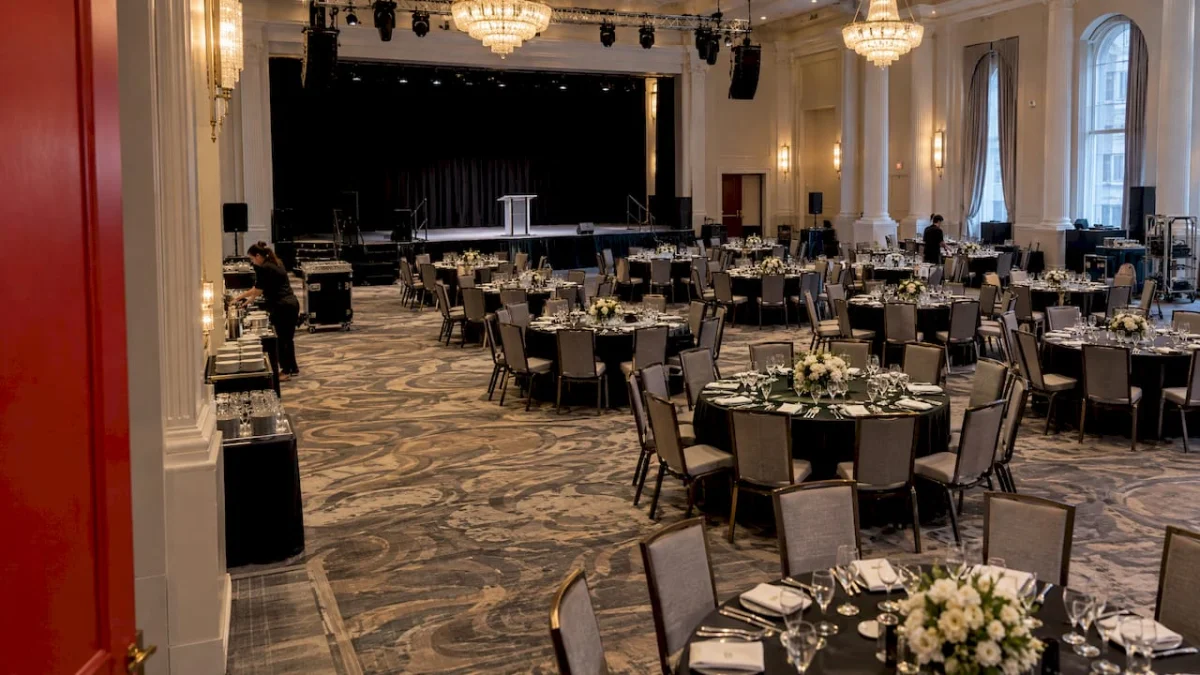
Venue choice shapes the donor experience more than most committees expect: sightlines to the stage, sound, flow from reception to dinner, and whether guests can actually talk to each other. Browse gala venues in NYC to see how ballrooms and lofts differ.
What happens after the event
This is where engagement either compounds or evaporates. Within 48 to 72 hours:
- Send a personal thank-you to every attendee, sponsor and contributor, not only the largest givers.
- Follow up on outstanding pledges and payments.
- Log attendance, conversations and interests in your donor records.
- Gather feedback from your team and board.
- Assign each guest a next step: a program visit, a volunteer invitation, a small-group briefing.
The point of the event is the relationship that continues after it. Keela reports that organizations that send thank-you notes within 48 hours see 400% higher retention rates, yet 65% of donors never receive a proper thank-you. Those are one company’s figures, but the direction is consistent with everything else in this field: fast, personal gratitude is cheap and effective.
Show what the money did
Donors want proof of impact. The same Keela post states that 90% of donors say they would give again if they understood the difference their donation made. DonorBox recommends sharing an impact report at every stage of the cycle, and suggests a rule of thumb that you talk 25% to 50% of the time while the donor talks the rest.
At an event, that translates into program design. Put a beneficiary or program lead on stage instead of a long slate of thank-yous. Use video or a live display to show results. Leave time for guests to talk. Reserve the ask for a moment when the story has landed.
For nonprofits that answer to boards and institutional funders, results reporting also matters after the night. We build ROI reporting into nonprofit events so that leadership can see what an event produced, and our guide to corporate event ROI measurement explains the framework.
A year-round engagement calendar
Engagement is a rhythm, not a season. A workable plan for a mid-sized nonprofit might look like this:
| Quarter | Focus | Example touchpoints |
|---|---|---|
| Q1 | Welcome and impact | Annual impact report, new-donor welcome call, program briefing |
| Q2 | Cultivation | Site visits, small leadership dinners, volunteer day |
| Q3 | Community and recognition | Summer reception, donor appreciation evening, board-hosted gatherings |
| Q4 | Solicitation and gratitude | Year-end appeal, gala or benefit event, personal thank-you calls |
Keep one principle in view: every ask should be surrounded by contact that has no ask in it. Segment your list so a first-time donor, a monthly giver and a major prospect each hear from you in a different way. Match recognition to what each person values; some want their name on a program, others want a private conversation with the executive director.
Perspective: why event execution is part of donor relations
We have produced over 1,100 events since 2001, and the pattern is consistent: donors judge your organization by how the evening feels. A late start, a muffled microphone or a confusing check-in does not read as a logistics problem to a guest. It reads as how the organization treats people.
That is why we run planning, venue sourcing, technical AV and on-site coordination with one in-house team and one point of contact. When the person who negotiated the venue is also the person who understands the stage, the sound and the run of show, there are fewer handoffs between subcontractors for your donors to feel.
For nonprofit clients, we also build in the measurement leadership asks for afterward, including ROI reporting, so an event feeds the next stage of the cycle instead of ending on the night. Treat the event as one chapter of a relationship, and design the follow-up before you design the program.
EMRG
Planning a donor event in New York
If your next stage of engagement is an event, we plan and produce fundraising galas, donor appreciation evenings, benefits and corporate partner events in New York City. Our in-house team covers venue sourcing, creative design, stage and AV production, vendor management, hospitality and on-site coordination, so your development staff can focus on the guests. Start with our event planning service, or talk to us about venue sourcing if you still need a space.
For charity and fundraising events specifically, see our corporate events page, which covers galas and fundraising event planning, or contact us through EMRG Media for a custom quote.
Common mistakes to avoid
- Only asking. Donors who hear from you solely for money disengage quickly. Balance every appeal with gratitude, impact and invitation.
- Treating the gala as the whole program. One night a year cannot carry the relationship. Add smaller cultivation and stewardship moments.
- Slow or generic thank-yous. Speed and personalization are the cheapest retention levers you have.
- No follow-up owner. Name one person responsible for each guest’s next step before the event happens.
- Measuring only revenue. Track attendance, repeat giving and retention so you can see engagement rising before the totals do.
- Underinvesting in the guest experience. Sound, sightlines and pacing shape how donors remember your cause.
FAQ
What is the donor engagement process?
It is a cycle of four stages: identification, cultivation, solicitation and stewardship. You find likely supporters, build their connection to your cause, ask in a way that fits the relationship, then thank and report back. Stewardship feeds back into cultivation, so the cycle repeats and donors give again.
How is donor engagement different from donor stewardship?
Engagement covers the whole relationship, including contact before, between and after gifts. Stewardship is the part that follows a gift: thanking, reporting impact and recognizing the donor. Stewardship is one piece of engagement, and both aim at keeping donors giving.
How do you measure donor engagement?
Combine behavior and outcomes. Behavior includes event attendance, volunteer hours, survey responses, email clicks and years as a donor. Outcomes include retention, repeat giving and upgrades. Review them regularly and segment by giving level to see where relationships stall.
Do events really improve donor retention?
Events can support every stage of the cycle, from identifying prospects to stewarding existing donors, and they give you in-person time that other channels cannot. Their effect depends on follow-up: a prompt, personal thank-you and a defined next step for each guest turn attendance into a continuing relationship.
Sources
- Everraise: Donor Engagement, How to Turn Follow-Up Into Retention
- Bloomerang: Donor Stewardship
- Donor Relations and Stewardship Defined (Stetson University, 2025)
- CUNY: The Complete Guide to Donor Engagement for Non-Profits
- Kindsight: Donor engagement guide
- CASE: Donor Cultivation
- CCS Fundraising: Introduction to Moves Management
- Double the Donation: Donor Stewardship
- RKD Group: Donor stewardship
- Salesforce: The Nonprofit Donor Engagement Guide
- FundraiseUp: Donor engagement strategies
- Urban Institute: 2016 Fundraising Effectiveness Survey Report
- Givebutter: Donor Cultivation
- Keela: The Donor Engagement Cycle
- DonorBox: Donor Engagement Cycle