
Picture this: you’re mapping out your event planning timeline just 3 to 4 months before peak wedding or gala season hits New York City, only to discover every venue you love is already booked.
Sound familiar? This is the reality for hosts who underestimate how competitive Manhattan’s calendar really is.
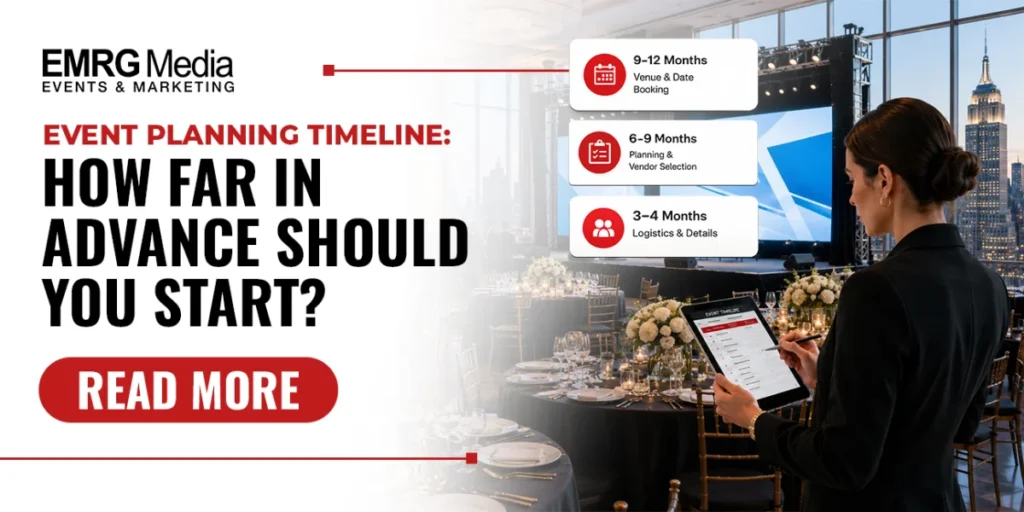
Here’s the short version: large-scale NYC events need 9 to 12 months on the calendar, mid-scale events need 6 to 9 months, and smaller gatherings can still move in 3 to 4 months.
An event planning timeline in New York City runs longer than almost anywhere else in the country, and skipping a step almost always costs extra money later.
Why New York Runs a Different Event Planning Timeline Than Other Cities
Manhattan’s density of weddings, galas, and corporate functions means the best venues, photographers, and caterers lock in Saturday dates a full year out.
City permits from NYC Parks or the Department of Transportation carry 30 to 90 day processing windows on top of your venue booking.
Union labor rules at certain Manhattan properties also affect crew scheduling, which is exactly why how far in advance to plan an event matters more here than in a smaller market.
If you want a deeper look at what a planner actually coordinates during this stretch, see What Does an Event Planner Do? for the full breakdown.
Mapping Your Planning Roadmap From Kickoff to Curtain Call
Not every event needs a year of lead time, but every event planning timeline follows a similar shape once you know your event type and guest count.
9–12 Months Out: Galas, Conferences, and Flagship Events
Flagship Midtown venues fill their premium spring and fall dates roughly a year ahead. This window is when you lock the venue, secure your headline vendors, and start the permit application process for anything outdoor.
6–9 Months Out: Mid-Scale Corporate and Social Events
Rooftop spaces and Tribeca lofts move fast in this window. This is also when your event preparation schedule should include vendor contracts for catering, AV, and décor before calendars close.
Not sure where your event falls on the calendar?
A quick 30-minute call with an EMRG Media planner can map out your exact dates, venue windows, and permit deadlines before you lose your top choices to another host.
3–4 Months Out: Intimate Celebrations and Fast Turnarounds
Groups under 75 guests have more flexibility, though private dining rooms still fill quickly during Q4. Even on a shorter timeline, permits and popular caterers should be confirmed first.
What Actually Fills Up Your Event Planning Schedule
An event planning schedule isn’t just one deadline it’s a stack of smaller ones. Venue contracts, F&B minimums, permit approvals, and vendor deposits all compete for the same weeks.
Once your venue is confirmed, cross-reference load-in windows and neighborhood rules, our NYC Corporate Event Venues guide breaks down capacity, cost, and permit quirks by borough.
Corporate Events Move on a Different Clock
A corporate event lead time looks different from a wedding or birthday roadmap because approval chains slow things down.
Budget sign-off, brand compliance reviews, and last-minute headcount changes all eat into your available weeks.
Companies planning conferences or product launches should start vendor outreach the moment the budget is approved, not after. For a full look at how corporate scope is managed end to end, New York event planning & management covers the entire process.
Planning a corporate event on a tight window? EMRG Media has executed major NYC productions in under eight weeks when needed. Reach out today to see what’s realistically possible for your date.
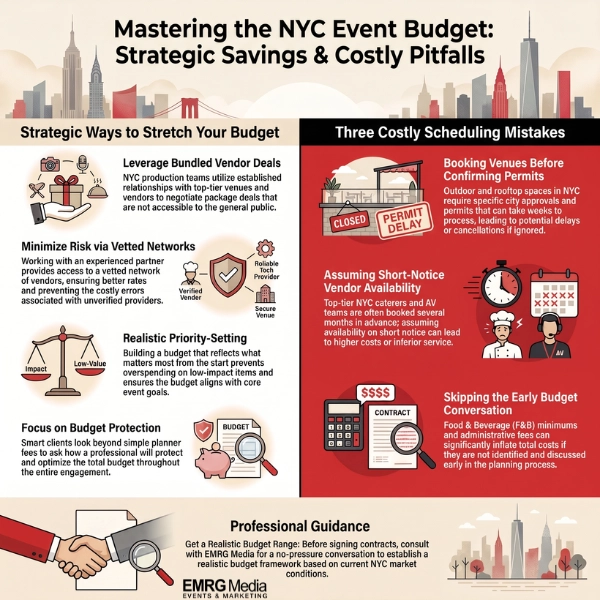
Three Scheduling Mistakes That Cost NYC Hosts Real Money
Even a well-built lead time plan breaks down when these three mistakes creep in:
- Booking a venue before confirming permits: outdoor and rooftop spaces need separate city approvals that can take weeks.
- Assuming vendors are available on short notice: top NYC caterers and AV teams book out event planning months ahead of the actual event date.
- Skipping the budget conversation early: F&B minimums and administrative fees can add significantly to your total cost if discovered late.
Key Takeaways
- Large NYC events 150+ guests need 9–12 months of lead time for the best venues and vendors.
- Mid-scale events run comfortably on a 6–9 month event planning timeline.
- Intimate gatherings under 75 guests can still move in 3–4 months.
- Permits alone can take 30–90 days, so build that into your schedule early.
- Corporate events need extra time upfront for internal budget and brand approvals.
Your Best NYC Event Starts With Today’s Date
The single biggest factor separating a smooth event from a scrambled one isn’t budget, it’s when the planning actually began.
Every week you wait to start your event planning timeline is a week fewer for the best venues, the best vendors, and the best pricing in New York City. Start the clock today, and let the calendar work in your favor instead of against you.
Ready to build a roadmap that actually holds? Follow EMRG Media on Facebook for real-time updates on NYC venue availability and planning tips, or reach out directly to get your event dates mapped out this week.
FAQs About Event Planning Timeline
How far in advance should you plan an event?
Large events need 9–12 months, mid-scale events need 6–9 months, and smaller gatherings can move in 3–4 months. New York’s demand for top venues and vendors makes earlier planning safer than later.
What is a typical event planning timeline?
A typical timeline starts with concept and budget, moves to venue and vendor booking, then permits and logistics, and finishes with final confirmations in the last 4–6 weeks before the event date.
How long does it take to plan a corporate event?
Most corporate events take 6–9 months due to internal budget approvals, brand compliance reviews, and vendor contract negotiations, though experienced planners have executed events in under eight weeks when necessary.