

Why Understanding Wedding Planner Rates Is Essential

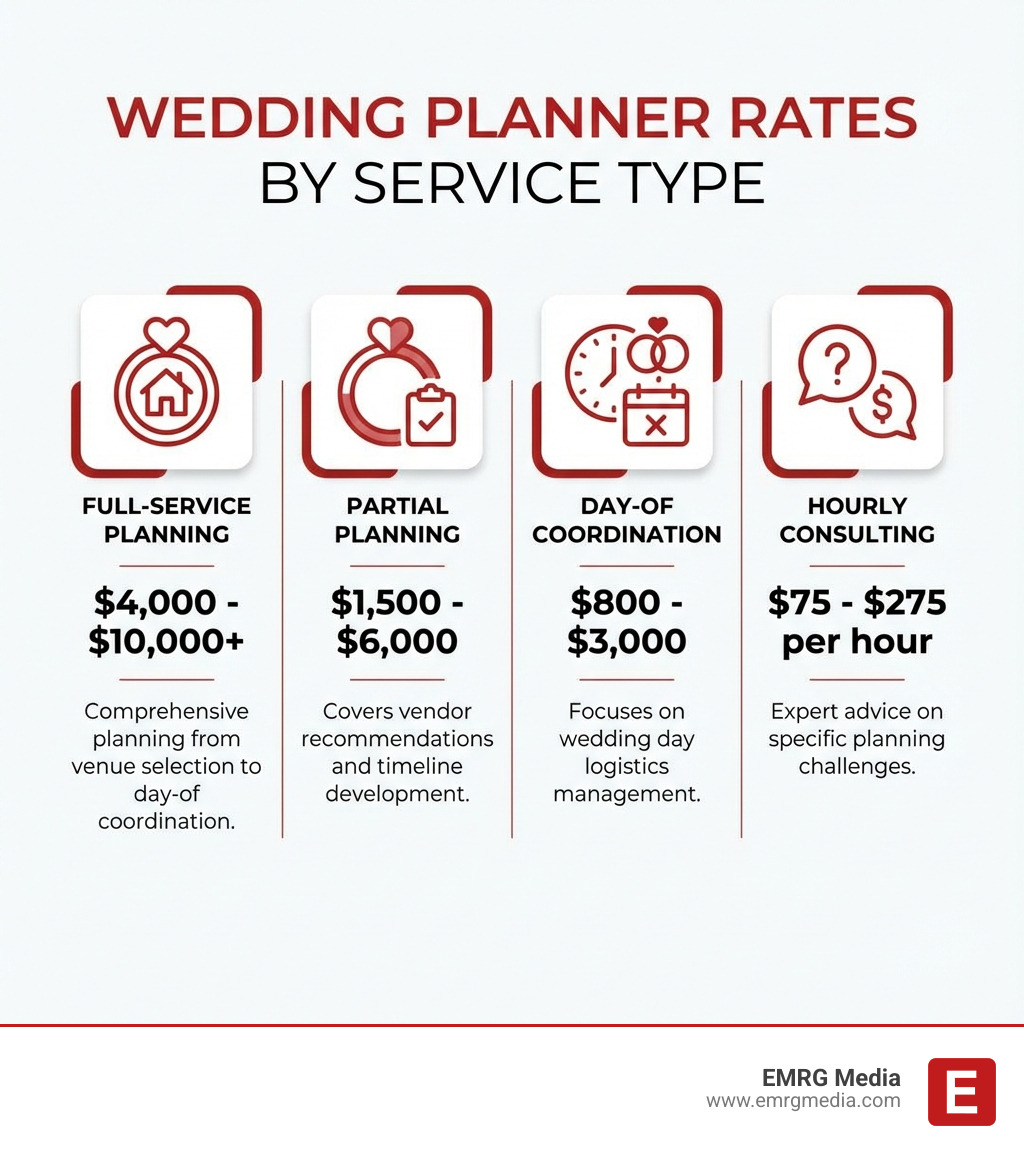
Wedding planner rates typically range from $1,400 to $10,000+ depending on the service level you choose. Here’s what real couples paid in 2024:
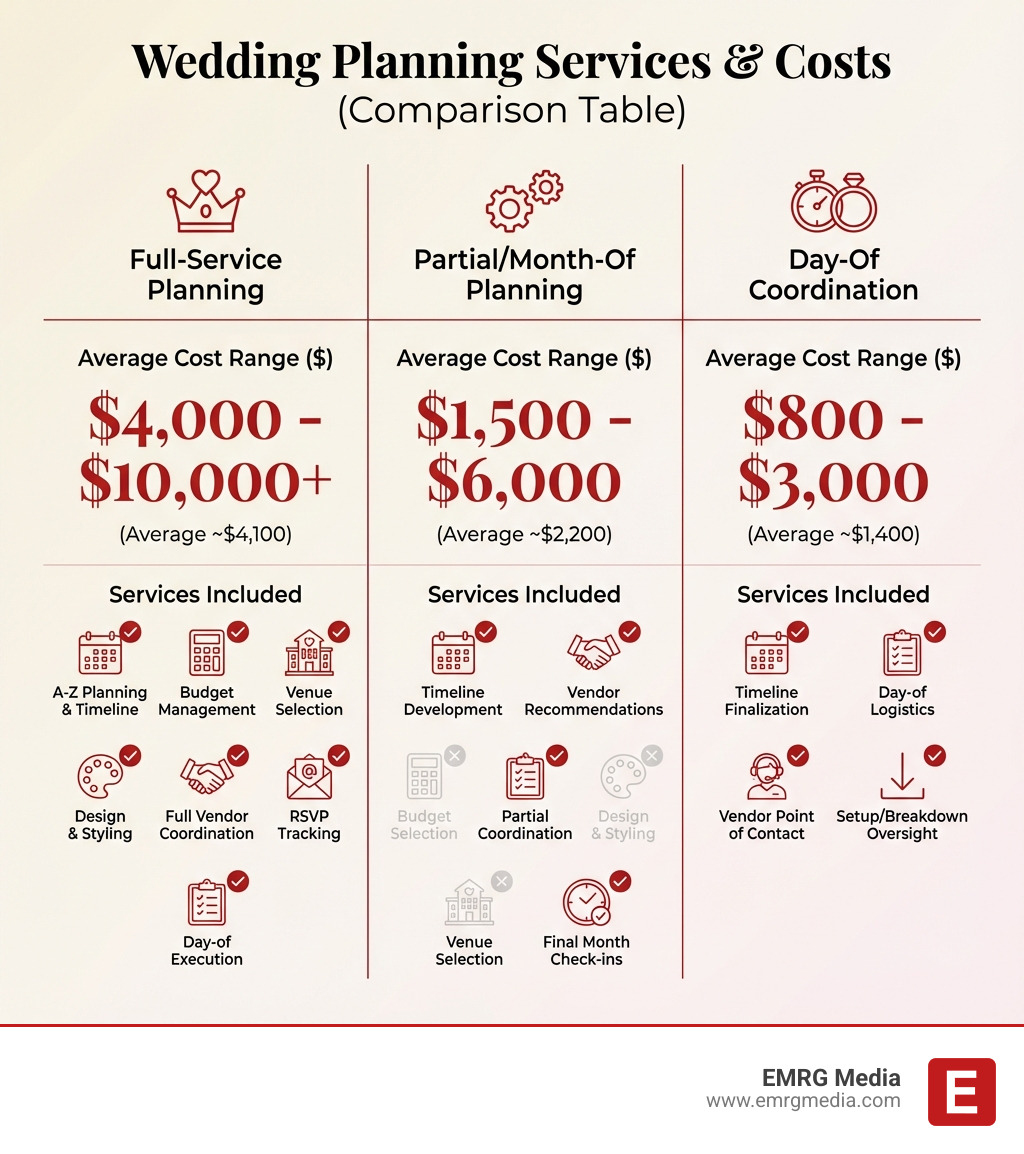
- Full-Service Planning: $4,000-$10,000+ (average $4,100)
- Partial/Month-Of Planning: $1,500-$6,000 (average $2,200)
- Day-Of Coordination: $800-$3,000 (average $1,400)
- Hourly Consulting: $75-$275 per hour
Planning a wedding is thrilling, but it’s also one of the most complex projects many couples will ever manage. Between vendor contracts, timeline coordination, and keeping everyone on the same page, the logistics alone can consume 250 to 400 hours of your time, according to a study by OnePoll. That’s nearly two months of full-time work—on top of your actual job, life, and trying to enjoy being engaged.
The cost of hiring a wedding planner isn’t just another line item in your budget. It’s an investment in peace of mind, professional expertise, and potentially saving money through vendor connections and avoiding costly mistakes. But understanding what you’re actually paying for—and why rates vary so dramatically—can feel like decoding a foreign language.
Some planners charge a flat fee. Others take a percentage of your total budget. Still others bill by the hour. Add in factors like location (a Manhattan planner costs significantly more than one in rural areas), experience level, and the complexity of your vision, and it’s no wonder couples feel overwhelmed when trying to budget for this service.
I’m Jessica Stewart, Vice President of Marketing & Sales at EMRG Media, and I’ve spent over a decade working with top event professionals across the country to understand wedding planner rates and industry pricing trends. Through The Event Planner Expo, I’ve seen what drives planner pricing and how couples can make smart decisions about this investment.
Average Wedding Planner Rates Explained
When we talk about wedding planner rates, it’s crucial to understand that there isn’t a single, fixed price. They vary based on factors from the planner’s experience to the event’s scale. While national averages provide a starting point, they don’t always reflect the reality of planning a wedding in a busy metropolis like New York City.
According to various industry reports, the national average cost of a wedding planner was around $2,100 in 2024, a notable increase from $1,500 in 2019. This upward trend reflects general inflation, increased demand for professional services, and the rising cost of doing business. However, for our clients in NYC, these numbers are often just the tip of the iceberg. In New York City, we see significantly higher rates due to elevated operational costs.
Full-Service Wedding Planner Rates Breakdown
For couples who envision a truly stress-free engagement and a flawlessly executed wedding, full-service planning is the ultimate choice. This comprehensive package means your planner handles virtually every aspect of the wedding, from the initial concept to the final farewell. This all-inclusive approach is ideal for busy professionals, those planning a destination wedding, or couples who simply want to savor the journey without getting bogged down in the minutiae.
The wedding planner rates for full-service packages reflect this extensive involvement. In major metropolitan areas like New York City, you can expect to invest anywhere from $5,000 to $25,000 and up. The average spend for full-service clients last year was around $4,100, but in a high-end market like ours, that can be a starting point. These packages often involve hundreds of hours of work, managing countless vendors, intricate designs, and complex logistics, as we’ll detail further in the services section.
Partial and Month-Of Wedding Planner Rates
Perhaps you’ve already tackled some of the big decisions—the venue is booked, and you have a clear vision for your day—but you need a seasoned professional to help bring it all together. That’s where partial wedding planning or month-of coordination comes in. This hybrid approach offers a middle ground, providing expert guidance and support for specific aspects of your wedding.
Partial planning services typically range from $1,500 to $6,000. This level of service is perfect for couples who enjoy the planning process but need assistance with vendor recommendations, timeline development, design consultation, and ensuring all the pieces fit together seamlessly. Our team at EMRG Media understands that every couple’s needs are unique, and sometimes a targeted approach is exactly what’s required.
Month-of coordination, while often grouped with partial planning, focuses more on the final weeks leading up to the wedding. This service, which typically costs around $2,200 on average (ranging from $1,000 to $8,000), is designed to take the baton from you, finalize vendor details, create the detailed wedding day timeline, and execute the event flawlessly. The Knot Real Weddings Study data shows that month-of coordination is a highly valued service, allowing couples to relax and enjoy their final month of engagement.
Day-Of Coordinator and Hourly Wedding Planner Rates
For the hyper-organized couple who has carefully planned every detail but wants to enjoy their wedding day without managing logistics, a day-of coordinator is an invaluable asset. Despite the name, “day-of” coordination often begins several weeks before the event, allowing the planner to review contracts, confirm vendor arrival times, and create a comprehensive wedding day schedule.
Day-of coordination services typically cost between $800 and $3,000, with an average spend of $1,400. Their primary role is to ensure everything runs smoothly on your wedding day—from setting up decor to managing the timeline and troubleshooting any unexpected issues. They are the calm in the storm, allowing you to be fully present for your celebration.
For those needing specific guidance without committing to a full package, hourly consulting is a flexible option. These fees generally range from $75 to $275 per hour, depending on the planner’s experience and location. It’s a fantastic way to tap into expert knowledge for specific challenges, like reviewing a venue contract, getting vendor recommendations, or fine-tuning your budget. For more information on general event planning pricing, you can check out our event planning price packages.
A Breakdown of Wedding Planner Service Packages
Understanding the different tiers of wedding planner rates goes hand-in-hand with knowing what services each package entails. It’s not just about a price tag; it’s about the scope of support you receive.
Full-Service Planning Services Included
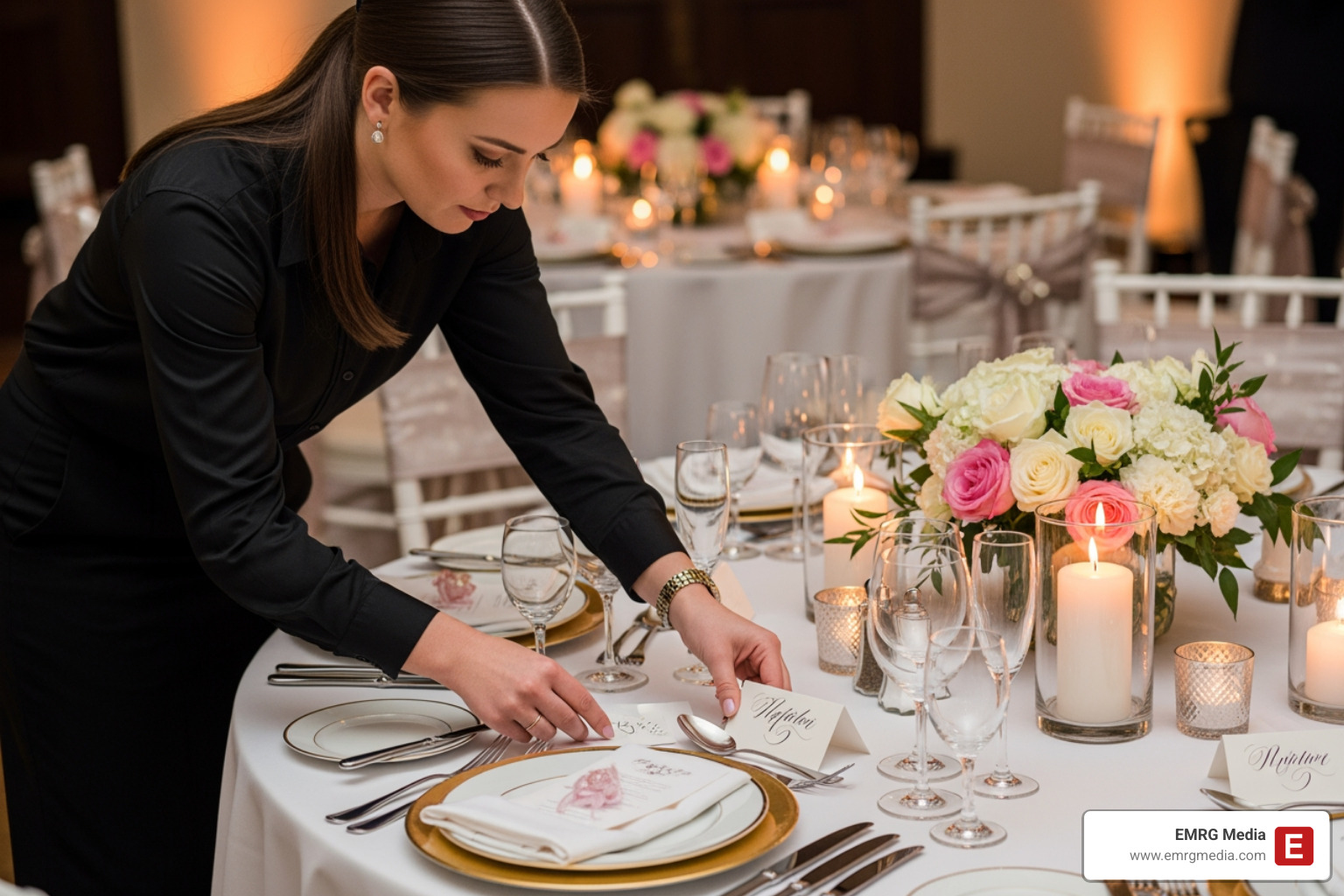
When you opt for full-service planning, you’re essentially hiring a project manager for your wedding, handling everything from the big picture down to the smallest detail. This is where the planner truly becomes your trusted advisor, confidante, and chief problem-solver.
Typically, full-service packages include:
- Budget Creation & Management: Developing a realistic budget and tracking all expenses.
- Venue Scouting & Selection: Researching and coordinating site visits to find the perfect location.
- Vendor Sourcing & Negotiation: Recommending and securing all necessary vendors (caterers, photographers, florists, entertainment, etc.) and often negotiating contracts on your behalf.
- Full Event Design & Styling: Conceptualizing the entire aesthetic, from color palettes to floral arrangements and decor, and overseeing its implementation.
- Guest List Management: Assisting with invitations, RSVPs, and seating charts.
- Timeline Development: Creating a detailed planning timeline and a comprehensive wedding day schedule.
- Unlimited Communication: Providing ongoing support and guidance throughout the entire planning process.
- Logistics Management: Coordinating transportation, accommodations, and all on-site details.
- Rehearsal & Wedding Day Coordination: Ensuring the rehearsal runs smoothly and overseeing every aspect of the wedding day itself.
For a comprehensive list of what a planner typically does, consider that they’ll handle tasks from managing vendor relationships and contract reviews to being the central point of contact for everyone involved. This level of service is particularly beneficial for complex events or if you’re planning a wedding from afar.
Partial Planning Services Overview
Partial planning is a flexible solution for couples who have started the planning process but need professional assistance to steer the more intricate or time-consuming elements. It’s like having a co-pilot who jumps in for the trickiest parts of the flight.
With partial planning, you can typically expect services such as:
- Vendor Recommendations: Access to the planner’s curated list of trusted vendors.
- Timeline Development: Assistance in creating a detailed wedding day timeline and a planning checklist.
- Design Consultation: Guidance on refining your wedding vision and sourcing decor elements.
- Contract Review: Professional review of vendor contracts to ensure clarity and protect your interests.
- Regular Check-in Meetings: Scheduled meetings to discuss progress, address concerns, and keep planning on track.
- Logistical Support: Help with specific logistical challenges or vendor coordination as needed.
This package offers a blend of DIY and professional support, giving you control over the fun parts of planning while offloading the more challenging tasks.
Day-Of or Month-Of Coordinator Responsibilities
Despite the name, “day-of” coordination is far more than just showing up on the wedding day. It’s about bringing together all your hard work and ensuring it culminates in a seamless celebration. Most day-of coordinators begin working with you 4-8 weeks before the wedding.
Their responsibilities typically include:
- Final Vendor Confirmations: Contacting all your chosen vendors to confirm arrival times, services, and logistics.
- Wedding Day Timeline Creation: Developing a detailed minute-by-minute schedule for the entire wedding day.
- On-Site Coordination: Overseeing all setup, managing vendors, directing guests, and troubleshooting any issues on the wedding day.
- Point of Contact: Serving as the main point of contact for all vendors, bridal party members, and guests, so you don’t have to be.
- Emergency Kit: Being prepared with an emergency kit for any unexpected mishaps (a safety pin, stain remover, etc.).
- Managing Transitions: Ensuring smooth transitions between ceremony, cocktail hour, reception, and any other events.
- Payment Distribution: Distributing final payments and tips to vendors.
- Personal Item Collection: Gathering personal items and gifts at the end of the night.
It’s important to understand the distinction between an Event Planner vs. Event Coordinator. A venue coordinator works for the venue and manages venue-specific aspects like catering and setup within their space. A wedding planner or day-of coordinator works for you, coordinating all aspects of your wedding across all vendors, ensuring your vision is executed holistically.
Factors Affecting Wedding Planner Rates
The variation in wedding planner rates isn’t arbitrary; it’s a direct reflection of several key factors that contribute to the complexity, expertise, and demand of the service.
Experience and Reputation
Just like in any profession, experience commands a premium. A seasoned wedding planner with a strong portfolio, years of successful events, and glowing testimonials will naturally charge more than a newer planner building their experience.
- Seasoned Professionals vs. New Planners: Established planners have honed their craft, built extensive industry connections, and developed robust systems. They bring a level of confidence and problem-solving ability that comes only with time. Newer planners, while often enthusiastic and creative, may offer lower rates as they gain experience and build their reputation.
- Portfolio Quality: A planner’s portfolio speaks volumes. High-end, intricately designed weddings require a planner with proven design capabilities and the logistical expertise to execute them.
- Industry Connections: Experienced planners have strong relationships with top-tier vendors. These connections can be invaluable, potentially leading to better service, preferred pricing, or unique offerings for your wedding.
- Certifications: While not universally required, some planners pursue certifications from reputable organizations. These can signal a commitment to professional development and industry best practices.
How Location Influences Wedding Planner Rates
Where you’re getting married plays a massive role in wedding planner rates. Major metropolitan areas, especially New York City, come with a higher cost of living and, consequently, higher operational costs for businesses.
- Major Metropolitan Areas (e.g., NYC): Planners operating in New York City face higher rents, salaries, and general business expenses. This translates to higher fees for their services. An hourly rate for a planner in NYC can be significantly higher than in a smaller town. As noted in industry reports, the average hourly rate for a planner in New York can reach $75 to $250 per hour.
- Travel & Accommodation Fees: If your planner needs to travel a significant distance for your wedding, especially for multi-day events, you may incur additional costs for transportation, accommodation, and per-diems. This factor is relevant even within NYC’s broader metro area if your wedding is outside the immediate city limits. The article “How Much Does a Wedding Planner Actually Cost?” on Brides.com highlights how location impacts planner fees, noting that a planner in NYC can charge significantly more than one in Oaxaca, Mexico.
Wedding Size and Complexity Considerations
The more moving parts your wedding has, the more time and expertise your planner will need to dedicate, directly impacting their rates.
- Multi-Day Events: A wedding that spans multiple days with several events (e.g., welcome party, rehearsal dinner, wedding day, farewell brunch) requires significantly more planning and on-site coordination.
- High Guest Counts: More guests mean more logistics—more seating, more catering, more transportation needs, and more coordination to ensure everyone is comfortable and accounted for.
- Complex Logistics: Weddings with multiple venues, intricate custom installations (like elaborate floral arches or suspended decor), or unique entertainment requests add layers of complexity that require specialized planning.
- Custom Installations: If you dream of a custom dance floor, a grand lighting design, or suspended floral arrangements, these elements require extensive planning, vendor coordination, and often, additional staff, pushing up the planner’s time commitment and, therefore, their fee.
Wedding Planner Fee Structures Revealed
Navigating the financial side of hiring a wedding planner can feel like a puzzle, but understanding how they calculate their fees is key to making an informed decision.
Popular Wedding Planner Pricing Models
Wedding planners typically use a few primary pricing models:
- Flat Fee: This is a single, all-inclusive price for a defined scope of services. It offers predictability and transparency, allowing you to budget effectively. Many full-service and partial planning packages are offered this way. For full coordination, flat fees can range from $3,500 to $10,000+.
- Percentage of Budget (10-20%): Some planners, particularly those in the luxury market or for full-service packages, charge a percentage of your total wedding budget. This often ranges from 10% to 20%, or even 20-25% for high-end events. The rationale here is that a larger budget often implies more vendors, more intricate details, and thus, more work for the planner. For example, if your wedding budget is $100,000, a 15% fee would be $15,000.
- Hourly Rate: Primarily used for consulting services or for very specific, à la carte tasks. As we’ve seen, hourly rates can range from $75 to $275 per hour, especially for high-profile planners in NYC. This is a good option if you need expert advice on a few particular items but plan to handle most of the organization yourself.
- Hybrid Models: Some planners combine these approaches, perhaps a flat fee for core services plus an hourly rate for any work beyond the initial scope, or a percentage-based fee with a minimum flat fee.
Decoding Wedding Planner Proposals
When researching and comparing wedding planners, don’t just look at the bottom line. Dive into the details of their proposals:
- Comparing Quotes: Get detailed quotes from several planners. Don’t be afraid to ask for a breakdown of services included in each package.
- Service Inclusions: What exactly is covered? Does “full-service” truly mean everything, or are there specific tasks that fall outside the scope? Ensure that the proposal clearly outlines what you’re paying for.
- Clarifying the Percentage Base: If a planner charges a percentage, ask if it applies to your entire wedding budget or just specific categories (e.g., excluding venue rental if they weren’t involved in selection).
- Asking the Right Questions:
- How many weddings do you handle per year/month?
- Do you work alone or with a team?
- Will you personally be present on my wedding day?
- What are your communication methods (email, calls, in-person meetings)?
- Can I see a sample contract?
- Do you have experience with weddings of our size, style, and budget?
Clear communication from the outset will prevent misunderstandings and ensure your expectations align with the services provided.
Potential Hidden Costs in Wedding Planner Rates
While most reputable planners are transparent about their fees, it’s wise to be aware of potential additional charges that might not be immediately obvious:
- Travel Fees: Beyond the planner’s local area (e.g., NYC), travel expenses like mileage, flights, and accommodation for destination weddings or events outside the immediate city.
- Assistant Fees: For larger or more complex weddings, a planner may require additional assistants on the wedding day. Clarify if these costs are included or billed separately.
- Rescheduling Fees: In an unpredictable world, rescheduling might become necessary. Many planners, especially since recent global events, have introduced rescheduling fees, typically ranging from 10-50% of the service fee, with 25% being an industry standard for wedding planners. This covers lost revenue and additional administrative work.
- Additional Event Coverage: Does the base package cover the rehearsal dinner, post-wedding brunch, or other satellite events? Often, these are add-ons.
- Overage Hours: If your wedding day extends beyond the contracted hours, or if planning requires significantly more time than initially estimated due to scope changes, planners may charge for overage hours.
- Design Fees: While some planners include design within their package, others may charge a separate “design fee” if you require extensive conceptualization and styling.
Always read your contract thoroughly and ask for clarification on any terms you don’t understand.
The True Value of Hiring a Wedding Planner
After reviewing the various wedding planner rates and service tiers, you might be asking: “Is this investment truly worth it?” We firmly believe the answer is a resounding yes, especially when considering the return on investment (ROI) in terms of both tangible savings and invaluable peace of mind.
Ways a Planner Saves You Money
It might seem counterintuitive to spend money to save money, but a skilled wedding planner often pays for themselves, sometimes multiple times over.
- Vendor Discounts & Connections: Planners have established relationships with a network of trusted vendors. These connections can lead to preferred pricing, exclusive packages, or complimentary upgrades that wouldn’t be available to individual couples. We at EMRG Media, for example, leverage our extensive network to secure the best for our clients.
- Budget Adherence: A planner’s primary role is to keep your budget on track. They know where to splurge and where to save, helping you allocate funds wisely and avoid impulse buys. They can guide you through pricing structures for various services, from wedding florists to photographers and caterers, ensuring you get the best value.
- Avoiding Costly Mistakes: Planning a wedding involves numerous potential pitfalls—missed deadlines, overlooked contract clauses, or hiring unreliable vendors. A planner’s expertise helps you sidestep these expensive errors, saving you from financial headaches and emotional distress.
- Negotiation Expertise: Planners are skilled negotiators. They understand industry pricing and can advocate for you to get the best possible terms and value from vendors.
Time Savings and Reduced Stress Benefits
Beyond the financial savings, the emotional and temporal benefits of hiring a planner are often priceless.
- Reducing Stress: As noted by wedding experts, organizing a wedding can take 250 to 400 hours. This is a significant time commitment that, without professional help, often falls on the couple. A planner absorbs the stress of logistics, vendor management, and problem-solving, allowing you to actually enjoy your engagement.
- Reclaiming Planning Hours: Imagine those 200-300 hours spent on planning being freed up for date nights, hobbies, or simply relaxing. A planner handles the legwork, freeing you up to focus on the fun, creative aspects of your wedding.
- Professional Problem-Solving: When a vendor has a last-minute emergency, or a guest has a special request, your planner is there to handle it discreetly and efficiently. They are the calm in any storm, ensuring your day flows seamlessly.
- Enjoying Your Engagement: This is a precious time in your life. A planner allows you to savor the excitement of getting married without the burden of endless to-do lists and phone calls.
Ideal Timing for Hiring a Wedding Planner
The ideal time to hire a wedding planner depends on the level of service you need:
- Full-Service Planning: The earlier, the better! We recommend hiring a full-service planner 12 to 18 months out from your wedding date. This allows them to be involved from the very beginning, helping with everything from venue selection to budget creation.
- Partial Planning: If you’ve handled some initial steps, bringing in a partial planner 3 to 6 months out is ideal. They can help with vendor recommendations, refining your vision, and ensuring all details are covered as the big day approaches.
- Day-Of Coordination: For day-of coordination, reaching out 4 to 8 weeks out is generally sufficient. This gives them enough time to familiarize themselves with your plans, finalize vendor details, and create a comprehensive timeline.
Hiring a planner is often considered one of the smartest investments you can make for your big day, regardless of your wedding’s size. Even for a smaller wedding, the logistical complexities remain, and a day-of coordinator can be particularly valuable to ensure everything runs smoothly.
Choosing the Best Planner for Your Wedding
Understanding wedding planner rates helps couples make smart choices for their big day. Rates vary from $1,400 for day-of coordination to over $10,000 for full-service planning, influenced by location, experience, and event complexity. In NYC, expect higher costs due to market demands. Hiring a professional saves time, reduces stress, and often cuts expenses through vendor negotiations and mistake avoidance. At EMRG Media, our 25 years of expertise ensure seamless, customized weddings that capture your vision. Whether partial or full support, investing in a planner lets you enjoy the process.
Every great NYC event has a rhythm. The pacing, the flow, the moments that hit just right. EMRG Media knows how to build that energy from the ground up.
Contact EMRG Media and start planning an event that feels effortless and unforgettable.