

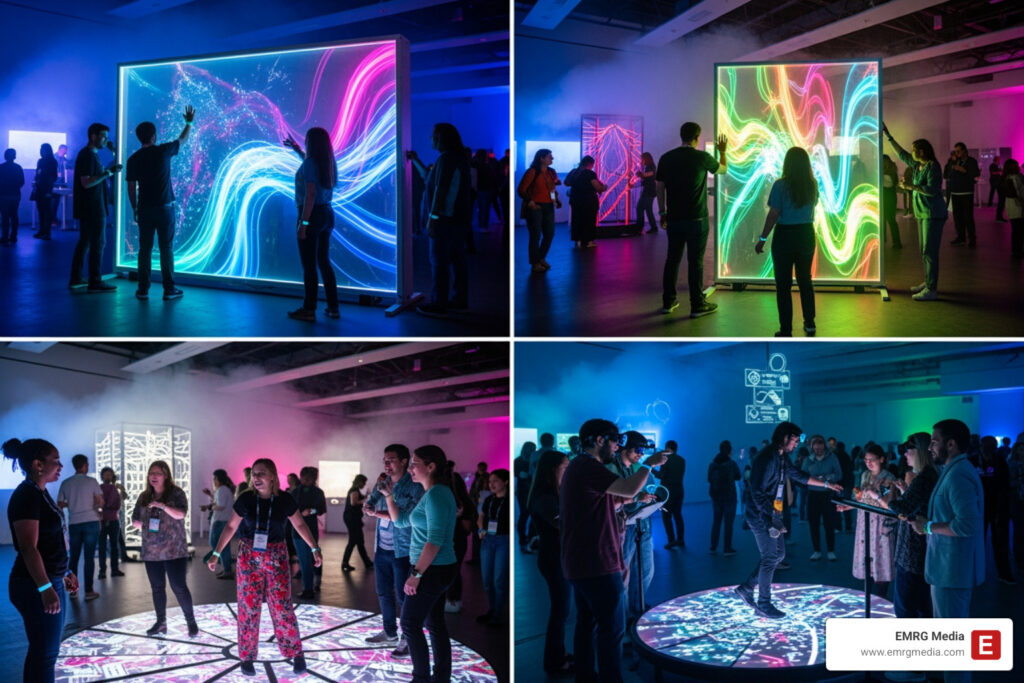

Why Standard Events Fall Short in Today’s World
Experiential event planning is about creating immersive, interactive gatherings that engage attendees on multiple sensory levels, changing passive observers into active participants who connect emotionally with your brand or message.
Here’s what makes experiential events different:
- Two-way interaction – Attendees don’t just watch; they touch, explore, and participate
- Emotional connection – Events create memorable moments that resonate long after they end
- Shareable experiences – Designed to be documented and shared organically on social media
- Brand authenticity – Humanizes your organization through genuine, hands-on engagement
- Measurable impact – Drives business results like increased loyalty, sales, and media reach
Live gatherings now compete with unlimited digital distractions and scarce attention spans. As one industry expert noted, “Today’s audiences look for immersion and interaction, not passive presentations.” The shift is clear: experiential events push boundaries beyond traditional marketing tactics, allowing people to interact with your brand, products, and values in exciting, memorable ways.
Research shows people retain up to 75% from hands-on or multisensory experiences compared to just 5% from passive viewing or listening, according to the Learning Retention Pyramid from the National Training Laboratories.
Whether planning a corporate conference or product launch, the focus shifts from what you’ll do to how people will feel. Experiential event planning crafts these feelings through intentional design and interactive elements, turning attendees into brand ambassadors.
I’m Jessica Stewart, Vice President of Marketing & Sales for EMRG Media and The Event Planner Expo. With over a decade of experience changing B2B conferences for companies like Google and JP Morgan, I specialize in creating unforgettable experiential events that deliver measurable business outcomes.
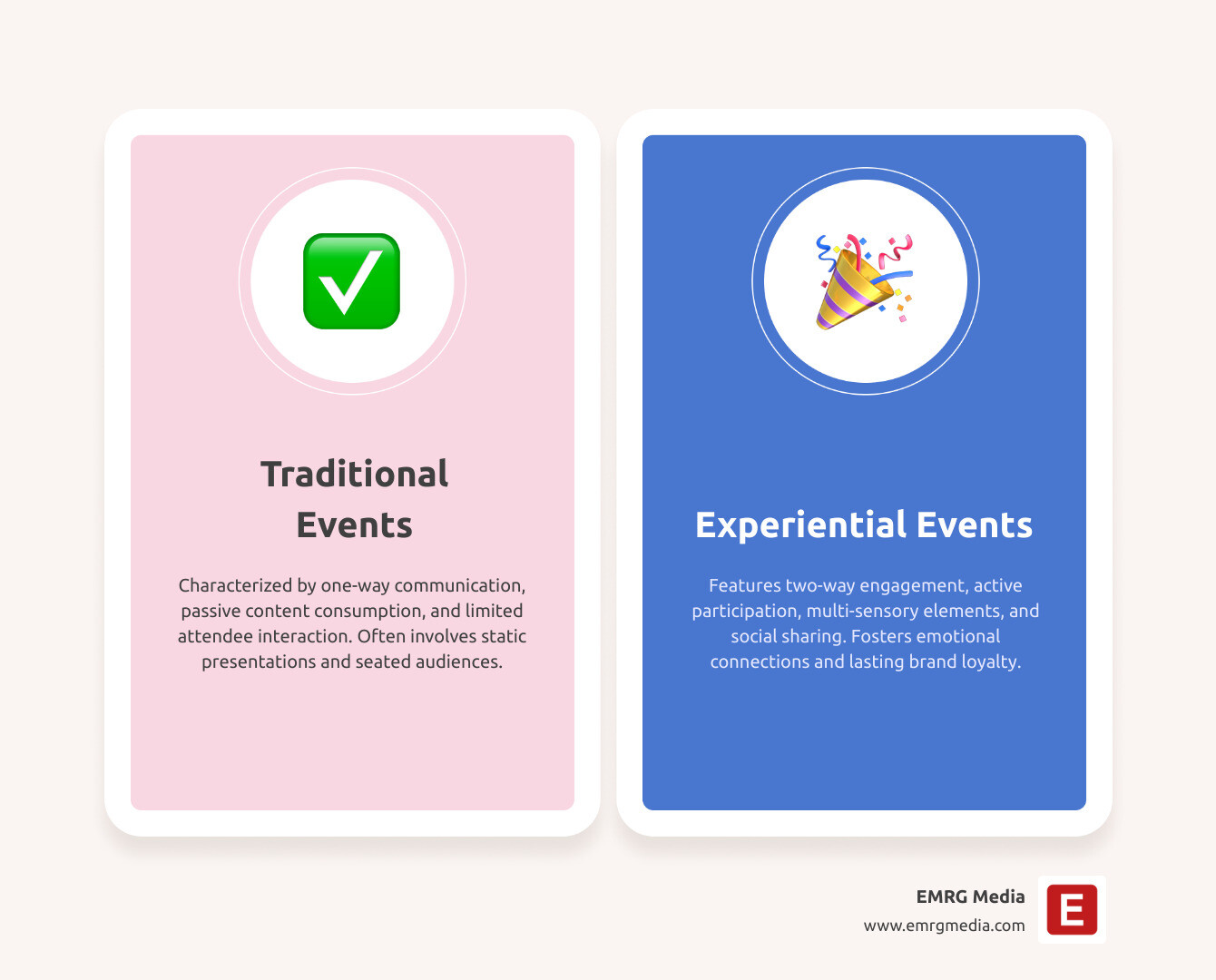
Shifting from Observer to Engager: Defining Experiential Events
At its core, an experiential event is a marketing strategy that turns passive advertising into dynamic, two-way engagements. Unlike traditional marketing, experiential event planning invites your audience to step into your brand’s world, creating an environment where they can actively participate, explore, and form a personal connection.
Traditional marketing tells you about a product; an experiential event lets you try it, feel it, and interact with it. This distinction is crucial, as experiential events evoke genuine emotions, leading to deeper engagement and lasting brand associations. It’s about humanizing your brand and cultivating an authenticity that static ads can’t match.
Our goal is to design experiences that resonate deeply, fostering a bond that turns attendees into advocates. This connection is key to shaping long-term brand perception through thoughtful event design.
Why Experiential Marketing is So Effective
The effectiveness of experiential marketing lies in its ability to turn an audience into active participants. When people are actively involved through hands-on activities or interactive displays, they form a stronger, more personal connection with your brand. This active engagement is a powerful catalyst for building brand recognition and fostering customer loyalty.
Consider the difference: hearing about a cause versus an interactive exhibit that lets you experience its challenges. The latter creates a far more impactful emotional imprint. Studies show people retain more from hands-on experiences than passive listening, which is why we create scenarios where attendees are doing, learning, and feeling.
Immersive experiences create positive brand associations by engaging multiple senses and encouraging interaction. This forges emotional connections, humanizes your brand, and cultivates authenticity, leading to increased brand recall and loyalty. As one expert put it, “Experiential events are powerful because they build emotional connections. Unlike passive experiences, they turn attendees into participants.” This deeper connection creates an enduring brand relationship. You can learn more about how hands-on experiences boost retention in resources like The Power of Moments by Chip and Dan Heath.
The Core Goal: Creating a Lasting Impression
In experiential event planning, our core goal extends beyond counting attendees. We aim to create a lasting impression that generates organic buzz and transforms your audience into enthusiastic brand ambassadors. This means designing events so unique and engaging that people can’t help but talk about them.
When attendees are genuinely moved or excited, they’re eager to share their experience. This user-generated content acts as powerful social proof, amplifying your message. We focus on creating unforgettable moments that keep your brand top-of-mind.
These events let brands showcase their unique qualities and create a distinct identity. Through immersive gatherings, your brand’s personality and values shine through tangibly. This direct, authentic engagement cultivates a loyal following, turning attendees into passionate advocates who have truly experienced your brand.
Building Blocks of an Effective Experiential Event
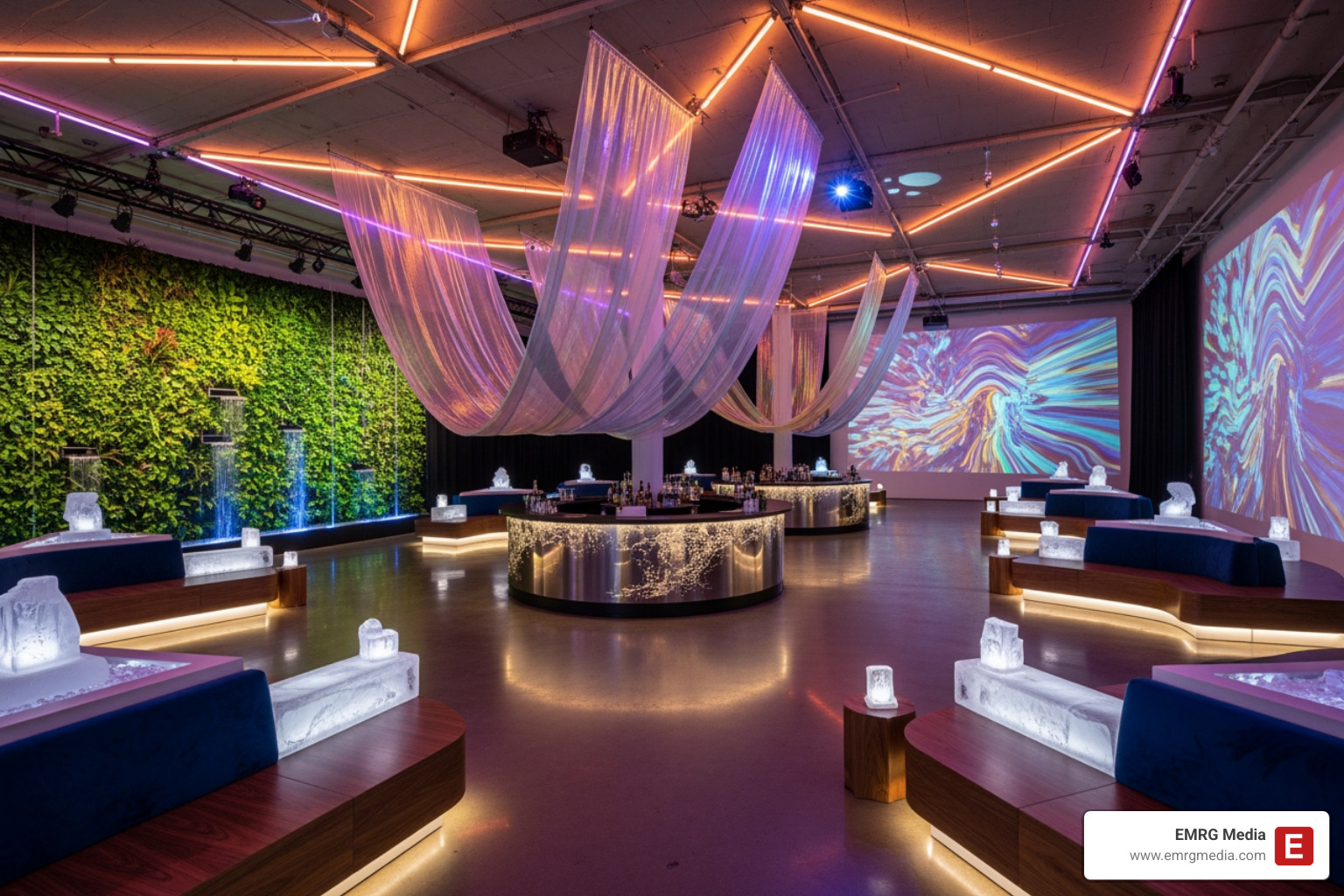
A successful experiential event is a carefully crafted journey designed to engage, excite, and leave a lasting mark. It’s about “world-building” for your brand, where every detail contributes to a cohesive and memorable narrative.
Engaging All Five Senses
Sensory engagement is a potent tool in experiential event planning. Appealing to sight, sound, smell, taste, and touch creates immersive environments that forge deeper connections and improve memory retention. A well-designed event activates all senses, making the experience profoundly impactful.
- Sight: We use lighting, color, and visual storytelling to set the mood. Color choices play a key role in event branding for evoking specific emotions, while projection mapping and unique visuals can transform a space.
- Sound: Curated soundtracks, live performances, or subtle ambient sounds can guide attendees and intensify emotional responses.
- Smell: Strategic use of scents, from fresh coffee to custom fragrances, creates a powerful, subconscious connection to the brand.
- Taste: Interactive culinary experiences, custom cocktails, or branded food items turn a simple refreshment into a memorable narrative element.
- Touch and Interaction: Hands-on activities, textured surfaces, and interactive installations encourage physical engagement, turning attendees into active participants.
Weaving these sensory elements together creates a cohesive atmosphere where every detail reinforces your brand’s story for an unforgettable experience.
Key Elements of Immersive Design
Immersive design is the heart of experiential event planning, crafting a narrative attendees can step into. Key elements for success include:
- Storytelling: Experiential event design immerses attendees in a brand-aligned story. We consider the emotional response we want to create and the message we’re trying to tell. This narrative guides all design decisions.
- Interactivity: This is where attendees become participants. We integrate hands-on activities, workshops, and gamified challenges. Examples include Adobe MAX’s Creative Park for testing software or Salesforce’s TrailblazerDX with its interactive challenges.
- Personalization: Tailoring the experience to individual attendees makes it feel incredibly special. For example, Qualtrics X4’s Dream Team fulfilled over 2,000 attendee requests to improve their experience, showing a powerful commitment to personalized service.
- Shareable Moments: We design events with “Instagrammable” moments in mind. Unique backdrops and interactive art encourage attendees to capture and share their experiences, extending your event’s reach organically.
For more insights into crafting these engaging narratives, our Experiential Marketing Guide offers a deeper dive. Here are some creative experiential event ideas:
- Pop-up Shops: Immersive retail experiences that bring a brand’s world to life.
- Gamified Challenges: Games and competitions that bring low-cost energy and excitement.
- Immersive Art Installations: Interactive art installations that transform spaces, like the Field of Light.
- VR/AR Zones: VR simulations or AR scavenger hunts that merge digital and physical worlds.
- Themed Festivals: Lifestyle festivals built around a brand value, like Lululemon’s Sweatlife Festival.
- Innovation Labs: Hands-on labs for exploring new tech, like those at IBM Think or LinkedIn Talent Connect.
- Unique Activations: Boundary-pushing events like IKEA’s in-store sleepover create unforgettable moments.
Amplifying Your Reach with Social Media
The publicity advantages of experiential events are immense, especially with social media. We design events to be captured and shared.
User-generated content (UGC) is a goldmine for organic reach. When guests share their excitement, they become authentic voices for your message. We encourage this by:
- Creating unique event hashtags: This makes it easy to track conversations and for attendees to share.
- Designing “Instagrammable” moments: Visually stunning installations and unique backdrops naturally invite photo and video sharing.
- Implementing social walls: Displaying a real-time feed of posts with your event hashtag turns spectators into participants. This dynamic display of buzz boosts engagement as attendees share content and interact with the wall.
- Influencer Showcases: Inviting relevant influencers to experience and share your event can amplify your reach significantly, generating excitement and FOMO (Fear Of Missing Out).
These strategies generate organic publicity and extend your brand’s story far beyond the event’s physical space. For more strategies on leveraging brand activations, check out our Brand Activation Guide.
Step-by-Step Guide to Experiential Event Planning

Planning an experiential event isn’t just about booking a venue and setting up decorations; it’s about crafting an entire experience from the ground up with bespoke event solutions that ensure every detail aligns with your goals.
Step 1: Establishing Strategy and Objectives
The foundation of any successful experiential event is a clear strategy and well-defined goals. Before we dive into creative concepts, we need to understand the “why” behind your event.
- Defining Clear Objectives: What do you want to achieve? Is it to launch a new product, build brand loyalty, generate leads, or improve brand perception? Your objectives should follow the SMART (Specific, Measurable, Achievable, Relevant, and Time-Bound) criteria for your event. For example, “Increase social media engagement by 20% during the event” is a SMART goal.
- Understanding Your Target Audience: Who are we trying to reach? What are their interests, motivations, and pain points? What kind of experience would resonate most with them? Including your target audience in the planning process, even through surveys or focus groups, can provide invaluable insights.
- Aligning with Marketing Goals: Your experiential event should not exist in a vacuum. It needs to integrate seamlessly with your overall marketing strategy and brand identity. This ensures consistency and maximizes the impact of your efforts.
- Establishing a Budget: Experiential events can be resource-intensive, so a realistic budget is crucial from the outset. This will guide creative decisions and help prioritize elements that deliver the most impact within financial constraints.
Step 2: Developing Concepts and Designs
Once the strategic groundwork is laid, we move into the exciting phase of concept and creative design. This is where we bring your brand’s story to life.
- Brainstorming Creative Concepts: This involves thinking outside the box and embracing innovative formats. We consider the emotional response we want to evoke and the story we want to tell.
- Developing a Cohesive Theme: A strong theme acts as the blueprint for all design elements. It ensures consistency across all touchpoints—from signage and menus to lighting and decor. We ensure this theme aligns with your unique value proposition, making the event truly distinct. For inspiration, explore 5 Fully Immersive Themes for Your Next Social Event or Celebration.
- Mapping the Attendee Journey: We carefully map out the entire attendee experience, from pre-event communications to their arrival, navigation through the space, interactions, and post-event follow-up. Every touchpoint is an opportunity to reinforce the brand message and create delight.
- Designing a Functional and Aesthetic Space: This involves changing the venue into an immersive environment. We consider elements like:
- Layout: How will attendees move through the space? We often use a “zoned” approach to manage large venues, creating themed quadrants with distinct lighting, colors, and activities. This helps scale down massive spaces to support intimate interactions and makes navigation intuitive.
- Decor and Furnishings: Every item is chosen to improve the theme and atmosphere.
- Sensory Elements: Integrating sight, sound, smell, taste, and touch to create a truly immersive experience.
Step 3: Evaluating Outcomes and ROI
Measuring the success and return on investment (ROI) of experiential events goes beyond simple attendance numbers. We focus on metrics that reflect the depth of engagement and the lasting impact on your audience.
| Metric Type | Traditional Event Metrics | Experiential Event Metrics |
|---|---|---|
| Attendance | Total number of attendees | Quality of attendees; Engagement rate (interaction points) |
| Leads | Number of business cards collected | Qualified leads; Conversion rates from engaged attendees |
| Cost Analysis | Budget vs. actual spend | Cost per engagement; ROI from brand lift and loyalty |
| Feedback | Post-event surveys (satisfaction) | Sentiment analysis (social media); Emotional connection scores |
| Reach | Direct invitations, PR mentions | Social media mentions, shares, likes; User-generated content (UGC) reach |
| Sales | Direct sales at event | Sales lift post-event; Brand recall; Customer loyalty metrics |
Tracking these key performance indicators (KPIs) allows us to understand what worked, what could be improved, and the true impact of your investment. This includes:
- Social Media Engagement: Monitoring hashtags, mentions, and the reach of user-generated content.
- Sentiment Analysis: Gauging the overall mood and perception of your brand during and after the event.
- Brand Recall and Loyalty: Post-event surveys or follow-up campaigns can measure how well attendees remember your brand and their likelihood of continued engagement.
- Sales Lift and Lead Quality: Did the event translate into tangible business results?
- Media Value: The earned media generated through organic social sharing and press coverage.
Analyzing this data for continuous improvement is vital, ensuring that each subsequent event is even more impactful and aligned with your objectives.
Powering the Experience: The Role of Technology
Technology is no longer just a supporting act for events; it’s a star player in enhancing the experiential journey. From creating fantastical environments to enabling seamless interaction, tech is integral to modern experiential event planning.
Boosting Immersion Using Advanced Tech
Cutting-edge technology allows us to push the boundaries of immersion, creating truly unforgettable moments:
- Augmented Reality (AR) Scavenger Hunts: AR overlays digital information onto the real world, turning a simple venue into an interactive playground. Attendees can use their phones to find hidden clues, open up content, or interact with virtual brand elements.
- Virtual Reality (VR) Simulations: VR transports attendees to entirely new worlds. Microsoft Ignite, for example, introduced mixed reality with VR experiences, allowing attendees to explore Microsoft technologies virtually and even see keynote speakers as 3D holograms. This brings complex concepts to life tangibly and memorably.
- Projection Mapping: This technique transforms ordinary surfaces into dynamic visual displays, creating stunning backdrops and immersive environments. It can turn an entire room into a brand narrative, as seen with product launches using projection-mapped walls.
- Interactive Installations: Large touchscreens, motion-sensor displays, and smart kiosks offer engaging ways for attendees to interact with content, products, or even create their own branded experiences, like Dell Technologies World where attendees could turn themselves into video advertisements.
These technological integrations not only captivate audiences but also provide unique opportunities for data collection and personalized interactions. Our expertise in Revolutionizing Event Experiences with Immersive Technology ensures we leverage the right tools for your event.
Looking Ahead: Virtual and Hybrid Approaches in Experiential Planning
The landscape of events has evolved, and experiential event planning has adapted beautifully to virtual and hybrid formats. We’ve learned that immersive experiences aren’t confined to physical spaces.
- Adapting for Virtual Audiences: Experiential events can thrive in virtual spaces. Think digital concerts, virtual shopping trips, or product launches within the metaverse. These branded events can be incredibly impactful, offering global reach and accessibility that traditional in-person events cannot.
- Creating Engaging Online Experiences: Beyond simple webinars, we design virtual experiences with interactive elements, gamification, and opportunities for real-time engagement. This might include virtual photo booths, live polls, or interactive Q&A sessions.
- Metaverse Events: The metaverse offers a new frontier for experiential events, providing truly immersive digital environments where attendees can interact with brands and each other in novel ways.
- Ensuring Seamless Integration: For hybrid events, the challenge—and opportunity—lies in creating a cohesive, engaging experience for both in-person and virtual attendees. This requires careful planning to ensure content, interaction, and branding are consistent across both formats. The good news is that hybrid events offer significant benefits: a remarkable 86% of organizers see positive ROI for their hybrid events within seven months, proving their effectiveness in boosting accessibility, diversifying audiences, and expanding reach.
Overcoming Hurdles in Experiential Event Execution
While the benefits of experiential event planning are undeniable, it’s important to acknowledge and strategically steer the potential downsides and challenges. The very nature of creating immersive, interactive experiences can introduce complexities that require careful management.
Frequent Challenges and Prevention Strategies
- Resource-Intensive Nature (Time, Money): Experiential events often demand a larger investment of time and financial resources compared to traditional events. They require more intricate planning, custom fabrication, and specialized technology.
- Mitigation: Start with a clear budget and prioritize high-impact elements that align directly with your objectives. Don’t try to do everything; focus on a few truly memorable experiences.
- Increased Planning Complexity: The interactive and multi-sensory nature means more moving parts, diverse vendor coordination, and a higher potential for logistical challenges.
- Mitigation: Break down the event into manageable zones or phases. Use detailed project management tools and assign clear ownership for each element.
- Potential for Technical Failures: If your event is heavily reliant on technology (AR, VR, projection mapping), technical glitches can quickly derail the experience.
- Mitigation: Thoroughly test all technology well in advance. Have backup equipment, redundant systems, and on-site technical support readily available.
- Managing Logistics and Crowd Flow: Large-scale interactive events can lead to congestion, long lines, or attendees getting lost.
- Mitigation: Design the event layout with clear pathways, intuitive signage, and dedicated staff to guide attendees. Use a zoned approach to distribute crowds and create distinct areas of interest.
Vital Factors for Planning and Risk Management
Mitigating risks in experiential event planning requires a proactive and comprehensive approach. We believe in preparing for every eventuality to ensure a smooth and successful experience.
- Contingency Planning: Always have a Plan B (and C!). This includes weather contingency for outdoor elements, alternative activities if a key component fails, and emergency protocols.
- Having Backup Equipment and Personnel: For tech-heavy events, this means backup projectors, additional VR headsets, and even a generator for power outages. For staff, ensure you have trained backup personnel, especially for roles requiring specialized skills.
- Thorough Vendor Vetting: Partner with experienced, reliable vendors who have a proven track record in experiential events. Ask for references, review their portfolios, and ensure clear contracts are in place detailing their responsibilities and contingency plans.
- Clear Communication Channels: Establish robust communication protocols among your team, vendors, and venue staff. Real-time communication during the event is crucial for quickly addressing any issues.
- Prioritizing Attendee Safety and Comfort: This is paramount. Ensure all installations are secure, pathways are clear, and emergency exits are well-marked. Consider providing quiet spaces for attendees who might feel overwhelmed by sensory input. Qualtrics X4’s Dream Team, for example, demonstrated exceptional attendee care by fulfilling over 2,000 requests, including things like a birthday cake or prescription glasses, highlighting the importance of attendee comfort and satisfaction.
Frequently Asked Questions about Experiential Event Planning
What distinguishes experiential event design from traditional event decoration?
Event design is about crafting a multi-sensory journey and narrative, while decoration is focused on aesthetics. Design integrates flow, interaction, and emotion to achieve a specific goal, making the attendee a part of the story. It considers how people will feel and act within the space, rather than just how the space looks. It’s about creating an immersive environment that aligns with a brand’s message, encouraging active participation and emotional connection.
How can small businesses with limited budgets implement experiential marketing?
Small businesses can absolutely leverage experiential marketing with creativity over cost. Focus on a single, high-impact moment that is authentic to your brand. Create a unique, shareable photo opportunity, a hands-on product demo station, or a small-scale pop-up that offers a taste of your brand’s unique offering. Leverage partnerships, user-generated content, and social media to amplify your reach. The goal is to spark curiosity and create a memorable, shareable interaction, even on a modest budget.
What is the first step to take when planning an experiential event?
The first step is to clearly define your “why.” What is the primary goal of the event? Is it to increase brand loyalty, launch a product, or generate social media buzz? Your objective will guide every subsequent decision in the planning process, from concept development and audience targeting to budget allocation and measurement. Without a clear “why,” your event risks being a fun but ultimately aimless gathering.
Conclusion: Create an Unforgettable Experience
In experiential event planning, the magic lies in turning ordinary gatherings into immersive journeys that spark emotion and loyalty. By blending sensory elements, interactive design, and innovative tech, brands can create moments that linger long after the lights dim. At EMRG Media, we specialize in bespoke event solutions that align with your goals, whether for corporate activations or luxury celebrations in NYC. Our 25+ years of expertise ensure seamless execution, from hybrid setups to on-site support, delivering measurable impact and unforgettable connections. Ready to elevate your next event?
Every great NYC event has a rhythm. The pacing, the flow, the moments that hit just right. EMRG Media knows how to build that energy from the ground up.
Contact EMRG Media and start planning an event that feels effortless and unforgettable.
