EMRG Media guide on event vendor insurance to collect every COI certificate before your Q4 NYC event

Collect Every Certificate Before Your Q4 NYC Event

Midtown Manhattan hotel ballrooms run back-to-back holiday parties every November and December, often with a two-hour turnover window between one company’s cocktail reception and the next client’s dinner. When a caterer’s van slides on black ice outside a loading dock on Sixth Avenue, or an AV rigger drops a truss during a rushed load-in, the venue’s first question isn’t “what happened”, it’s “who’s insured.”

That’s why event vendor insurance verification is the one Q4 planning task that cannot slip to the week of your event.

At minimum, every vendor touching your New York event, caterer, AV crew, florist, DJ, security staff, needs active General Liability coverage on file, and most Manhattan venues won’t approve a load-in without proof of it.

Collecting and verifying event vendor insurance from every single vendor, not just your headline caterer, is what actually protects your company when the room is full of clients and executives watching how your brand handles the night.

Why Q4 Raises the Stakes for Event Vendor Insurance in NYC

Q4 compresses New York’s entire event calendar into eight weeks. Venues in Midtown and the Flatiron District book three to four events per day during December, which means freight elevators, loading docks, and vendor check-in windows get tighter with every passing week.

A vendor who shows up without current insurance documentation doesn’t just risk their own liability; they can hold up your load-in entirely while building management sorts out the paperwork on-site. Winter weather adds another layer: icy sidewalks outside a Williamsburg loft or a delayed delivery truck on the West Side Highway both increase the odds of an incident happening during your event window.

Planners who build event vendor insurance verification into their event planning and management process early, not the week before, avoid the Q4 scramble entirely.

What Every Vendor Certificate Must Show Before Load-In

A certificate isn’t just a PDF a vendor emails you the day before. It needs specific coverage types, dollar amounts, and language naming the right parties before it protects anyone.

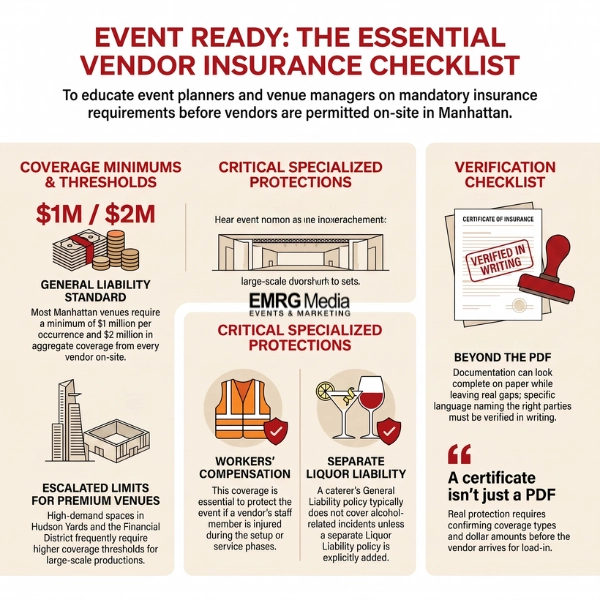
  • General Liability minimums: Most Manhattan venues require at least $1 million per occurrence and $2 million in aggregate coverage from every vendor on-site.
  • Higher thresholds for large venues: High-demand spaces in Hudson Yards and the Financial District frequently push requirements higher for large-scale productions.
  • Workers’ Compensation: Protects your event if a vendor’s staff member is injured during setup or service.
Infographic checklist detailing event vendor insurance requirements like general liability for NYC venues
  • Liquor Liability: A separate policy entirely, a caterer’s General Liability typically won’t cover alcohol-related incidents unless it’s explicitly added.

Without confirming these details in writing, event vendor insurance documentation can look complete on paper while leaving real gaps underneath.

Building Your Vendor-by-Vendor Verification List

Every vendor category on your event carries a different risk profile, which means a single blanket insurance requirement rarely covers the full picture. Here’s what to confirm for each:

  • Caterers: General Liability, Workers’ Comp, and confirmation of caterer insurance requirements tied to alcohol service if they’re pouring drinks.
  • AV and production crews: Equipment coverage plus AV vendor liability for rigging, staging, and any elevated work.
  • Florists and decor vendors: General Liability covering installation work, especially for ladder or scaffold use in tall venue spaces.
  • Transportation and valet services: Commercial auto insurance in addition to standard liability.
  • Entertainment and talent: Liability coverage for performers, plus equipment coverage for any gear they bring on-site.
  • Security staffing: Liability coverage specific to crowd management and access control.

Managing this across a dozen vendors is genuinely time-consuming, especially during Q4 crunch. If your team is already stretched thin, EMRG Media’s catering food service coordination team can step in to build and manage your food and beverage vendor verification checklist before your calendar fills up.

The Additional Insured Clause Most Planners Miss

A vendor can carry a perfectly valid policy and still leave your venue exposed if the certificate doesn’t name the right additional insured parties. Most Manhattan and Brooklyn venues require the building owner, the venue operator, and sometimes the event host to all appear on the vendor’s policy as additional insured for vendors before access is granted.

This single clause is the most commonly missed detail in event vendor insurance collection. A caterer’s certificate might show $2 million in coverage, but if it doesn’t name your venue specifically, the policy may not respond to a claim arising from your event.

Timeline: When to Collect Certificates Before Your Event Date

COI requirements for venues typically specify a filing deadline separate from your general event timeline, and missing it can delay load-in approval entirely. Build your collection schedule around these general benchmarks:

  • 8 to 10 weeks out: Confirm each venue’s specific COI requirements and additional insured language.
  • 4 to 6 weeks out: Request certificates from every contracted vendor, not just primary ones.
  • 2 to 3 weeks out: Verify coverage amounts, expiration dates, and additional insured names against venue requirements.
  • 7 to 10 days out: File confirmed certificates with building management and resolve any last-minute gaps.

A subcontractor insurance checklist matters here too, a caterer’s approved policy doesn’t automatically extend to a subcontracted rental company or a last-minute staffing agency they bring in.

Full NYC event compliance requires this level of documentation across every vendor category, and our team tracks it against each venue’s specific filing deadlines so nothing reaches event week unresolved.

Don’t wait until Q4 crunch time to find a coverage gap. Reach out to EMRG Media now and let our team build your vendor verification checklist before your holiday event calendar fills up.

Key Takeaways

The Real Protection Isn’t the Policy, It’s the Verification

Having a stack of certificates on file means nothing if no one checked the coverage amounts, the expiration dates, or the additional insured language against what your venue actually requires. Event vendor insurance only protects your event when every certificate has been reviewed line by line, well before your vendors arrive on-site.

Q4’s compressed calendar makes this verification work harder to fit in, which is exactly why it needs to start earlier, not later. A single overlooked certificate can turn a flawless corporate holiday party into a liability conversation nobody wanted to have.

Ready to lock down your vendor documentation before your next NYC event? Visit EMRG Media to see how our full-service team builds insurance verification into every phase of your planning timeline, so your Q4 event runs without a single compliance surprise.

Further Reading on Commercial Insurance

Want to learn more about the legal definitions of General Liability and exactly what these policies protect? Read the Insurance Information Institute’s Guide to Understanding Business Liability Insurance for a comprehensive breakdown of commercial coverage. 

EMRG Media event planning banner ensuring flawless events with proper event vendor insurance and service

FAQs About Event Vendor Insurance

What insurance should I require from event vendors?

Require General Liability coverage at minimum $1 million per occurrence and $2 million aggregate, plus Workers’ Compensation for staffed vendors. Caterers serving alcohol and AV crews doing rigging work need additional coverage specific to those risks.

A Certificate of Insurance is proof of a vendor’s active coverage. It should show policy type, coverage limits, expiration date, and the venue or event host listed as additional insured, not just the vendor’s own business name.

Request certificates 4 to 6 weeks before your event date, with final verification completed 7 to 10 days out. Many NYC venues set their own filing deadlines separately, so confirm requirements early in your planning timeline.