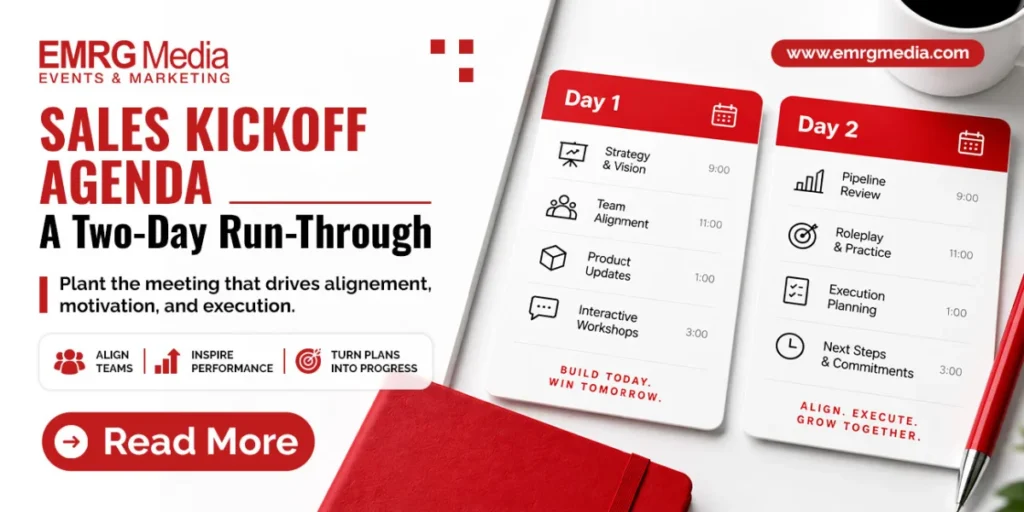

Building a sales kickoff agenda that actually holds together for two full days is harder than it looks, especially in New York City, where January and February book solid across every venue type sales teams tend to want. Most companies underestimate how much dead air creeps into a schedule once travel delays, slow breakfasts, and AV setup eat into the morning.
This guide walks through an hour-by-hour framework you can adapt, along with a realistic look at what each block actually requires to run smoothly.
Why an NYC Sales Kickoff Needs a Tighter Schedule Than You Think
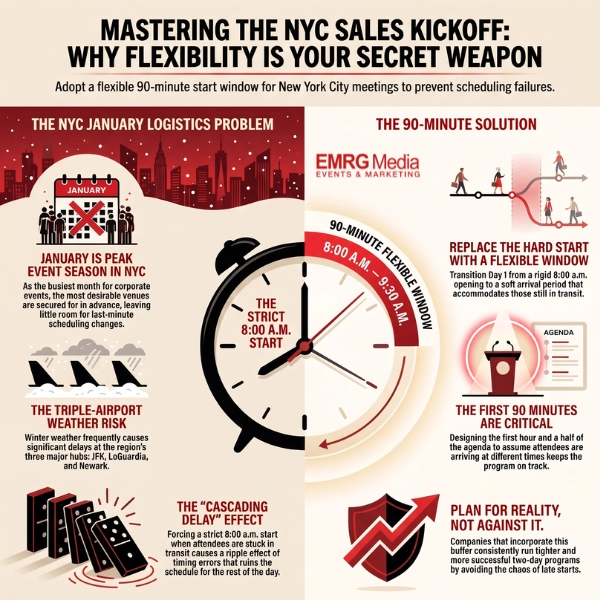
January is the busiest month for corporate events in New York, which means the venues sales leaders want most are also the hardest to secure on short notice. Add winter weather delays at JFK, LaGuardia, and Newark, and a Day 1 sales kickoff agenda built around a strict 8:00 a.m. start is asking for trouble.
A sales kickoff meeting in this city works better when the first 90 minutes assume some attendees are still in transit. Companies that plan around this reality, rather than against it, consistently run tighter two-day programs.
That single adjustment, a flexible arrival window instead of a hard start time, prevents the cascading delays that derail an otherwise well-built schedule.
Day One: Setting the Tone Before Lunch
8:00 – 9:00 a.m. Registration & Breakfast: Build in slack here. Flights delayed by winter weather are common enough that a hard 8:00 a.m. keynote start almost always means an awkward late seating.
9:00 – 9:45 a.m. Opening Keynote: This sets the theme for the two days and should land on one or two numbers the entire org is rallying around, not five.
9:45 – 11:00 a.m. Main Sales Kickoff Presentation: Typically covering the year ahead: territory changes, quota structure, and product roadmap. This is the single longest block of Day 1 and the one most likely to run over, so build a 15-minute cushion after it rather than scheduling the next session immediately.
11:15 a.m. – 12:30 p.m. Cross-Functional Alignment: Marketing, product, and customer success each get a short slot to explain what is changing on their side. Twenty minutes per team, no more.
Event Pro Tip: Standing up in a room this size for a full day of general sessions is where most planning teams get stuck. Full-service Corporate Events support covers venue sourcing, staging, and day-of coordination so internal teams are not also running logistics between sessions.
Day One Afternoon: Breakouts, Training, and the First Real Work
12:30 – 1:30 p.m. Lunch: Keep it in the same building or floor. A separate lunch venue in Midtown Manhattan traffic can quietly cost 45 minutes.
1:30 – 3:30 p.m. Role-Based Breakouts: This is where sales kickoff training actually happens: breakout sessions by role, region, or product line. Groups of 20 to 40 work best in separate rooms rather than one large space split by table, since overlapping audio between groups becomes a real problem past 60 feet of shared floor.
3:30 – 3:45 p.m. Break: Do not skip it. A room that has been seated since 8:00 a.m. needs a real reset before the next session, not a five-minute pause.
3:45 – 5:00 p.m. Manager-Led Team Huddles: Smaller groups review individual goals against the numbers presented that morning. This block works best in the same venue but a different room, so nobody has to relocate mid-day.
Venue Sourcing Note: Getting the room split right for both the general session and the breakouts matters more than most planners expect. The NYC Corporate Event Venues by Type guide breaks down which Manhattan and Brooklyn venues actually support this kind of split without a second AV build-out.
Day One Evening: Networking That Doesn’t Feel Like Overtime
6:00 – 9:00 p.m. Team Dinner or Reception: This is the block that determines whether the day felt like a marathon or a reset. Skip formal remarks past 15 minutes. People who have been in sessions since 8:00 a.m. do not want a second keynote at dinner.
A well-run sales kickoff treats the evening as recovery, not another agenda item, and that distinction shows up directly in Day 2 energy levels.
Ready to build a two-day agenda that actually holds up in New York? EMRG Media has produced over 1,100 corporate events across the city, from general session staging to breakout logistics. Talk to a producer about your dates before the best January and February venues are gone.
Day Two Morning: Role-Play, Workshops, and Course Correction
8:30 – 9:00 a.m. Light Breakfast: Day 2 should start later than Day 1. Attendees are tired, and a 9:00 a.m. start respects that without losing the day.
9:00 – 10:30 a.m. Role-Play & Objection-Handling Workshops: Run in the same breakout groups as Day 1. This is where the sales kickoff meeting agenda shifts from information delivery to skill application, and it is consistently the most valuable block of the two days according to sales leaders who run these programs annually.
10:45 a.m. – 12:00 p.m. Top Performer Panel: Panel or fireside chat with top performers sharing what actually worked last year. Real numbers land better than motivational language here.
Production Detail: Every microphone in these sessions needs to be tested at speaking volume with the doors closed before the room opens, and a four-person panel needs four microphones, not two passed back and forth. AV Production support handles this kind of technical detail so the panel sounds clean without a mid-session scramble.
Day Two Afternoon: Recognition, Closing, and the Send-Off
12:00 – 1:00 p.m. Lunch & Informal Networking: Keep this shorter than Day 1’s lunch. Energy tends to dip here if it runs long.
1:00 – 2:00 p.m. Awards & Recognition: For top performers. This block should feel earned, specific, and short. Naming actual deals and numbers of works better than generic praise.
2:00 – 2:45 p.m. Closing Keynote: Tying the two days back to the opening numbers from Day 1. This is the last chance to make the theme stick before everyone scatters to flights.
Additional Resources: For a deeper breakdown of how NYC SKOs are typically structured across industries, the Definitive Guide to Sales Kickoff Meetings in New York, NY covers additional formatting variations worth reviewing before finalizing a run of show.
Key Takeaways
- Build a flexible arrival window into Day 1 morning rather than a hard start time, since winter travel delays into NYC airports are common in peak SKO season.
- Reserve the longest, least flexible block (the main sales kickoff presentation) for mid-morning, with a built-in cushion afterward.
- Treat breakout room acoustics and microphone counts as planning decisions, not day-of fixes.
- Schedule Day 2 to start later than Day 1 and end with recognition before the closing keynote, not after it.
What Actually Makes a Two-Day Kickoff Work
A strong sales kickoff agenda is less about cramming in content and more about protecting the transitions between blocks. The teams that get this right in New York build slack into arrival, keep breakout groups small enough to hear clearly, and treat the evening reception as recovery rather than another program to run.
Get those three things right and the rest of the schedule tends to hold.
Planning a two-day sales kickoff and not sure where to start on venue and AV? EMRG Media has run this exact format for teams across every borough. Reach out for a scoped proposal before your target dates fill up.
Industry Insight: Validating Your Strategy
If you are looking to justify the ROI of this kind of structured schedule to your executive team, we highly recommend Forrester’s breakdown on Four Things The Best CSOs Do Well at Sales Kickoffs. It perfectly reinforces why shifting away from grueling “information dumps” in favor of focused skill application like the Day 2 role-plays outlined above is critical for actual knowledge retention and team morale.

FAQs About Sales Kickoff Agenda
What should you include in a kick-off meeting agenda?
A kick-off meeting agenda should include a clear opening that states the year’s goals, a main presentation covering strategy and numbers, breakout or training sessions specific to role or region, and a closing that ties everything back to the opening theme.
Time for questions and informal networking should be built in rather than treated as overflow. Leaving buffer time between blocks prevents one delayed session from pushing the entire day off schedule
What is a good agenda for a sales meeting?
A good agenda for a sales meeting opens with a short review of current numbers, moves into the main topic or training focus, and closes with clear next steps assigned to specific people. Twenty to thirty minutes per major topic keeps attention from fading, and leaving the last ten minutes for open questions prevents unresolved issues from lingering after the meeting ends. Meetings that run past 90 minutes without a break typically lose engagement well before they conclude.
What are some good ideas for a sales kickoff meeting?
Good ideas for a sales kickoff meeting include a fireside chat with top performers sharing real deal numbers, role-play workshops built around actual objections the team hears in the field, and recognition segments that name specific wins rather than generic praise. Splitting the group into smaller breakout sessions by territory or product line also keeps training relevant instead of generic.
Ending the program with a closing keynote that references the opening theme gives the two days a sense of follow-through rather than a list of disconnected sessions.