



Understanding Wedding Planner Prices: Essential for Your Perfect Celebration
Wedding planner prices vary widely across the United States, and understanding these costs is crucial for anyone planning a celebration. Here’s what you need to know at a glance:
Quick Wedding Planner Cost Breakdown:
- National Average: $2,100 – $4,047
- Full-Service Planning: $5,000 – $25,000+ (average $5,000)
- Partial/Month-Of Planning: $1,000 – $8,000 (average $2,200)
- Day-Of Coordination: $800 – $3,000 (average $1,400)
- Hourly Rates: $75 – $275 per hour
Planning a wedding is overwhelming. Between managing vendor contracts, coordinating timelines, and keeping track of countless details, most couples quickly realize they need help. But how much should you actually budget for a wedding planner?
The answer isn’t simple. Wedding planner prices depend on the level of service you need, where you’re getting married, and the experience of the professional you hire. A day-of coordinator in a smaller city might charge $800, while a full-service planner in Manhattan could start at $8,000 or more.
The real question centers on value. Industry studies show that couples who hired planners spent anywhere from $1,400 to over $4,100 depending on the service level. But many planners argue that their fees often pay for themselves through vendor negotiations, budget management, and avoiding costly mistakes.
This guide breaks down everything you need to know about wedding planner prices. We’ll explore the different service tiers, explain what drives costs up or down, and help you understand what’s actually included in those fees. You’ll also learn when to hire a planner, what questions to ask, and whether this investment makes sense for your specific situation.
I’m Jessica Stewart, Vice President of Marketing & Sales for EMRG Media and The Event Planner Expo. I’ve worked alongside thousands of event professionals and grasp the details of wedding planner prices from both sides. Over the years, I’ve helped turn The Event Planner Expo into the leading conference for the events industry, and I’ve seen how the right planning investment can turn a stressful process into a memorable celebration.
The Spectrum of Wedding Planner Prices: From Averages to Tiers

When we talk about wedding planner prices, it’s important to understand that there isn’t a one-size-fits-all answer. The cost of a wedding planner is as varied as the weddings themselves, influenced by everything from the scope of services to the planner’s experience and, crucially, your wedding’s location. For couples planning in New York City, these prices often sit at the higher end of the spectrum due to the market’s unique demands and costs.
National Average Costs: Insights from Recent Data
Let’s start with the big picture. National average costs for a wedding planner are often cited between $2,100 and $4,047, with most couples spending in that range. This discrepancy highlights the vast range of services and planner tiers available.
It’s vital to remember that these are national averages. In a high-demand, high-cost market like New York City, you can expect wedding planner prices to be significantly higher. For instance, recent data suggests the average planner cost in New York is around $6,000. This shows that while national figures provide a baseline, local market conditions in NYC play a dominant role in final pricing.
The average cost for a wedding planner is $2,100. While this number is a useful benchmark, it’s not always reflective of today’s couples’ actual spending, especially in busy metropolitan areas like ours. The variance in spending depends heavily on the specific services hired and the type of wedding being planned.
Full-Service Wedding Planner Prices Explained
For couples who want a hands-off experience, full-service wedding planning offers comprehensive support. This package means your planner handles every detail, from engagement to the reception’s end. For a full-service planner, couples typically spend an average of $5,000, but these wedding planner prices can range from $5,000 to $25,000 and up. For those aiming for a bespoke and elaborate celebration, luxury full-service planning prices usually start at approximately $40,000.
What does this investment cover? It includes creative development, vendor sourcing and management, budget tracking, contract negotiation, timeline management, and full execution of all events. Full-service planners can spend an estimated 150-250 hours on a single wedding, not including assistant staff hours. This extensive involvement makes full-service planning ideal for busy couples in NYC who want a seamless journey to their big day.
Breaking Down Partial and Month-Of Wedding Planner Prices
If you enjoy being hands-on with some aspects of planning but need expert guidance and support for others, partial planning or month-of coordination might be your sweet spot. These services bridge the gap between full-service and day-of options, offering custom assistance without the complete oversight of a full planner.
Month-of wedding planners fall between full-service and day-of packages, with costs typically ranging from $1,000 to $8,000. Industry studies indicate that couples spend an average of $2,200 for a month-of wedding coordinator. For partial planning, the average starting rate in the U.S. comes in at $1,250, but can range from $2,300 to $6,000 for more experienced professionals, or even $2,500 to $10,000 depending on the scope.
While called “month-of,” this service often begins about four to six weeks before your wedding day. The planner steps in to finalize vendor confirmations, create a detailed day-of timeline, and manage any last-minute details. Partial planning offers more upfront help, assisting with specific areas like catering, rentals, or design, while you handle other tasks. These options suit couples who have a clear vision and enjoy the planning process but want a professional to ensure everything comes together smoothly.
Day-Of Coordinator Prices and Hourly Rates
For couples who’ve planned every detail themselves but need a professional to execute their vision on the wedding day, a day-of coordinator is invaluable. This service focuses on the logistics and smooth running of the event itself. Day-of wedding coordination can run between $800 and $3,000, with an average cost of around $1,400. The average starting cost for a day-of wedding planner in the U.S. is $800, with higher-end planners averaging $1,250 to $3,395.
“Day-of” coordination typically begins about a month before the wedding, allowing the planner to review contracts, confirm vendors, and create a comprehensive timeline. On the actual wedding day, they act as the main point of contact, troubleshoot issues, and ensure everything stays on schedule, allowing you to relax and enjoy.
Some planners also offer hourly rates, particularly for specific consultations or à la carte services. The average starting cost of a wedding planner by the hour is around $75, with higher-end professionals ranging from $100 to $275 an hour. However, not all planners offer hourly rates; many prefer package-based pricing to ensure comprehensive service.
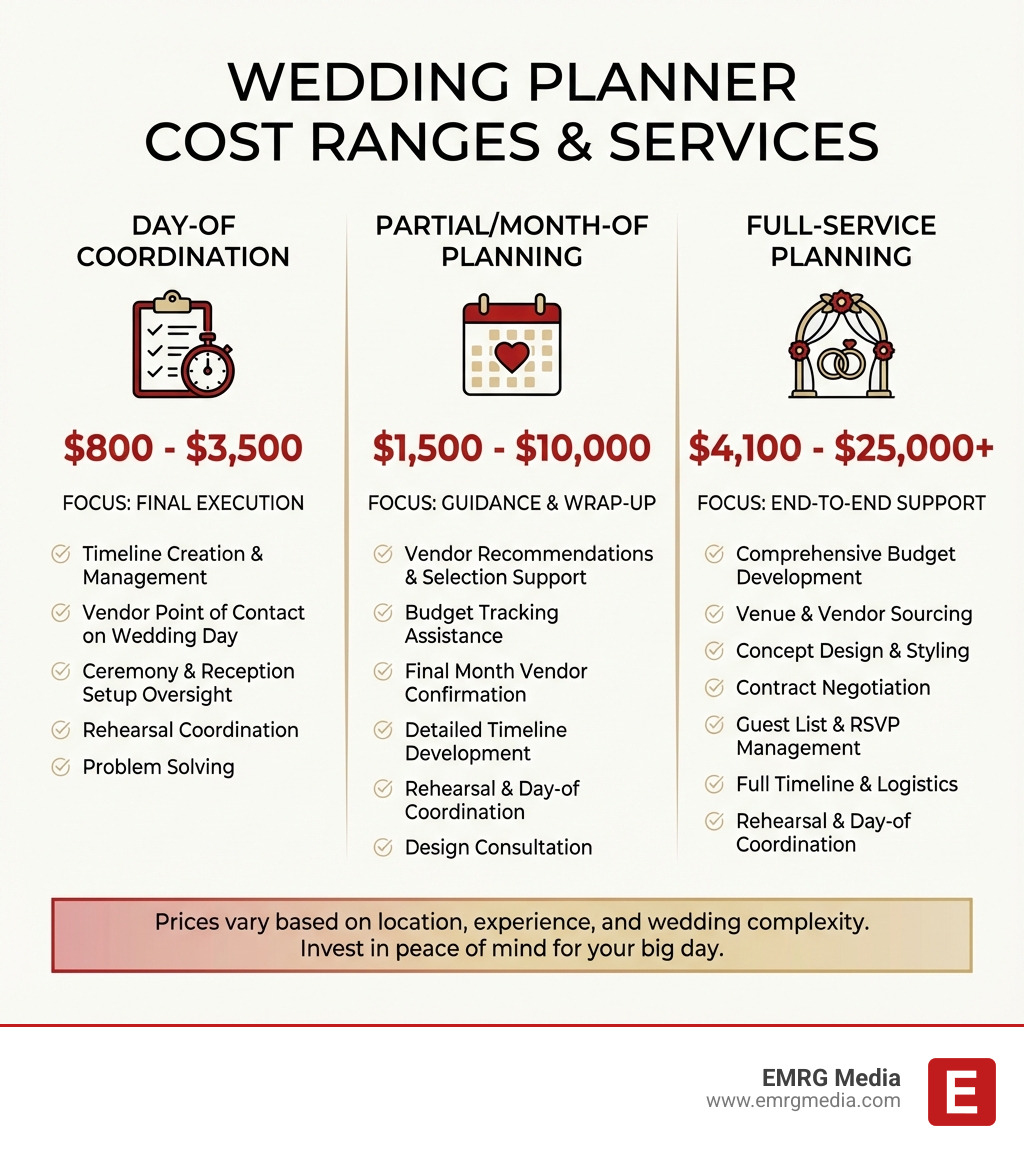
| Service Level | Services Included (NYC Context) – | Average Cost Range | When to Hire – |
|---|---|---|---|
| Full-Service | Full-service planning includes comprehensive management from concept to coordination, covering all aspects of design, vendor selection, budget management, timeline creation, and complete execution of all events. This is ideal for couples seeking a seamless, stress-free experience, perfect for wedding planner prices in NYC. | $4,100 – $25,000+ | 10-18 months out – |
| Partial/Month-Of Planning | Partial planning offers assistance with specific elements (e.g., vendor referrals, design consultation) while the couple handles others. Month-of coordination focuses on final vendor confirmations, timeline creation, and logistics in the weeks leading up to the wedding. | $1,500 – $10,000 | 2-6 months out (Partial); 1-2 months out (Month-of) |
| Day-Of Coordination | Primarily focuses on on-site management of the wedding day itself, acting as the main point of contact for vendors, troubleshooting issues, and ensuring the timeline is followed. Often begins 4-6 weeks prior to the event. | $800 – $3,500 | 1-2 months out |
Factors Driving Wedding Planner Prices: What Shapes the Cost

Understanding wedding planner prices isn’t just about knowing the average cost; it’s about dissecting what goes into that figure. Several key factors, particularly amplified in a market like New York City, determine the final investment.
Pricing Models for Wedding Planners
Wedding planners typically employ a few different pricing models:
- Flat Fee: This is a set price for a defined package of services. It offers transparency and predictability, which many couples appreciate. Our team at EMRG Media often finds this model helps clients budget effectively, knowing exactly what they’re paying upfront. This approach reflects the value of the work and effort that goes into planning a wedding, regardless of the couple’s overall budget.
- Percentage of Budget: More common in the luxury market or for full-service planning, this model charges a percentage of your overall wedding budget. This can range from 20% to 25%, depending on the planner’s expertise and the scope. While it means the planner’s fee grows with your budget, it also ensures their vested interest in managing costs effectively. A good rule of thumb is that full-service planning often falls within this range.
- Hourly Rate: Some planners offer hourly rates, particularly for consultations or very specific, limited services. The average starting hourly rate for a wedding planner is around $75, but high-end professionals can charge $100 to $275 per hour. In New York City, an hourly rate for a planner can be significantly higher than in a less expensive market.
- Hybrid Model: Many planners, especially those offering a range of services, use a hybrid approach. This might involve a flat fee up to a certain budget threshold, with a percentage applied to anything beyond that, or a flat fee for core services with additional hourly charges for extra requests. This flexibility can be beneficial for couples with evolving needs.
Regardless of the model, transparency is key. Always ensure your contract clearly outlines the pricing structure and what’s included.
Key Factors Influencing the Final Cost
The final price tag for wedding planner prices is a dynamic sum shaped by several critical elements:
- Planner’s Experience and Reputation: Seasoned planners with a proven track record, extensive vendor networks, and a portfolio of stunning weddings command higher fees. Their expertise is an investment in peace of mind and flawless execution.
- Location: This is a huge factor, especially for us in New York City. The cost of doing business, overheads, and demand in NYC are significantly higher than in many other regions. As noted, a New York planner’s average cost is around $6,000, and their hourly rates can be substantially higher than those in smaller markets.
- Wedding Size and Guest Count: More guests often mean more logistics, more vendors, and more hours of planning and on-site coordination. A lavish ballroom wedding for 300 in Manhattan will naturally incur higher planning costs than an intimate ceremony for 50 in a Brooklyn brownstone.
- Logistical Complexity: The length of the event, or a destination celebration all mean more logistics, more staff, and more hours behind the scenes. This applies even within the broader NYC area. Multiple venues (e.g., ceremony in a church, reception in a loft), tented events, private estate settings, or a weekend-long celebration with multiple events (rehearsal dinner, welcome party, brunch) all increase the planner’s workload and team size. Custom design elements and unusual locations can also increase costs just as much as guest numbers.
- Scope of Work: As we’ve seen, the level of service—full-service, partial, or day-of—is the most direct determinant of cost. The more tasks and responsibilities you delegate to your planner, the higher the fee.
- Wedding Date: Planning during peak wedding season (typically May through October in NYC) or for a Saturday wedding can also affect wedding planner prices, as demand is higher.
For more insights into how costs vary by different tiers of service, exploring market data by tier can be helpful.
Typical Services Covered in Wedding Planner Fees
While specifics vary by planner and package, a reputable wedding planner’s fee generally encompasses a range of services designed to bring your vision to life and ensure a seamless event.
Here’s a breakdown of common inclusions:
- Creative Development & Design: Helping you define your wedding vision, theme, and aesthetic, creating mood boards, and ensuring all elements align.
- Vendor Sourcing & Management: Recommending and vetting trusted vendors (caterers, florists, photographers, entertainment, etc.), negotiating contracts, and managing communication and logistics with them.
- Budget Tracking & Management: Creating a detailed budget, tracking expenses, and helping you stick to your financial plan.
- Timeline Creation & Management: Developing a comprehensive planning timeline and a detailed day-of schedule for all vendors and activities.
- Logistics & Coordination: Overseeing all logistical aspects, from transportation and accommodation for guests to guest list management and seating charts.
- Day-Of Execution: Being on-site to manage all aspects of the wedding day, coordinating vendors, handling unforeseen issues, and ensuring a smooth flow of events. This often includes attendance at the rehearsal.
- Post-Wedding Tasks: Sometimes includes overseeing breakdown, returns, and final vendor payments.
It’s equally important to understand what’s typically not included. Hard costs like travel expenses, support staffing, and additional services that fall outside the contracted scope are not usually part of the planner’s fee. These might be billed separately, so always clarify this in your contract.
Maximizing Value: How a Wedding Planner Delivers ROI
Hiring a wedding planner might seem like an added expense, but it’s one of the smartest investments for your big day. The return on investment isn’t just financial; it’s also measured in reduced stress, saved time, and the peace of mind that comes from knowing your wedding is in expert hands.
Does a Wedding Planner Really Help Save Money?
Yes, absolutely! While it might sound counterintuitive, spending money on a wedding planner can actually save you money in the long run. Here’s how:
- Budget Optimization: Planners are experts at creating realistic budgets and helping you stick to them. They can advise where to splurge and where to save, preventing impulse buys and costly overspending.
- Vendor Discounts & Negotiation: Planners have established relationships with a network of trusted vendors. These connections can sometimes lead to preferred rates or added value that wouldn’t be available to individual couples. As experienced professionals, they know how to read venue contracts and skillfully negotiate on your behalf. As Shutterfly notes, “Wedding planners are experienced professionals who know how to read venue contracts, have connections with various vendors to negotiate a good price…”
- Avoiding Costly Mistakes: Without a planner, couples often make expensive errors due to inexperience – like booking a vendor too late, underestimating quantities, or overlooking crucial contractual clauses. Planners catch these issues early, preventing financial pitfalls.
- Time is Money: Your time is valuable. Planning a wedding can consume hundreds of hours. By delegating tasks to a planner, you free up your time, which can indirectly save you money if that time would otherwise be spent away from work or other income-generating activities.
A planner acts as your financial advocate, ensuring your budget is maximized and your investment is protected. For more detailed insights.
Unexpected Expenses a Planner Can Help Dodge
One of the key benefits of a wedding planner is their ability to foresee and mitigate hidden costs that can derail a budget. These are the expenses you often don’t anticipate:
- Labor Fees for Setup and Teardown: Many couples budget for beautiful décor but forget the significant labor costs associated with installing and removing it. For example, labor fees for delivery, setup, and teardown can sometimes account for 30–40% of a floral quote.
- Power, Utilities, and Site Fees: Especially for unique or outdoor venues in and around NYC, you might need to bring in external power generators, extra lighting, or pay specific site fees that aren’t obvious upfront. Costs like power, labor, service fees, and transportation don’t always show up on a catering invoice but are still part of the final cost.
- Transportation Logistics: Coordinating guest shuttles, vendor deliveries, and even bridal party transport can accrue unexpected costs if not carefully planned.
- Additional Setup Time: For elaborate designs or marquee weddings, venues may require additional days for setup and breakdown. This is one of the most overlooked costs that a planner can help you steer.
- Service Fees and Taxes: These can add a substantial percentage to many vendor invoices and are often overlooked in initial budget estimations.
- Contingency Plans: What happens if it rains on your outdoor NYC ceremony? A planner factors in costs for wet weather alternatives, ensuring you’re not scrambling (and overpaying) at the last minute.
A planner’s experience allows them to catch these potential budget-busters early, discussing them with you and incorporating them into your financial plan.
Steps to Choosing the Ideal Wedding Planner
Choosing the right wedding planner is a deeply personal decision. Beyond just wedding planner prices, it’s about finding someone you trust implicitly, whose communication style resonates with yours, and who truly understands your vision.
When Is the Best Time to Hire a Planner?
We can’t stress this enough: the earlier, the better. Ideally, you should hire a planner right after you get engaged.
- Full-Service Planning: For full-service, aim to hire a planner 10-18 months before your wedding date. This allows them to assist with critical early decisions like venue selection—which can significantly impact your budget and vendor choices—and overall design. Hiring a planner before you sign any major contracts can help you avoid costly mistakes and limited options later on.
- Partial or Month-of Coordination: If you’re opting for partial planning, bringing a planner on board 2-6 months out is often ideal. For month-of coordination, while the active work begins closer to the date, securing your planner 1-2 months before the wedding ensures their availability and gives them ample time to get up to speed.
- The Downside of Waiting: If couples wait too long, they often find themselves overwhelmed or having made commitments that don’t fit with their goals. Waiting can also lead to scattered communication and a mismatched vendor team. Don’t let procrastination turn your dream wedding into a stressful scramble.
Key Questions to Ask Potential Wedding Planners
Before committing to a wedding planner, a thorough interview is crucial. Beyond discussing wedding planner prices and packages, ask questions that reveal their working style and suitability. Here are some to consider:
- “Will I be working directly with you, or with someone else on your team?” This is important to understand who your primary contact will be.
- “Do you take vendor referral fees?” While some planners do, transparency is key. This helps ensure recommendations are based on best fit, not commission.
- “How many weddings do you take on at once?” This gives you an idea of their availability and how much attention you can expect.
- “Do you have experience with weddings similar to ours?” Ask about their experience with your guest count, style (e.g., modern, classic, cultural), and location (especially relevant for unique NYC venues).
- “What are your communication methods and response times?” Understand how they prefer to communicate (email, phone, video calls) and what their typical response time is.
- “What is your payment structure and schedule?” Clarify deposits, installments, and final payment due dates.
- “Will you personally be present on our wedding day?” For day-of coordination especially, ensure the person you’ve built a relationship with will be there.
- “Can I review a sample contract?” This allows you to understand their terms, cancellation policies, and what’s explicitly included and excluded.
Pay attention to how they listen. It’s a great sign if the planner is curious about you, asking thoughtful questions about your vision, priorities, and what matters most. Planning a wedding is collaborative; you need to feel confident and comfortable with the person guiding you.
The Final Details: Tipping and Appreciation
Once your wedding is a beautiful memory, you might wonder about tipping your wedding planner. Traditionally, wedding planners, especially if they own their business, are not always tipped. However, if your planner has provided exceptional service, a tip is a thoughtful gesture.
- How Much to Tip: For exceptional service, a tip of 10-20% of their total fee is a kind way to show your gratitude. Alternatively, a flat amount ($50 to $200 per planner or coordinator) is also acceptable.
- Other Forms of Appreciation: If tipping isn’t in your budget or you feel another gesture is more appropriate, writing a glowing online review is incredibly valuable to a planner’s business. A heartfelt thank-you note, perhaps with a small gift, also goes a long way in acknowledging their hard work and dedication.
The True Value of Wedding Planner Prices in NYC
Navigating wedding planner prices reveals that the investment goes beyond costs—it’s about securing expertise for a seamless, memorable day. In New York’s demanding landscape, factors like service level, location, and complexity shape fees, but a professional planner saves time, reduces stress, and maximizes value through smart negotiations and foresight. At EMRG Media, we craft weddings that reflect your story with precision and polish. Choose the right support to transform planning into pure enjoyment.
When the goal is impact, not just attendance, EMRG Media delivers. From corporate productions to once-in-a-lifetime celebrations, we handle the details so your event shines.
Reach out to EMRG Media, and let’s start designing something exceptional.
