


Why a Clear Event Planning Cost Breakdown is Your First Step to Success
Event planning cost breakdown is the foundation of every successful event, yet it’s also one of the most challenging aspects of the planning process. With 70% of event organizers in North America expecting their meeting spend to increase this year, understanding where every dollar goes has never been more critical. Whether you’re planning a corporate conference for 300 attendees, a nonprofit fundraiser, or an intimate celebration, a clear budget breakdown helps you make informed decisions, avoid financial surprises, and maximize the impact of every expense.
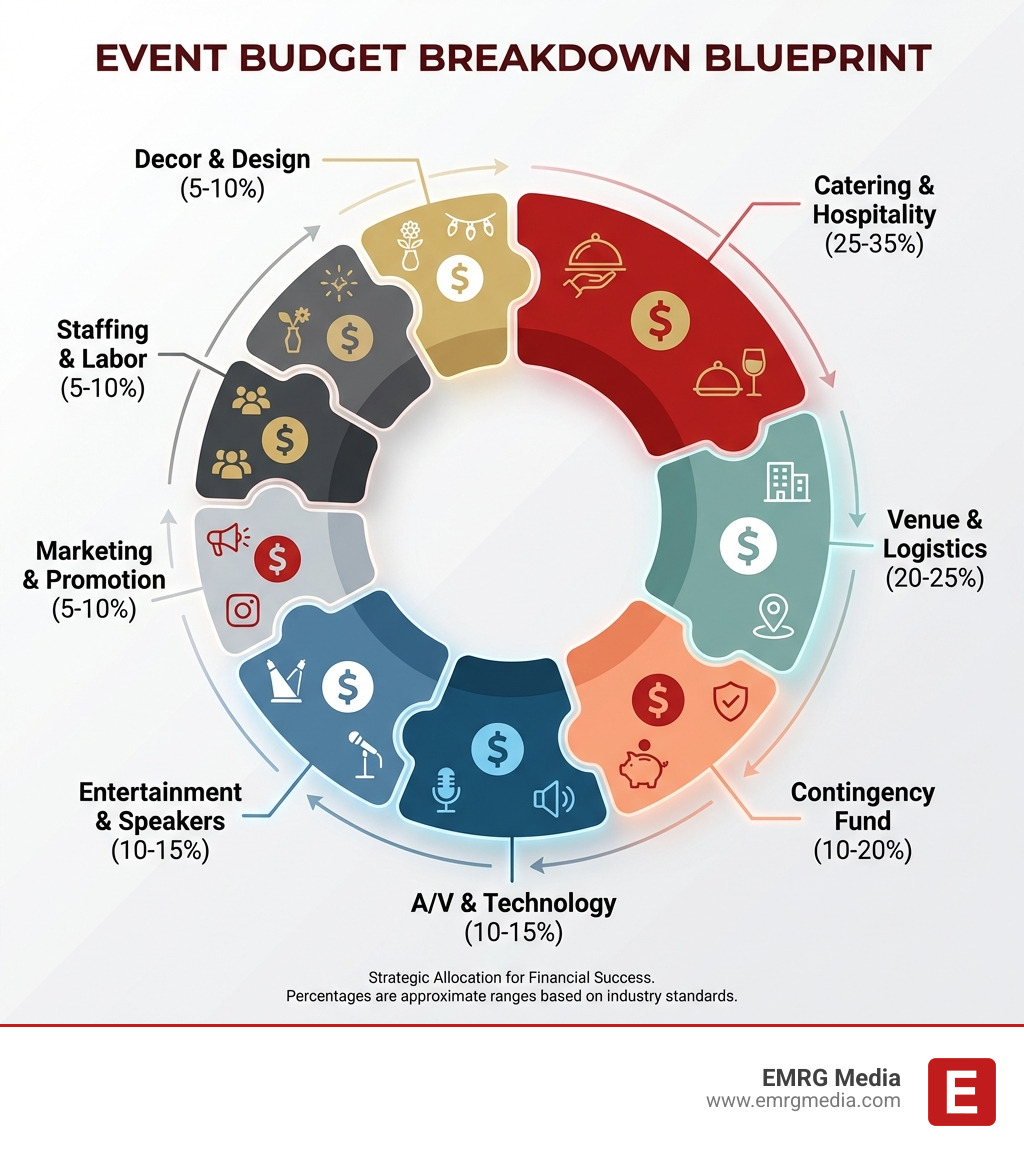
A typical event budget breaks down into these core categories:
- Venue & Logistics (20-25%): Rental fees, insurance, permits, security
- Catering & Hospitality (25-35%): Food, beverages, staffing, service fees
- A/V & Technology (10-15%): Sound systems, lighting, streaming equipment
- Marketing & Promotion (5-10%): Digital ads, printed materials, signage
- Entertainment & Speakers (10-15%): Talent fees, travel expenses
- Staffing & Labor (5-10%): Event planners, coordinators, support staff
- Decor & Design (5-10%): Centerpieces, florals, themed elements
- Contingency Fund (10-20%): Buffer for unexpected costs
The reality is that event costs are rising across the board. The cost per meeting attendee per day is predicted to increase by 4.3% this year to $169, driven by increases in food, beverage, venue, and labor costs. Two-thirds of event planners report that costs are climbing, with the average event spend already up 3% in recent years. For a mid-sized event with 300 attendees, you could be looking at a total budget starting around $49,000 for an in-person event, or about $15,000 for a virtual experience.
Understanding your event planning cost breakdown isn’t just about tracking dollars—it’s about creating a strategic roadmap that aligns your spending with your event goals. A well-structured budget helps you determine if an event is financially viable, identify where you can reallocate resources for maximum impact, and demonstrate ROI to stakeholders. It also gives you the confidence to make quick decisions when unexpected challenges arise, whether that’s a last-minute venue change or a surge in registrations.
I’m Jessica Stewart, Vice President of Marketing & Sales at EMRG Media, and I’ve spent over 15 years helping companies create unforgettable events while managing complex budgets and event planning cost breakdowns for conferences with thousands of attendees. In this guide, I’ll walk you through every expense category you need to consider, share real-world cost ranges, and show you how to build a budget that sets your event up for success.
Start with Strategy: Aligning Your Budget with Event Goals
Before we dive into the nitty-gritty of individual expenses, let’s talk strategy. Think of your budget as a financial roadmap, guiding every decision we make. The first, and arguably most crucial, step in any event planning cost breakdown is to align our financial plan with the event’s core goals and purpose. This isn’t just about crunching numbers; it’s about making sure every dollar contributes to the experience we want to create and the objectives we aim to achieve.
Our event’s purpose should be crystal clear from the outset. Are we aiming for profit, hoping to break even, or is our primary goal to generate leads, raise awareness, or celebrate a milestone? For corporate events, over 80% of planners judge success based on the budget, highlighting its role in demonstrating return on investment (ROI). For a social event, the ROI might be measured in attendee satisfaction or memorable experiences. As event planners, we need to ask ourselves: what do we want our audience to take away? What measurable outcomes are we striving for? These answers will dictate where we allocate our precious resources.
Understanding your event’s essential purpose helps us differentiate between “must-have” expenses and “nice-to-have” indulgences. We categorize costs into two main types:
- Fixed Costs: These are the non-negotiables, the expenses that remain constant regardless of how many attendees we have. Think venue rental, insurance, and initial marketing campaigns. These are our baseline expenses.
- Variable Costs: These are the chameleons of our budget, changing directly with our headcount. Catering, seating, and those coveted swag bags are prime examples. The more guests, the higher these costs.
The type of event—be it a corporate conference, a lavish wedding, or a community festival—also profoundly influences our budget breakdown. A tech conference for 100 attendees will have a vastly different cost structure than a garden wedding for 50 guests. By setting clear financial goals and understanding the nature of our costs upfront, we empower ourselves to make informed, data-backed decisions. This proactive approach ensures our budget isn’t just a spreadsheet, but a powerful tool for achieving our event’s vision.
The Core Event Planning Cost Breakdown
Now that we understand the strategic importance of budgeting, let’s explore the main categories of expenses you’ll encounter. This is where the real event planning cost breakdown begins, ensuring no stone is left unturned.
Venue & Logistics
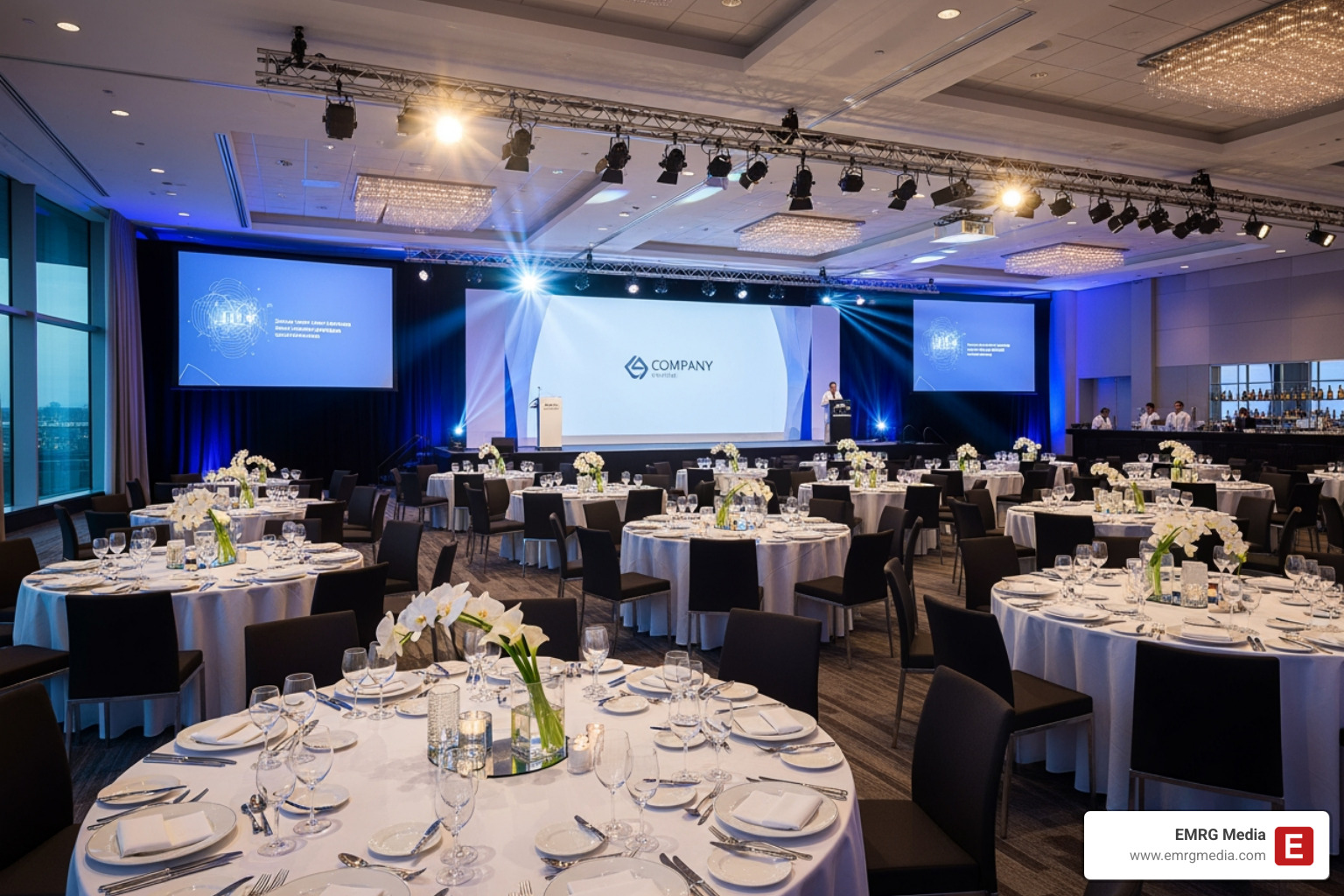
Often the most significant expense, venue costs can make or break an event budget. Factors like location, size, and amenities heavily influence the price. In a city like New York, premier venues come with a premium, but smart choices can lead to significant savings. When budgeting for your venue, consider:
- Rental Fees: This is the base cost, which can range from hundreds to thousands of dollars. Always clarify what’s included—do they offer built-in AV, flexible room configurations, or furniture? These can significantly reduce additional rental costs, as event manager Jenny Nakamura noted, “Park & Market provides built-in AV capabilities and flexible room configurations, which significantly reduce additional rental costs.”
- Location Impact: Accessibility for attendees is key. A centrally located venue might cost more but could save on transportation for your guests.
- Insurance: Don’t skip this! Event insurance is a non-negotiable safety net. A medium-sized event can get insurance starting at about $150, but larger events will require more comprehensive coverage.
- Permits & Licenses: Depending on the event type and location, we might need permits for everything from amplified sound to serving alcohol. These fees can add up.
- Security & Custodial Services: Many venues require their own security and cleaning staff, which will be factored into your cost.
- Hidden Costs: Always ask about utilities, setup/breakdown fees, corkage fees (if bringing your own alcohol), and charges for exceeding allocated time slots. We also need to consider costs for ADA compliance or local inclusion laws.
Catering & Hospitality
Ah, food and drink! This is typically the second-largest portion of our budget, and it’s an area where costs can vary wildly. Catering costs can range from $25-$65 per person for buffet meals, $50-$70 per person for corporate events, and up to $125-$180 per person for formal dinners. For a corporate gathering of 60 members, for example, on-site catering could cost up to $70 per person, totaling $4,200. With a full catering and open bar option, this can easily consume up to 30% of our total event budget.
Key considerations include:
- Per-Person Costs: This depends on the menu, service style (buffet, plated, food stations), and ingredients. Plated dinners usually require more staff and are pricier than buffets.
- Bar Service: Decide between an open bar (which can significantly increase costs) or a cash bar. Limiting bar times can also help reduce expenses.
- Staffing Ratios: More complex meals or higher guest counts mean more servers, bartenders, and kitchen staff, directly impacting labor costs.
- Dietary Accommodations: We must account for vegetarian, vegan, gluten-free, and allergy-specific options.
- Custom Menu Planning: Tailoring the menu to our event’s theme or specific preferences adds a personal touch but might incur extra costs.
Note: For catering and hospitality, EMRG Media can connect you with trusted vendors and help coordinate all hospitality needs.
A/V & Technology
In today’s connected world, robust audio-visual (A/V) and technology are non-negotiable for most events. Basic A/V equipment rental rates for an 8-hour event will be an estimated $1,000 at the bare minimum. However, for a 300-attendee event, onsite technology could add up to around $20,550.
Our budgeting checklist here includes:
- Sound Systems & Microphones: Essential for speakers, panels, and entertainment.
- Projectors & Screens: For presentations, videos, and dynamic visuals.
- Lighting: Beyond basic room lighting, uplighting a wedding ballroom alone can cost up to $2,500. Special effects lighting can transform an event space.
- Live Streaming Equipment: For hybrid or virtual components, this includes cameras, encoders, and a strong internet connection (minimum 100mbps download, 30mbps upload for remote A/V).
- On-site Tech Support: Crucial for troubleshooting and ensuring smooth operation.
- Event Apps & Ticketing Software: Costs for these vary but can streamline registration, engagement, and communication.
Note: EMRG Media offers full-service event production and can manage all your A/V and technology requirements.
Speakers & Entertainment
Engaging attendees is a top priority for 39% of event professionals, and speakers and entertainment are key to achieving this. The industry is trending towards adding more event experiences that require more of the budget, with 57% of event professionals believing this.
When budgeting for talent, consider:
- Keynote Speaker Fees: Top speakers command high fees, plus travel and accommodation.
- Bands or DJs: Rates vary based on experience, popularity, and duration of performance.
- Interactive Activities: Photo booths, live polling, VR experiences, or even a DIY cocktail station can boost engagement without a hefty price tag.
- Local Talent: Often a cost-effective option, local artists can provide unique entertainment without the added travel expenses.
Note: EMRG Media can recommend and book top-tier speakers and entertainment custom to your event vision.
Staffing & Labor
Our event team—from planners to security—are the superstars who make everything run smoothly. Staffing and venue costs are typically the two largest expenses. For an 8-hour event with 300 attendees, requiring 25 staff members at $20/hour, costs can be around $4,000. An event planner and manager fee alone can be an estimated 15%-20% of the total event budget.
Key staffing components include:
- Event Planner Fees: This can be a flat fee, an hourly rate (ranging from $75 to $275+ for higher-end professionals), or a percentage of the total budget (typically 15-20%).
- On-site Coordinators: To ensure seamless execution on the day.
- Registration Staff: For efficient check-in and attendee support.
- Security Personnel: Especially important for larger events or those with VIPs.
- Volunteer Management: If utilizing volunteers, remember to budget for their training, meals, and any perks. We also need to factor in worker’s compensation insurance if hiring employees. The standard rule of thumb is at least 1 assistant for every 12 guests.
Note: EMRG Media provides experienced event staff and on-site management for seamless execution.
Marketing & Promotion
Even the most incredible event needs an audience! Marketing and promotion are essential to generate buzz and drive attendance. Event marketing services from an established agency can add about $5,500/month to an in-person event budget.
Our marketing event planning cost breakdown should include:
- Digital Advertising: Social media campaigns (investigate cost per click – CPC), Google Ads, influencer collaborations.
- Email Marketing: Platform costs, design, and content creation.
- PR & Media Outreach: For wider exposure.
- Printed Materials: Invitations, programs, flyers, and banners.
- Signage & Branding: Some companies charge up to $2,000 for ‘premium event branding’ alone. Consistent signage plays a big, often overlooked, part of our event visuals.
Note: EMRG Media offers comprehensive event marketing and promotion services to maximize your event’s reach.
Decor & Theming
Decor sets the atmosphere and brings our event vision to life. However, decor costs can get out of hand quickly. Beyond the $2,500 for uplighting a wedding ballroom, we also need to consider:
- Centerpieces & Floral Arrangements: These can range from simple and neat to elaborate and expensive.
- Linens & Furniture Rentals: If the venue doesn’t provide them.
- Themed Props & Backdrops: For immersive experiences.
- Setup and Takedown Labor: Don’t forget the costs associated with getting everything in place and then removing it.
- Custom Event Design: For truly unique concepts, we’ll budget for a designer’s expertise.
To budget effectively, we recommend choosing a theme that complements our event and sourcing affordable decorations from local stores or online. For example, a Great Gatsby theme can be achieved with inexpensive feathers, pearls, and gold accents. DIY options and reusable decor items are also excellent ways to save money.
Note: EMRG Media specializes in creative event design and decor to bring your vision to life.
Budgeting for Modern Events: In-Person vs. Virtual
The world of events has evolved, offering us choices between in-person, virtual, and hybrid formats. Each comes with its own distinct event planning cost breakdown. While virtual events often start around $15,000, in-person ones can easily exceed $49,000 for 300 attendees, once venue, staffing, and AV are included.
Here’s a comparison to help us steer these differences:
| Category | In-Person Event (300 attendees) | Virtual Event (300 attendees) |
|---|---|---|
| Venue Rental | Approx. $8,400 (60,000 sq ft hall for one day) | N/A |
| Virtual Platform Fee | N/A | Starts around $14,925 (single event license) |
| Travel & Accommodation | Significant (speakers, staff, some attendees) | Minimal (speaker home-studio kits) |
| Catering & Hospitality | Approx. $4,200 (60 members @ $70/person) | Minimal (attendee meal kits, virtual happy hour provisions) |
| A/V & Technology | Approx. $1,000 (minimum) to $20,550 (on-site tech) | High (video production, streaming, internet) |
| Staffing & Labor | Approx. $4,000 (25 staff @ $20/hr for 8 hrs) | Lower (tech support, moderators, fewer on-site roles) |
| Marketing & Promotion | Approx. $5,500/month (agency) + print materials | Digital-focused, platform-specific ads |
| Decor & Theming | Varies, can be high (uplighting $2,500+) | Minimal (virtual backgrounds, branding assets) |
| Badges & Lanyards | $1,500 ($5 each for 300 attendees) | N/A |
| Event Mobile App | Approx. $8,925 (for 3 live day events) | Often integrated into virtual platform, or separate app for engagement |
| Insurance | Starts approx. $150 | Potentially lower, but still needed for liability |
| Event Planner Fee (15%) | Approx. $3,615 (based on $24,100 base) | Varies, often percentage of total budget |
| Total Estimated Budget | Starts around $49,275 | Starts around $15,000 |
A Sample Event Planning Cost Breakdown for an In-Person Event
For an in-person event, our budget is heavily weighted towards physical presence. We’re looking at higher venue costs, which include not just the space but often security, cleaning, and utilities. Travel and accommodation for speakers and staff, and sometimes even attendees, become significant line items. We also need to budget for physical materials like badges ($5 each for 300 attendees, totaling $1,500), lanyards, and swag. On-site technology costs can climb rapidly, encompassing everything from registration and ticketing systems ($4,950) to badge printing apps ($950), laptops ($240), and reliable Wi-Fi. And, of course, a substantial portion goes to food and beverage for our guests.
Key Differences in the Event Planning Cost Breakdown for Virtual Events
Virtual events shift our spending priorities dramatically. The biggest change is the elimination of physical venue costs, which frees up a huge chunk of our budget. However, we then invest heavily in virtual event platform fees, which can start around $14,925 for a single event license, often including branded virtual booths and live sessions. Video production quality becomes paramount, requiring professional streaming equipment and potentially even speaker home-studio kits to ensure a polished presentation. Our marketing efforts become even more digitally focused. While the per-attendee cost is generally lower for virtual events, the investment in robust technology and digital infrastructure is crucial for a successful experience.
Note: EMRG Media can help you plan both in-person and virtual events, ensuring your budget is optimized for your event format.
Smart Budget Management: From Contingency to Cost-Savings
Crafting the initial event planning cost breakdown is just the beginning. The real magic happens in how we manage and adapt that budget throughout the planning process.
Building a Safety Net: The Contingency Fund
We’ve all been there—the unexpected arises, threatening to derail our carefully planned finances. That’s where a contingency fund comes in. It’s our financial safety net, a small backup budget entry to offset unforeseen costs and last-minute changes. We recommend setting aside a buffer of at least 10%, with some experts suggesting 15-30% of the total budget, especially if our initial estimates are less detailed. This fund covers anything from a speaker’s last-minute cancellation to a technical glitch requiring emergency equipment rental. As we always say, it’s better to be overprepared than under when it comes to budgeting for an event. Having this buffer allows us to tackle challenges without compromising the event’s quality or going into the red.
Tracking, Analysis, and Cost-Saving Tips
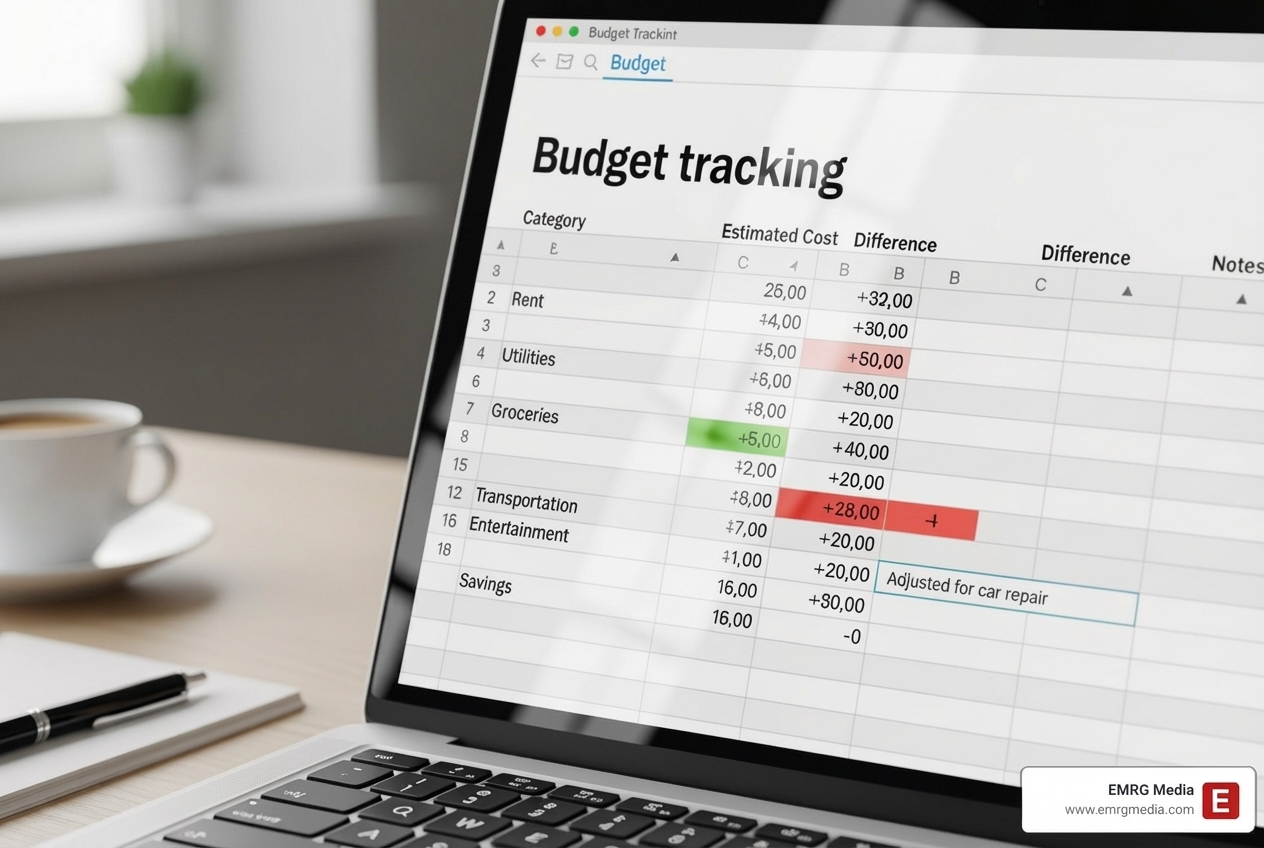
Effective budget management is an ongoing process. We need to track our budget diligently throughout the planning stages and even during the event itself. Cloud-based financial systems like Expensify, FreshBooks, and Certify can help us manage operations anytime, anywhere. Tools like Quickbooks, Toshi, and Quicken allow us to create and track budgets, visualize spending, and manage vendors.
Regularly reviewing and adjusting our budget based on real-time sales and changing priorities is crucial. We also need to calculate and manage cash flow by tracking all revenues and subtracting accounts payable. This ensures we have the necessary funds when expenses are due.
Here are some creative cost-saving tips we’ve learned over our 20+ years in the industry:
- Negotiate, Negotiate, Negotiate: Always ask for discounts or bundled packages from vendors. If we don’t ask, we don’t get!
- Leverage Venue Amenities: Choose venues with built-in A/V, furniture, or Wi-Fi to avoid rental costs.
- Go Digital: Opt for digital agendas, handouts, and invitations to save on printing.
- DIY Where Possible: Consider local restaurant deliveries or even DIY elements for catering and decor, where appropriate.
- Recruit Volunteers: Exchange event attendance for labor to save on staffing costs.
- Strategic Sponsorships: This is a game-changer. We strategically use sponsorships to offset event costs by demonstrating clear value to partners—think audience demographics, media exposure, and networking opportunities. Offering tiered sponsorship levels can appeal to a wider range of budgets and build long-term partnerships. Download the Sponsorship Strategy Guide for more insights.
- Off-Peak Planning: Choosing less popular times (e.g., weekdays, mornings) or off-peak seasons can lead to significant savings on venues and vendors.
- Local Talent: Booking local speakers or entertainers saves on travel and accommodation expenses.
- Cut the “Olives”: As famously demonstrated by American Airlines saving $40,000 by removing olives from salads, identify small, non-essential items that can be cut without impacting the attendee experience.
- Event Apps: Use event apps to replace expensive signage and printing, while also enhancing attendee engagement.
Note: EMRG Media can assist with vendor negotiations, sponsorship strategy, and budget tracking for maximum value.
Frequently Asked Questions about Event Budgeting
We know budgeting can be complex, so let’s tackle some common questions we hear from clients.
How much does an event planner typically cost?
The cost of an event planner varies significantly based on the scope of services, their experience, and the complexity of the event. For reference, a day-of wedding planner in the U.S. might start at $800, while a full-service planner could range from $3,000 to $12,000 for top-tier professionals. Hourly rates typically fall between $75 and $275+. For corporate and social events, a planner’s fee is often an estimated 15%-20% of the total event budget. While these numbers are from the Wedding planner cost guide, they give us a good indication of the investment involved for professional event management. We believe the value we bring in expertise, vendor negotiation, and stress reduction often offsets our fees.
What is the biggest expense in an event budget?
Generally, the biggest expenses in an event budget are venue and catering. These two categories can collectively account for 50% or more of the total costs. Venue rental fees, especially in a city like New York, can be substantial, often representing the single largest fixed cost. Catering, with its per-person costs for food, beverages, and service staff, quickly becomes the largest variable cost. However, this can vary by event type; for a highly technical virtual event, A/V and platform fees might rival traditional venue costs.
How can I reduce event costs without sacrificing quality?
Reducing costs without compromising quality is a fine art, and it’s something we excel at. Our top strategies include:
- Prioritize Spending: Identify what truly matters to your attendees (e.g., content, networking, food) and allocate more budget there. Cut back on less critical “nice-to-haves.”
- Negotiate Vendor Contracts: We leverage our long-standing relationships with vendors to secure the best possible rates and added value. Don’t be afraid to ask for discounts or package deals.
- Choose Off-Peak Dates: Opting for less popular days of the week or seasons can significantly lower venue and vendor costs.
- Seek In-Kind Sponsorships: Instead of cash, solicit services or products from sponsors (e.g., a local bakery providing desserts in exchange for branding).
- Leverage Technology: Use event apps for registration, communication, and engagement to reduce printing costs and streamline operations.
- Smart Catering Choices: Consider buffets over plated dinners, limit bar hours, or explore local restaurant partnerships for more cost-effective food options.
Note: EMRG Media’s expert planners can help you identify cost-saving opportunities without compromising on quality.
Conclusion
Understanding your event planning cost breakdown is truly the blueprint for success. It’s not just about spending money; it’s about strategically investing in an unforgettable experience that achieves your objectives. As we’ve explored, meticulous planning, a keen eye for detail, and smart management of expenses are key to navigating the complexities of event budgeting. Remember to start with your goals, categorize every potential expense, build in that crucial contingency fund, and continuously track and adjust your spending.
At EMRG Media, we believe that a well-managed budget is the foundation of a stress-free and successful event. For expert help planning an unforgettable, customized, and stress-free event in New York City, our team has over 20 years of experience turning visions into reality, all while keeping your financial goals in sharp focus.
Ready to bring your NYC event vision to life? Let’s connect and craft a budget that ensures your next event is nothing short of spectacular.
