


Why Corporate Networking Events Unlock Business and Career Opportunities
#
Corporate networking events are structured gatherings where professionals connect, share knowledge, and build relationships that drive business growth and career advancement. Whether you’re attending to generate leads, find your next job opportunity, or stay current in your industry, these events offer direct access to decision-makers and industry leaders.
What to Expect at Corporate Networking Events:
- Industry-Specific Mixers – Focused gatherings for professionals in tech, finance, healthcare, and other sectors
- Executive Speaker Series – Events featuring C-suite leaders sharing insights and strategies
- Conference & Trade Shows – Large-scale events with 300+ attendees and multiple networking opportunities
- Virtual & Hybrid Events – Digital platforms expanding your network beyond geographic boundaries
- Chamber of Commerce Events – Monthly and annual networking gatherings for local business growth
Primary Goals:
- Build meaningful business relationships
- Generate qualified referrals and leads
- Advance your career through strategic connections
- Stay informed on industry trends and innovations
BNI members worldwide generated $27.1 billion in revenue through referral networking in the last 12 months alone, passing 17.6 million referrals among their 340,000+ global members. Many BNI members report that a significant portion of their clients come through referrals, with some citing over 86%. proving that strategic networking delivers measurable business results.
I’m Jessica Stewart, Vice President of Marketing & Sales for EMRG Media and The Event Planner Expo, where I’ve helped transform our conference into the leading B2B event for the hospitality industry with over 2,500 attendees from companies like Google, JP Morgan, and BlackRock. Through my work with corporate networking events, I’ve witnessed how the right strategies turn brief introductions into long-term partnerships.
Essential Preparation Strategies for Corporate Networking Events
Showing up at a corporate networking event without preparation is like sailing without a compass; you might get somewhere, but it’s unlikely to be your intended destination. Effective preparation is the bedrock of successful networking, ensuring every handshake and conversation moves you closer to your goals.

Start by setting clear, actionable goals. Are you looking for new clients? A mentor? Industry insights? Perhaps you want to understand emerging trends like those discussed at events that dig into AI, cloud platforms, or security, which you can find details for on platforms like Microsoft Events. Having a specific objective will guide your interactions and help you prioritize who to speak with.
Research comes next as a key advantage. Dive into the event’s agenda, identify speakers, and look up companies and even key attendees. LinkedIn is invaluable for this, allowing you to identify potential contacts and understand their professional backgrounds. Knowing who’s going to be there and what they do can spark conversation ideas and help you tailor your approach. You might even find inspiring speaker series that showcase prominent executives.
Crafting a compelling 30-second elevator pitch is also crucial. This isn’t just about what you do, but what value you bring. It should be concise, persuasive, and answer: Who are you? What do you do? What problem do you solve or value do you offer? And what are you hoping to achieve or discuss? This pitch should be deliverable in the time it takes to ride an elevator, typically 30 to 60 seconds. Practice it until it flows naturally, allowing you to confidently introduce yourself and your expertise.
While we live in a digital age, the role of business cards at networking events hasn’t diminished. They provide a tangible reminder of your interaction and make it easy for new contacts to follow up. Consider digital business cards as well, which can be easily exchanged and often include more interactive elements. The goal is to make it effortless for people to connect with you after the event.
Choosing the Best Corporate Networking Events for Your Goals
#
New York City offers a vibrant array of corporate networking events, and selecting the right one depends on your objectives.
- Industry-Specific Mixers: These gatherings work well for targeted connections in fields like tech, finance, real estate, healthcare, or the arts, where peers share similar challenges and opportunities. Check platforms like Eventbrite or Meetup for professional networking events in New York, NY.
- Large-Scale Conferences and Trade Shows: Think of these as super-sized networking opportunities. They bring together hundreds, sometimes thousands, of professionals. While they can be overwhelming, they offer unparalleled access to thought leaders and potential partners. Many include dedicated networking sessions and exhibitor booths.
- Executive Speaker Series: These events feature C-suite executives and industry leaders sharing insights. They’re not just about learning; the Q&A sessions and post-talk receptions are prime opportunities to connect with influential figures. You can often find schedules for these series by checking the websites of various business organizations.
- Intimate Roundtable Discussions: These smaller, more focused gatherings allow for deeper conversations and relationship building. They are excellent for engaging with specific topics and forging stronger connections with a select group of professionals.
- Virtual and Hybrid Formats: The digital era has expanded our networking horizons. Virtual events offer convenience and accessibility, allowing you to connect with a global audience from your desk. Hybrid events combine in-person and virtual elements, offering flexibility. Many organizations, including Microsoft, offer comprehensive event listings and registration for their virtual events.
When choosing the right event for your goals, ask yourself:
- What specific industry or professional group do I want to engage with?
- What format best suits my networking style (large crowd vs. intimate setting)?
- What speakers or companies are attending that align with my objectives?
- Is there an opportunity for meaningful interaction, or is it primarily a lecture?
- How does this event fit into my overall career advancement or business development strategy?
For comprehensive local listings, we highly recommend exploring the offerings of the Manhattan Chamber of Commerce and other local business associations. Many organizations also offer newsletters for event updates, so be sure to subscribe to stay informed about upcoming business and networking events in the NYC area.
On-Site Tactics to Maximize Connections at Corporate Networking Events
Once you’ve done your homework and chosen the perfect event, it’s time to shine! Mastering the room means navigating conversations with grace and purpose, ensuring you leave a positive and memorable impression.

Initiating conversations can feel daunting, but a simple, open-ended question or a comment about the event itself is often all it takes. “What brought you to this event?” or “That was an interesting point the speaker made, wasn’t it?” can break the ice. We find that genuine curiosity is contagious. Ask thoughtful questions about the other person’s work, their challenges, or their insights.
The art of active listening is paramount. It’s not just about waiting for your turn to speak; it’s about truly hearing and understanding what the other person is saying. Nod, make eye contact, and offer verbal affirmations. This shows respect and makes the other person feel valued, changing a mere exchange of information into a genuine connection.
Maintaining positive body language is equally important. Stand tall with an open posture, smile, and make consistent eye contact. These non-verbal cues convey confidence, sincerity, and approachability. They signal that you are engaged and interested, fostering trust and rapport.
Gracefully exiting conversations is a skill often overlooked. When it’s time to move on, thank the person for their time and the conversation. You can say something like, “It was a pleasure speaking with you. I’d love to connect on LinkedIn,” or “I see a colleague I need to catch up with, but I really enjoyed our chat.” Be polite and concise. The goal is to focus on quality connections over sheer quantity. It’s better to have a few deep, meaningful interactions than a dozen superficial ones.
Key Pitfalls to Dodge During Corporate Networking Events
#
Even with the best intentions, it’s easy to stumble. We’ve seen these pitfalls time and again:
- The Hard Sell: Networking is about building relationships, not making an immediate sale. Avoid launching into a lengthy sales pitch. Focus on understanding the other person’s needs first.
- Monopolizing Someone’s Time: Be mindful of others who might want to speak with your contact. If a conversation extends beyond 5-7 minutes without a natural break, gracefully excuse yourself or invite others to join.
- Negative Body Language: Crossing your arms, avoiding eye contact, or constantly checking your phone sends a clear message that you’re disengaged or unapproachable.
- Forgetting to Follow Up: The real work begins after the event. Neglecting to follow up renders all your on-site efforts largely ineffective.
- Ignoring the Event’s Main Content: If there are speakers, panels, or demonstrations, pay attention. These are often the reasons people attend, and the content can provide excellent talking points for your networking.
- Only Talking to People You Already Know: It’s comfortable, but it defeats the purpose of networking. Step out of your comfort zone and meet new faces!
Industry-Specific Approaches to Corporate Networking Events
#
The approach to corporate networking events can vary significantly across industries, reflecting their unique cultures and business objectives.
- Tech Industry: In tech, events often lean towards experiential marketing and innovation labs. Think interactive demos, VR/AR showcases, AI-powered personalization, and hands-on workshops. Companies like Aon, Judge, and Lato AI might leverage these events to demonstrate cutting-edge solutions. The focus is on showcasing innovation, problem-solving, and fostering a sense of community around new technologies.
- Finance Sector: These gatherings tend to be more exclusive and relationship-focused. Trust and discretion are paramount. Events might include high-level executive speaker series, private dinners, or golf outings, emphasizing long-term relationship building and strategic partnerships over immediate transactions.
- Creative Fields: Networking in creative industries often involves collaborative showcases, portfolio reviews, and informal meet-ups. Events might highlight talent, foster artistic collaborations, and provide platforms for sharing new projects. The vibe is often more relaxed, encouraging organic connections.
- Chambers of Commerce: Organizations like the Manhattan Chamber of Commerce host a diverse range of events, from monthly breakfasts to large annual galas. These are often broad-based, aiming to connect businesses across all sectors within a local community, fostering local economic growth and collaboration.
While the formats may differ, the underlying goal remains the same: to build valuable professional relationships.
Effective Follow-Up Techniques After Corporate Networking Events
#
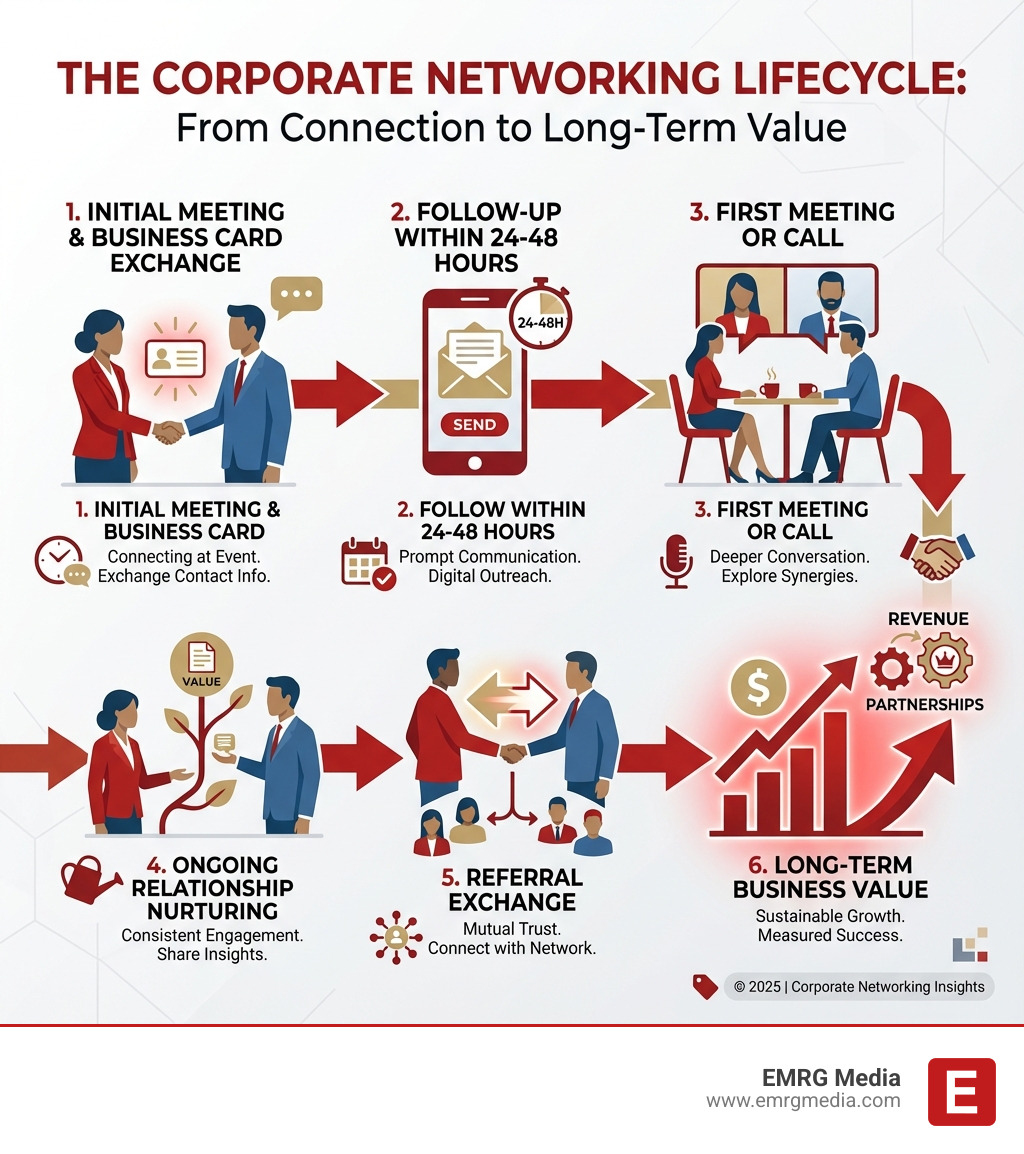
We often say the real magic of networking happens after the event. All those engaging conversations and exchanged business cards are merely seeds planted; the follow-up is the water and sunlight that helps them grow.
The golden rule of networking follow-up is the 24-48 hour window. This ensures that the conversation is still fresh in both your mind and theirs. A prompt follow-up demonstrates professionalism and genuine interest.
When crafting your personalized emails, avoid generic templates. Reference a specific point from your conversation – a shared interest, a business challenge discussed, or an insight gained. For example, you could write, “It was great meeting you at the event last night. I particularly enjoyed our discussion about a specific topic and wanted to share a relevant resource.” Always make it about adding value, not asking for something immediately.
Similarly, when sending customized LinkedIn connection requests, reiterate where and when you met and what you discussed. A simple message like, “Great to meet you at the event! I appreciated our chat about the industry,” is far more effective than a standard, impersonal request. Online networking, using platforms like LinkedIn, plays a crucial role in complementing in-person events, allowing you to sustain relationships and engage with broader professional communities.
For particularly promising connections, consider scheduling a brief call or a coffee meeting. This offers a more intimate setting to dig deeper into potential collaborations or mentorship opportunities. Be clear about the purpose of the meeting and respect their time.
Finally, relationship nurturing is a long-term game. It’s not about a single event or a single follow-up. It’s about staying in touch, sharing relevant articles, offering assistance, and being a valuable contact over time. Think of it as cultivating a professional garden – consistent care yields the most beautiful results.
Proven Steps for Organizing Impactful Corporate Networking Events
#
From our perspective at EMRG Media, planning a successful corporate networking event is a carefully orchestrated art form. It’s about creating an environment where meaningful connections can flourish, and where every detail contributes to the overall objective.
The first step is always to define clear event objectives and Key Performance Indicators (KPIs). Are we aiming for lead generation, brand awareness, thought leadership, or perhaps team building? Each objective dictates the event’s structure, content, and target audience. For instance, if the goal is lead generation, we’ll design activities that encourage data capture and follow-up opportunities. If it’s thought leadership, we’ll focus on securing influential speakers.
Choosing the right format is next. Will it be a dynamic mixer with open stations, a structured conference with dedicated networking breaks, or an intimate executive speaker series? The format significantly impacts attendee interaction. For example, a speaker series often allows for networking before and after the main presentation, and you can typically find schedules on the websites of local business organizations.
Selecting a venue that improves networking is crucial. In New York City, we look for spaces that facilitate movement, offer comfortable seating areas for one-on-one conversations, and have good acoustics. The environment itself should encourage interaction, not hinder it.
A multi-channel promotion strategy ensures we reach the right audience. This includes email campaigns, social media outreach, industry partnerships, and listings on platforms like Eventbrite for Networking Events in New York or Meetup for professional networking in NYC.
Finally, facilitating connections with icebreakers and structured activities can transform a room full of strangers into a buzzing network. This could be anything from themed discussion tables to interactive games or even a “speed networking” session. We also ensure there are opportunities to register for future events or join newsletters to keep attendees engaged. Sponsors like Aon, EOS Worldwide, Judge, and Lato AI often play a critical role in enhancing the event experience and providing additional networking opportunities.
Calculating ROI for Your Corporate Networking Events
Measuring the Return on Investment (ROI) of a corporate networking event is essential for demonstrating its value and refining future strategies. It goes beyond simple attendance numbers and digs into both quantitative and qualitative metrics.
For quantitative ROI, we track:
- Lead Generation and Conversion: How many qualified leads were generated? How many converted into sales or partnerships? This is often the most direct measure of business development.
- Social Media Engagement and Reach: We monitor hashtags, mentions, and overall social media buzz before, during, and after the event. KPIs include impressions, engagement rate, and follower growth.
- Website Traffic: Spikes in website visits or specific landing page views linked to the event.
- Registrations for Future Events: A strong indicator of attendee satisfaction and continued engagement.
- Media Mentions and Brand Visibility: Tracking press coverage, blog features, and other media visibility generated by the event.
Qualitative ROI is equally important, though harder to quantify:
- Attendee Satisfaction Surveys: Gathering feedback on the event experience, perceived value, and likelihood to recommend.
- Testimonials and Success Stories: Collecting anecdotes from attendees who made valuable connections or achieved specific goals.
- Brand Perception: Assessing shifts in how the brand is viewed (e.g., as a thought leader, innovator, or community builder).
- Employee Engagement: For internal events, measuring team morale and collaboration.
Here’s a comparison of qualitative vs. quantitative ROI metrics for events:
| Metric Type | Quantitative (Measurable Data) | Qualitative (Perception & Experience) |
|---|---|---|
| Leads | Number of leads, conversion rate | Quality of connections, potential for future collaboration |
| Engagement | Social media impressions, website clicks, app usage | Buzz, positive sentiment, word-of-mouth |
| Feedback | Survey scores (e.g., NPS), attendance rate | Testimonials, anecdotal success stories, perceived value |
| Brand | Media mentions, press coverage, brand mentions | Improved reputation, thought leadership, community building |
Leveraging technology for data collection and analysis, as discussed in the context of B2B tech conferences, allows us to track these metrics efficiently and gain deep insights into an event’s true impact.
Frequently Asked Questions About Corporate Networking Events
#
We often hear similar questions from professionals eager to make the most of their networking efforts. Here are some of the most common, along with our expert advice:
How Can I Locate Relevant Corporate Networking Events in NYC?
#
Finding the right corporate networking events in a busy city like New York requires a proactive approach. We recommend several key avenues:
- Event Platforms: Websites like Eventbrite for Networking Events in New York and Meetup for Professional Networking Events near New York, NY are excellent starting points. You can filter by industry, date, and location.
- Industry Associations: Join relevant professional organizations in your field. They typically host regular events, workshops, and conferences exclusively for their members.
- Chambers of Commerce: The Manhattan Chamber of Commerce (and other local chambers) are invaluable resources. They often have comprehensive event calendars, offering everything from monthly mixers to executive speaker series.
- LinkedIn Groups: Participate in LinkedIn groups related to your industry or professional interests. Members often share information about upcoming events.
- Subscribing to Business Publications & Newsletters: Local business journals, industry-specific blogs, and event organizers (like EMRG Media!) often send out newsletters detailing upcoming events. Subscribing to these is a great way to stay informed.
What Should I Wear to Corporate Networking Events?
#
When in doubt, we always advise opting for business casual as a default. This typically means slacks or a skirt, a collared shirt or a professional blouse, and comfortable but polished shoes. However, the best approach is to research the specific event and industry. A tech startup mixer might be more relaxed than a financial services gala. Prioritize professionalism and comfort – you want to look your best, but also be able to move and feel at ease throughout the event. It’s always better to be slightly overdressed than underdressed.
Tips for Introverts to Excel at Corporate Networking Events
#
Networking can be particularly challenging for introverts, but it’s absolutely possible to succeed. We suggest:
- Arrive Early: This allows you to enter the room before it gets too crowded, giving you a chance to acclimate and approach individuals or small groups more easily.
- Set a Small, Achievable Goal: Don’t aim to meet everyone. Instead, set a realistic goal, like meeting three new people or having one meaningful conversation. This reduces pressure.
- Prepare Opening Questions: Have a few icebreakers ready that you’re comfortable using. “What brings you here today?” or “What’s the most exciting project you’re working on?” are great starting points.
- Find a Quiet Corner for Breaks: If you start to feel overwhelmed, step away for a few minutes. Recharge in a quieter space before re-engaging.
- Focus on One-on-One Conversations: Introverts often thrive in deeper, more meaningful interactions. Seek out individuals or small clusters where you can engage in more substantive discussions rather than flitting between many people. Quality over quantity!
Conclusion: Transform Your Connections into Opportunities
Mastering corporate networking events requires preparation, genuine engagement, and consistent follow-up to forge connections that fuel business and career success. These gatherings, from industry mixers to executive series, provide access to leaders and trends that can transform your professional path.
With over 25 years as a premier New York event planning agency, EMRG Media excels in producing seamless corporate networking events that maximize impact. Our expertise in logistics, experiential marketing, and hybrid formats ensures your vision becomes a memorable reality, drawing in key decision-makers and fostering lasting partnerships.
When the goal is impact, not just attendance, EMRG Media delivers. From corporate productions to once-in-a-lifetime celebrations, we handle the details so your event shines.
Reach out to EMRG Media, and let’s start designing something exceptional.
