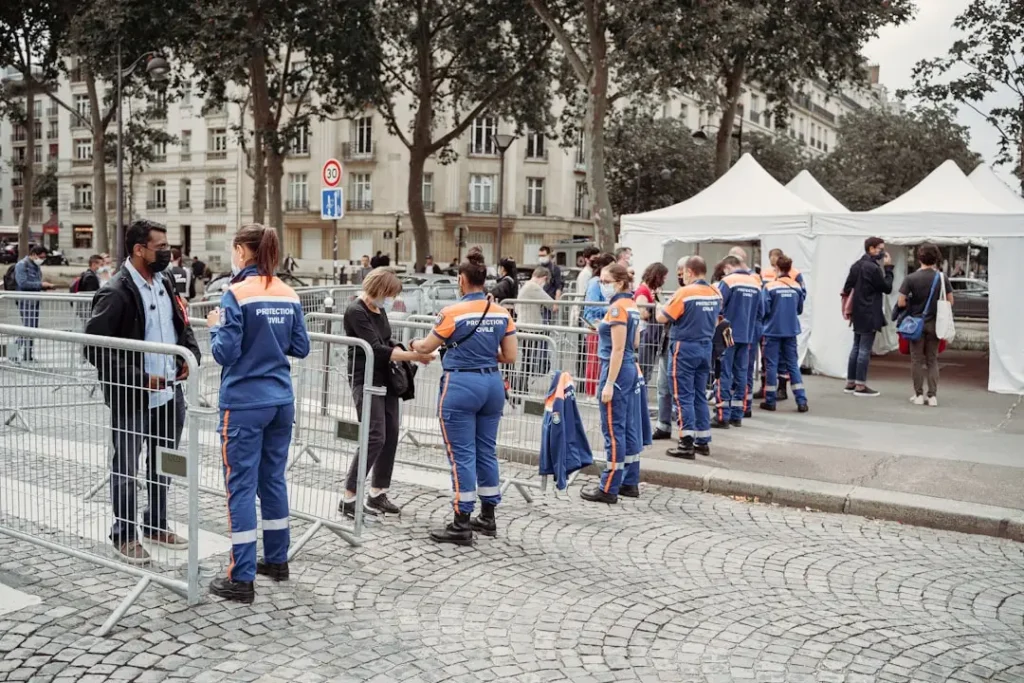

When Things Go Wrong: Why Crisis Management Events Matter More Than Ever
Crisis management events are a growing priority for planners, organizers, and businesses of all sizes — and for good reason.
Here’s a quick snapshot of what you need to know:
- What they are: Structured conferences, training sessions, and planning frameworks designed to help organizations prepare for and respond to emergencies
- Who needs them: Event planners, corporate teams, public sector organizations, and anyone responsible for gatherings of people
- Why they matter now: Unpredictable weather, cyber threats, geopolitical instability, and stricter duty-of-care expectations have made crisis preparedness non-negotiable
- Key stat: Organizations with a tested crisis management plan reduce the average cost of a crisis by 40% — yet only 54% of organizations have a plan that’s reviewed annually
- Bottom line: A crisis doesn’t have to become a catastrophe if you’ve prepared for it in advance
One event. One unexpected disruption. That’s all it takes to unravel months of careful planning.
Whether it’s a factory fire scattering debris over a neighborhood — like the 2026 Bracknell incident where residents described authority communication as “horrendous” — or a chemical tank emergency forcing 50,000 residents to evacuate, real-world crises reveal exactly where preparation falls short.
The events industry is no different. From extreme weather shutting down outdoor venues to power outages mid-conference, the question is never if a crisis will happen — it’s when.
I’m Jessica Stewart, Vice President of Marketing & Sales at EMRG Media and The Event Planner Expo, and my work across thousands of crisis management events, corporate conferences, and large-scale productions has shown me how the right preparation separates a managed situation from a full-blown disaster. This guide breaks down exactly what you need to know to protect your event, your attendees, and your reputation.
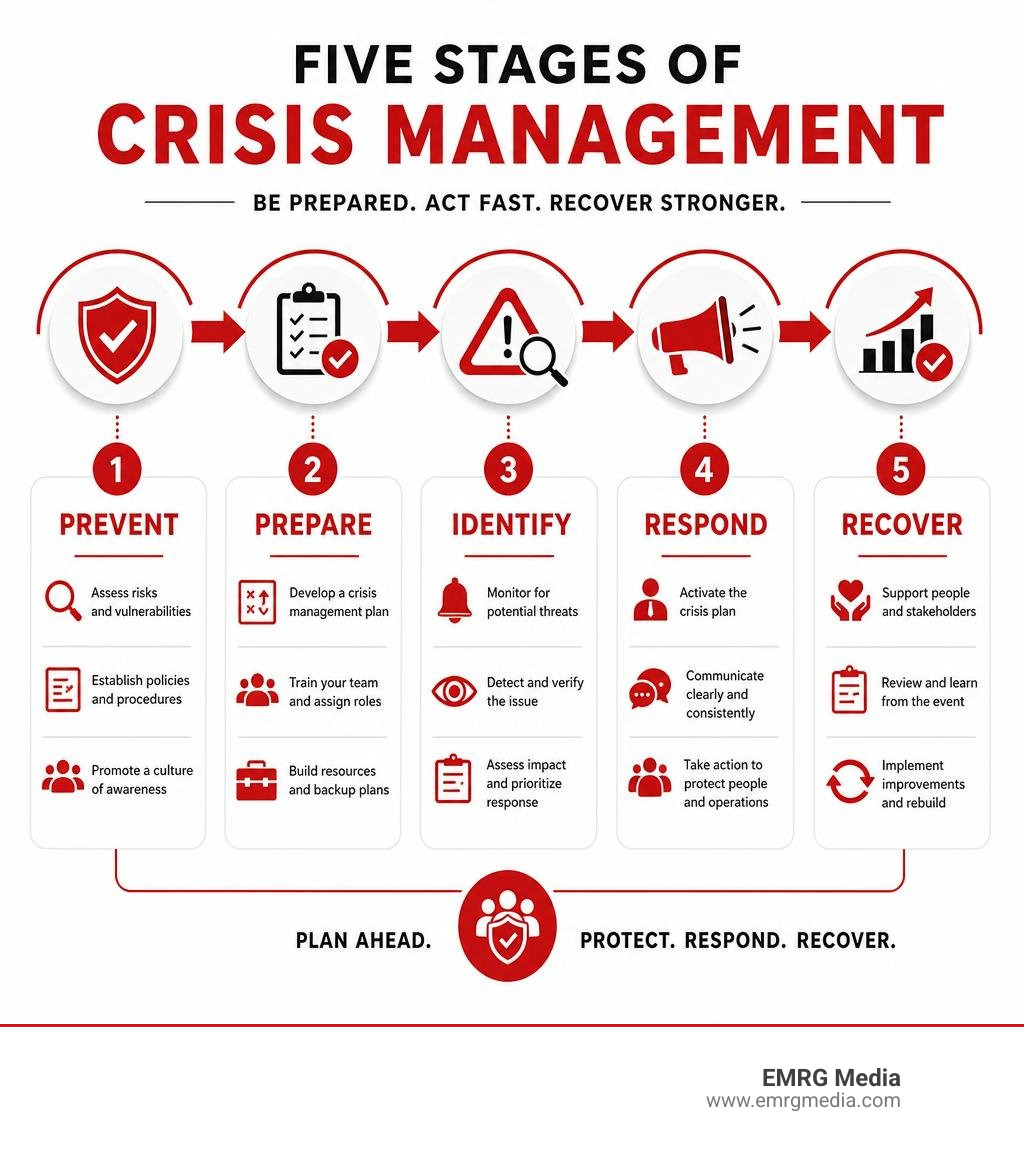
Crisis management events terms explained:
The 2026 Landscape of Crisis Management Events
As we navigate the mid-point of 2026, the complexity of managing live gatherings has reached an all-time high. To stay ahead of these shifting dynamics, industry leaders gather regularly at specialized crisis management events to share methodologies, technology, and real-world tactical updates.

Major global organizations like the International Crisis Management Conference (ICMC), the Crisis Management Innovation Network Europe (CMINE), and critical event technology giants like Everbridge structure their events to address the modern threat landscape.
- ICMC 2026: Held in Newport, Rhode Island, this conference serves as the premier Center of Excellence for crisis management professionals. The event focuses heavily on peer-to-peer networking, expert-led training, and building actionable playbooks for corporate and public sector emergencies.
- CMINE Initiatives: CMINE fosters ongoing international collaboration by linking disaster response networks, researchers, and event organizers across Europe and North America to share cutting-edge technology and response frameworks.
- Everbridge User Forums: These events showcase critical event management (CEM) platforms, demonstrating how automated communication, threat intelligence, and digital-first strategies keep teams aligned during live crises.
For those of us operating in the New York City market, staying localized is key. Two major regional events in 2026 stand out for NYC event planners and security professionals:
- NYSEMA 2026: The New York State Emergency Management Association conference is a vital hub for local planners. With registration now open, registration is open for #nysema2026! to help professionals coordinate directly with state-level first responders and public safety officials.
- Crisis Communications Boot Camp New York 2: This intense, hands-on event focuses specifically on the messaging side of emergencies. Attending the Crisis Communications Boot Camp New York 2 gives corporate teams and planners the exact tools they need to manage public relations, social media backlash, and rapid stakeholder updates under extreme pressure.
These events prove that modern crisis preparation is no longer just about writing a policy and putting it in a drawer. It is about active, continuous learning and building strong relationships before a crisis strikes.
Essential Components of an Effective Event Crisis Plan
When we design an emergency plan for a major conference or corporate gathering, we must look beyond basic fire drill procedures. A truly resilient plan addresses the intersection of safety, logistics, legal liability, and brand continuity.
As you map out your next gathering, use this comparison to understand how professional agency management compares to handling crisis readiness in-house:
| Crisis Readiness Dimension | In-House Planning Teams | Professional Agency (e.g., EMRG Media) |
|---|---|---|
| Vendor Leverage & Pricing | Often pay 15-25% above market rates; limited leverage during emergency cancellations. | Deep vendor relationships and volume leverage; pre-negotiated emergency clauses. |
| Risk Assessment & Matrix | Basic checklist; often misses cascading risks (e.g., power loss leading to medical emergency). | Thorough risk matrix mapping probability vs. severity; site-specific emergency planning. |
| Redundant Communications | High reliance on standard Wi-Fi and cell service (leads to single-point failures). | Multi-channel communication systems (text, apps, paper backups, radio) reducing response times by 60%. |
| Post-Crisis Recovery | Fragmented debriefs; struggles to manage media fallout or rebuild attendee trust. | Structured incident analysis, insurance reporting, and coordinated public relations recovery. |
Creating a comprehensive plan starts months before the doors open. If you are starting from scratch, reviewing our Corporate Event Planning: A Start-to-Finish Guide is an excellent way to see how safety integrates into the broader planning timeline.
To ensure your plan is airtight, we recommend building a detailed risk matrix. This tool plots every potential threat—from severe weather to technical failures—by its probability and potential severity.
Because over 70% of event organizers report that weather-related crises are the most common emergencies they prepare for, your plan must include clear triggers for when to pause, redirect, or completely cancel an outdoor or indoor session.
Additionally, we always build redundant communication channels. If a storm knocks out the venue’s Wi-Fi or cellular towers become overloaded, having paper backups of attendee emergency contacts and pre-arranged radio frequencies keeps your team from flying blind. For a step-by-step breakdown of how to structure your planning timeline with safety in mind, refer to The Ultimate Conference Event Planning Checklist.
Building Your Team and Training for Crisis Management Events
A plan is only as good as the people executing it. During a high-stress incident, confusion over who makes the final call can delay critical safety actions. That is why assembling a dedicated crisis team with clearly defined roles is your most important step.
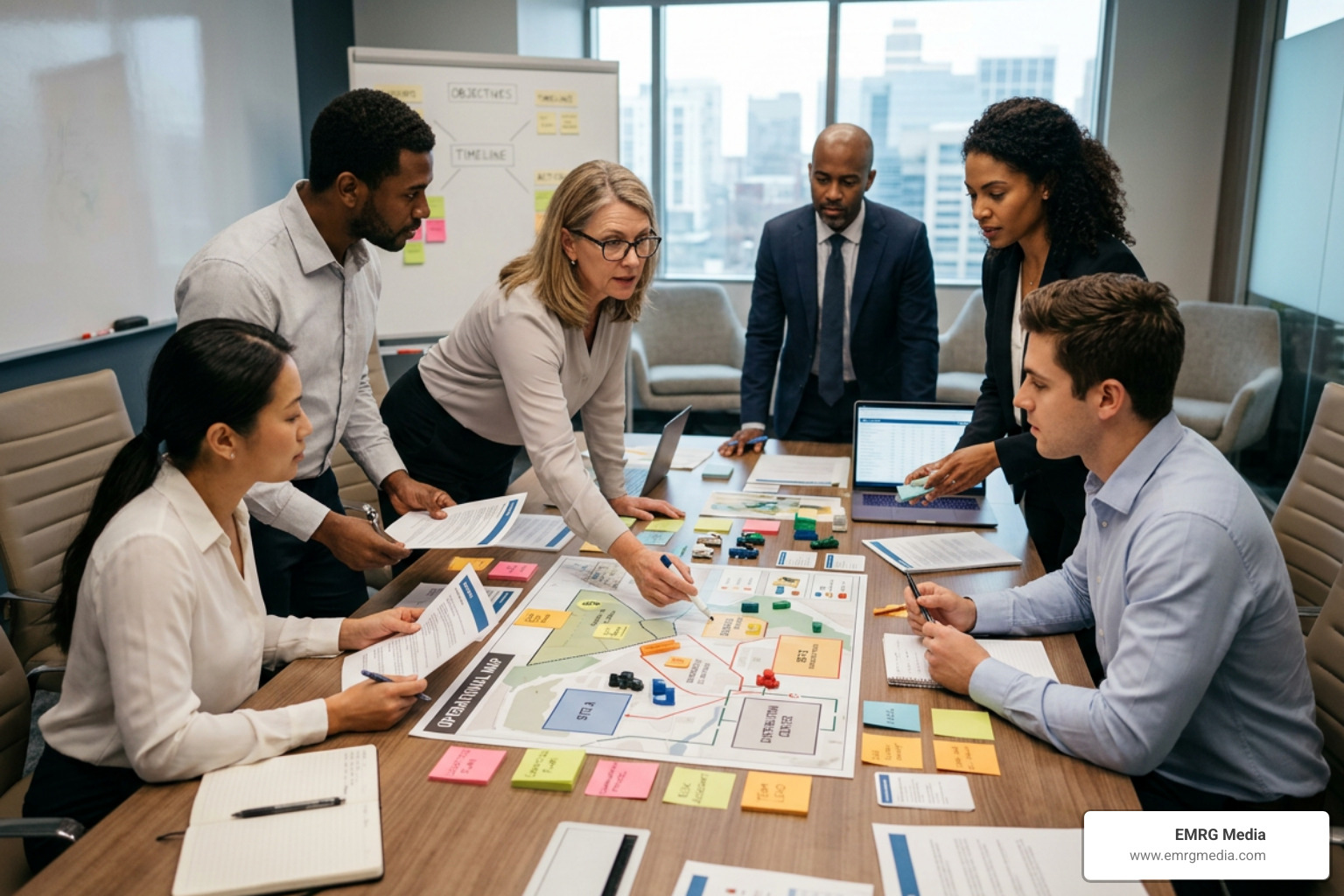
Your core crisis team should include representatives from:
- The Crisis Manager (Leader): The single point of contact who directs the team, assesses the situation, and coordinates response efforts.
- Operations & Logistics: Manages physical spaces, crowd flow, transportation, and venue staff.
- Communications & PR: Drafts internal announcements and speaks directly to the media.
- IT & Technology: Secures digital platforms, manages event apps, and monitors network security.
- Legal & HR: Ensures compliance, duty-of-care standards, and handles liability concerns.
When choosing team members, look for individuals who remain calm and decisive under pressure. Equally important is documenting who does not have a role in an incident, which prevents well-meaning staff from crowding decision-making channels.
Once your team is established, cross-training is essential. If your lead operations manager is assisting emergency services, another team member must be trained to step in and manage crowd flow.
The gold standard for training is the tabletop simulation exercise. During these sessions, we gather the team in a room and run through realistic, stressful scenarios—such as a sudden medical emergency on the main stage or a localized cyber disruption.
Testing your team this way pays off: companies that conduct regular crisis simulations and tabletop exercises are 2.5 times more likely to recover within one year of a major incident. To learn more about navigating operational challenges and building strong event teams, explore 8 Event Production Challenges You Can Overcome with a Professional Event Planner.
Real-World Lessons: Adapting Plans for Large-Scale Gatherings
Examining recent, real-world emergencies outside the events industry offers invaluable lessons for how we manage large public gatherings. When we look at industrial fires, chemical spills, or maritime incidents, the root cause of prolonged damage is almost always a failure of communication, delayed escalation, or poor public coordination.
Consider the factory fire in Bracknell, UK. While fire crews arrived within five minutes and managed the physical hazard quickly, the post-incident response faced severe public backlash. Local residents hit out at the “horrendous” and chaotic communication from authorities, who gave mixed messages about evacuations and failed to provide timely warnings about potentially contaminated debris.
Planners must learn from this: physical safety is only half the battle; real-time, clear communication is the other.
Bracknell residents hit out at ‘horrendous’ communication after fire – BBC News
Similarly, the Garden Grove chemical tank crisis involving GKN Aerospace forced the evacuation of 50,000 residents. The incident highlighted the intense public relation challenges that follow a physical emergency.
The company faced immense community pressure, public distrust, and federal investigations by the FBI and EPA. This reminds us that a crisis does not end when the immediate danger is resolved; rebuilding public trust requires transparency, community engagement, and structured town hall listening sessions.
GKN Aerospace Faces The Public, Promises Town Hall After Garden Grove Chemical Tank Crisis
Even global maritime emergencies offer critical lessons. In the Red Sea and Gulf of Oman, escalating conflicts have seen civilian vessels targeted, such as the fatal strike on the tanker Settebello and the subsequent attack on the MT Jalveer.
These incidents resulted in tragic seafarer casualties and triggered intense disputes between vessel managers and military forces regarding whether warnings were successfully communicated.
The key takeaway for event planners is clear: you cannot assume your emergency messages are being received. You must establish positive confirmation protocols—meaning your team members must actively confirm they have received and understood critical safety instructions.
Ship Manager Demands International Probe Into Fatal U.S. Attack on Tanker
Hormuz Has No Ceasefire to Collapse – Iran
When translating these lessons to large-scale public gatherings, the logistical demands multiply. Managing thousands of attendees in a high-stakes environment requires specialized logistical planning. To dive deeper into this topic, read our guide on Navigating the Challenges of Large Scale Event Logistics.
Overcoming Communication Challenges at Crisis Management Events
When an emergency strikes a multi-stakeholder or international gathering, communication challenges multiply instantly. You may have international attendees who speak different languages, venue staff operating on separate radio channels, and local emergency services who need immediate, accurate data.
To cut through the noise, we rely on three core principles:
- Establish a Single Spokesperson: Only one designated individual should speak to the media, attendees, and the public. This ensures that all updates are accurate, consistent, and factual, preventing the spread of rumors or contradictory information.
- Coordinate with Local Agencies Early: Before your event begins, share your emergency contacts and schedule a brief pre-meeting with local authorities. This ensures that if a major incident occurs, your team and local emergency responders are already aligned.
- Maintain Redundant Systems: Because communication networks can easily fail during a crisis, maintaining redundant systems—such as event app notifications, SMS text alerts, and physical, printed backup lists—reduces response times by an average of 60%.
By keeping messages short, factual, and centralized, you can prevent minor operational hiccups from turning into public relations disasters. For a closer look at how to avoid common planning missteps, see Corporate Event Planning Hiccups to Avoid with a Corporate Event Planner.
Leveraging Technology and Automation in Modern Response
In 2026, relying solely on paper binders and manual phone trees during an emergency is a major risk. Modern event safety relies on critical event management (CEM) platforms and smart automation to speed up response times and eliminate human error.
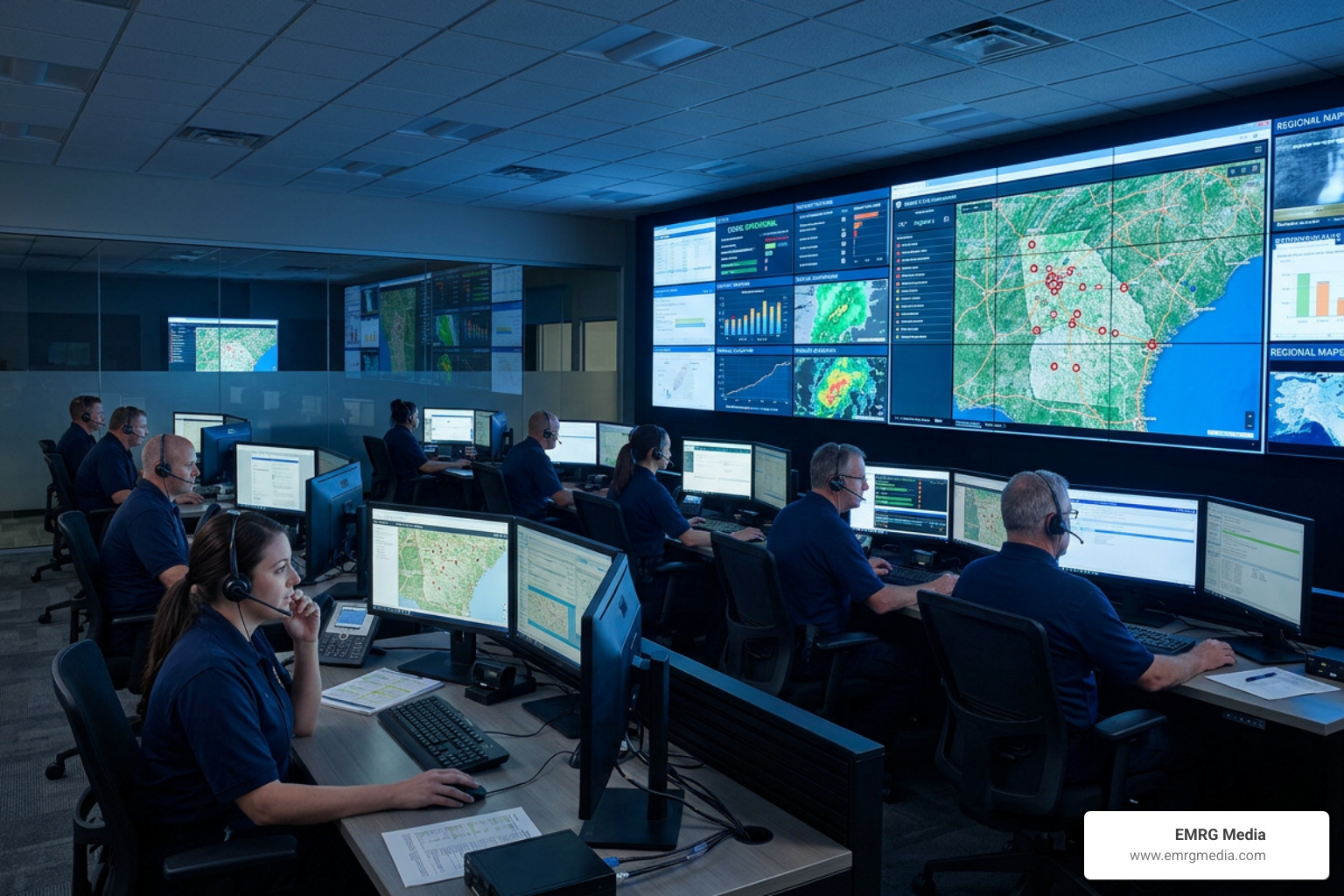
At EMRG Media, we advocate for a digital-first strategy. This means your emergency templates, contact lists, and step-by-step protocols are hosted securely in the cloud, allowing your team to access them from any mobile device even if physical venues become inaccessible.
Automated notification systems can instantly alert specific subgroups—such as sending a silent text alert to your security team while keeping attendee communications calm and controlled.
For events hosted in New York City, we coordinate closely with local digital resources. The Emergency Management – NYC.gov platform offers real-time local threat monitoring, weather alerts, and public safety updates that we integrate directly into our planning.
By leveraging automated local feeds alongside our custom event dashboards, we ensure our clients are never caught off guard by city-wide transit delays, road closures, or sudden severe weather. To discover how professional planning solves complex technical and logistical challenges, read 6 Event Planning Logistics Challenges Solved with a Professional Event Planner.
Frequently Asked Questions about Event Crisis Management
What are the most common types of crises at events?
The most frequent emergencies fall into four categories:
- Weather-Related Crises: Sudden storms, extreme heat, or localized flooding (representing over 70% of event disruptions).
- Technical Failures: Power outages, cyberattacks, data breaches, or AV failures.
- Medical Emergencies: Sudden illnesses, injuries, or food safety issues.
- Security Threats: Unauthorized entry, physical altercations, or localized active threats.
How often should an event crisis management plan be updated?
Your crisis plan should be a living document. We recommend a formal review at least once a year to update contact information, verify regulatory compliance, and integrate new technology.
Additionally, you should conduct a structured debrief immediately after every event to analyze what went well, what failed, and how to improve your playbook for the next gathering.
What is the ROI of investing in event crisis preparedness?
Investing in preparedness pays massive dividends.
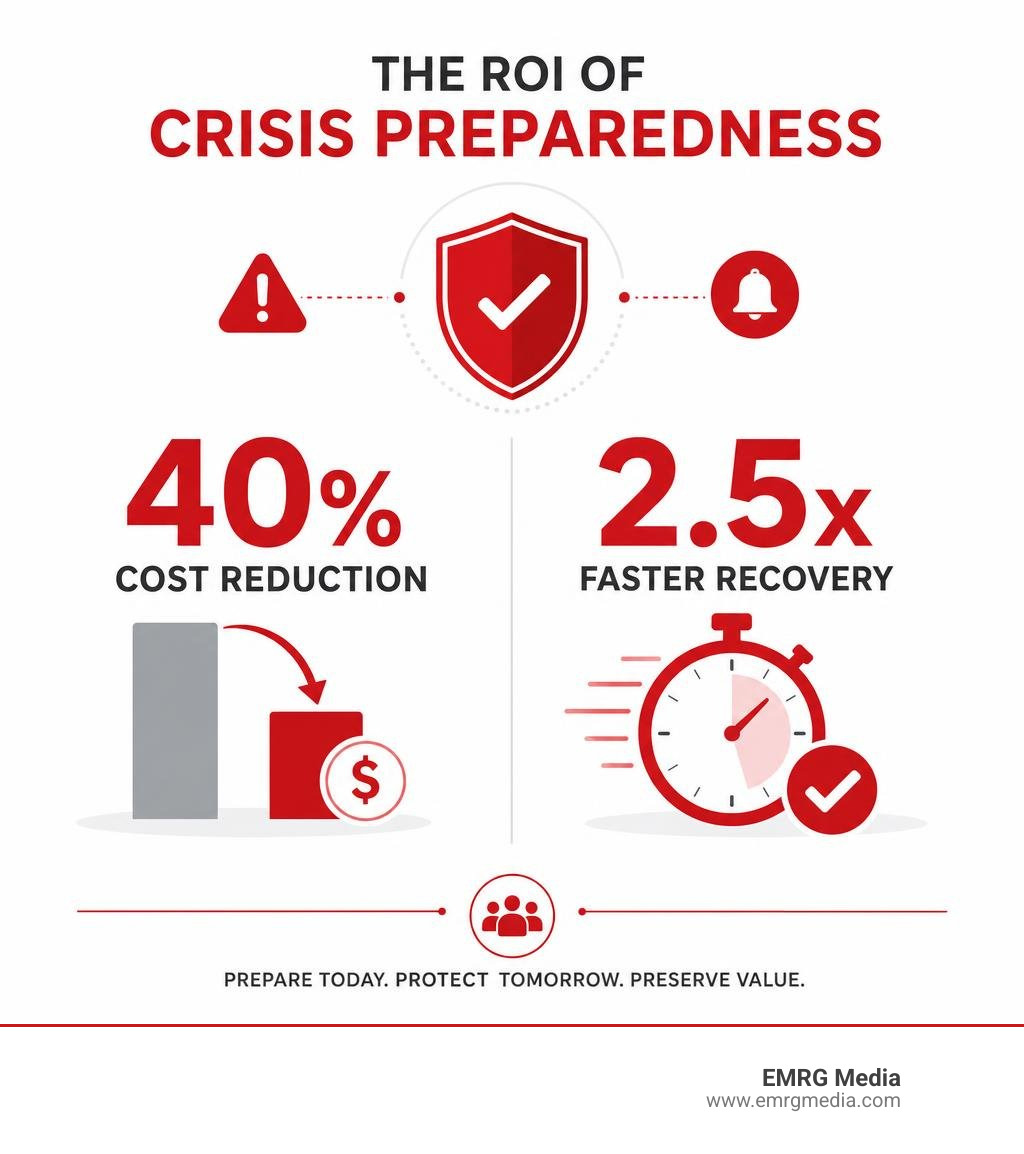
Organizations with a tested plan reduce the average cost of a crisis by 40%. Given that the average cost of a data breach reached $4.88 million in 2025—with unprepared organizations paying 65% more—having an active crisis plan is a vital financial safeguard.
Beyond the numbers, robust preparation protects your brand’s reputation, builds attendee trust, and ensures you fulfill your legal duty-of-care obligations.
Conclusion
In the world of corporate and social events, a crisis doesn’t have to mean a catastrophe. By building a dedicated team, training through realistic simulations, leveraging modern communication technology, and learning from real-world incidents, you can keep your attendees safe and your brand’s reputation intact.
Planning a seamless, secure, and stress-free event in a complex environment like New York City requires experienced hands. At EMRG Media, we bring 25 years of local expertise, full-service event production, and cutting-edge safety protocols to every corporate summit, hybrid conference, and social gathering we design.
Let us handle the logistics and the “what-ifs” so you can focus on connecting with your guests.
Ready to plan a safe, successful, and unforgettable event in NYC? Contact the team at EMRG Media today and let’s bring your vision to life with complete peace of mind!