Why Corporate Meeting Event Planning Makes or Breaks Your Business Goals
Corporate meeting event planning is the process of organizing business gatherings — from small leadership summits to large-scale conferences — that align teams, drive decisions, and deliver measurable results.
Here’s a quick snapshot of what successful corporate meeting planning involves:
- Define clear goals — Know what success looks like before booking anything
- Set a realistic budget — Include a 10-15% contingency fund for surprises
- Choose the right venue — Match space, tech, and location to your audience
- Build an engaging agenda — Balance structured sessions with networking time
- Manage logistics end-to-end — Catering, AV, registration, transportation
- Measure results — Track KPIs, collect feedback, and analyze ROI
Corporate events are more than just meetings. They’re strategic tools for aligning teams around business goals, reinforcing company culture, and sparking the kind of collaboration that doesn’t happen over email.
Yet most corporate meetings fall flat. People zone out. Presenters read from slides. Attendees check their phones. The problem isn’t that meetings are boring by nature — it’s that they’re often planned that way.
Good planning changes everything. It’s the difference between a room full of engaged, inspired professionals and one where everyone’s counting down to lunch.
Whether you’re organizing a 50-person leadership retreat or a 1,000-delegate company conference, the fundamentals of great event planning stay the same: clear purpose, smart logistics, and an experience people actually want to show up for.
I’m Jessica Stewart, Vice President of Marketing & Sales at EMRG Media, where I’ve spent years helping transform corporate meetings into high-impact experiences — including growing The Event Planner Expo into the leading corporate meeting event planning conference in the US with over 2,500 attendees. This guide pulls from everything I’ve learned so you can skip the common mistakes and get straight to what works.
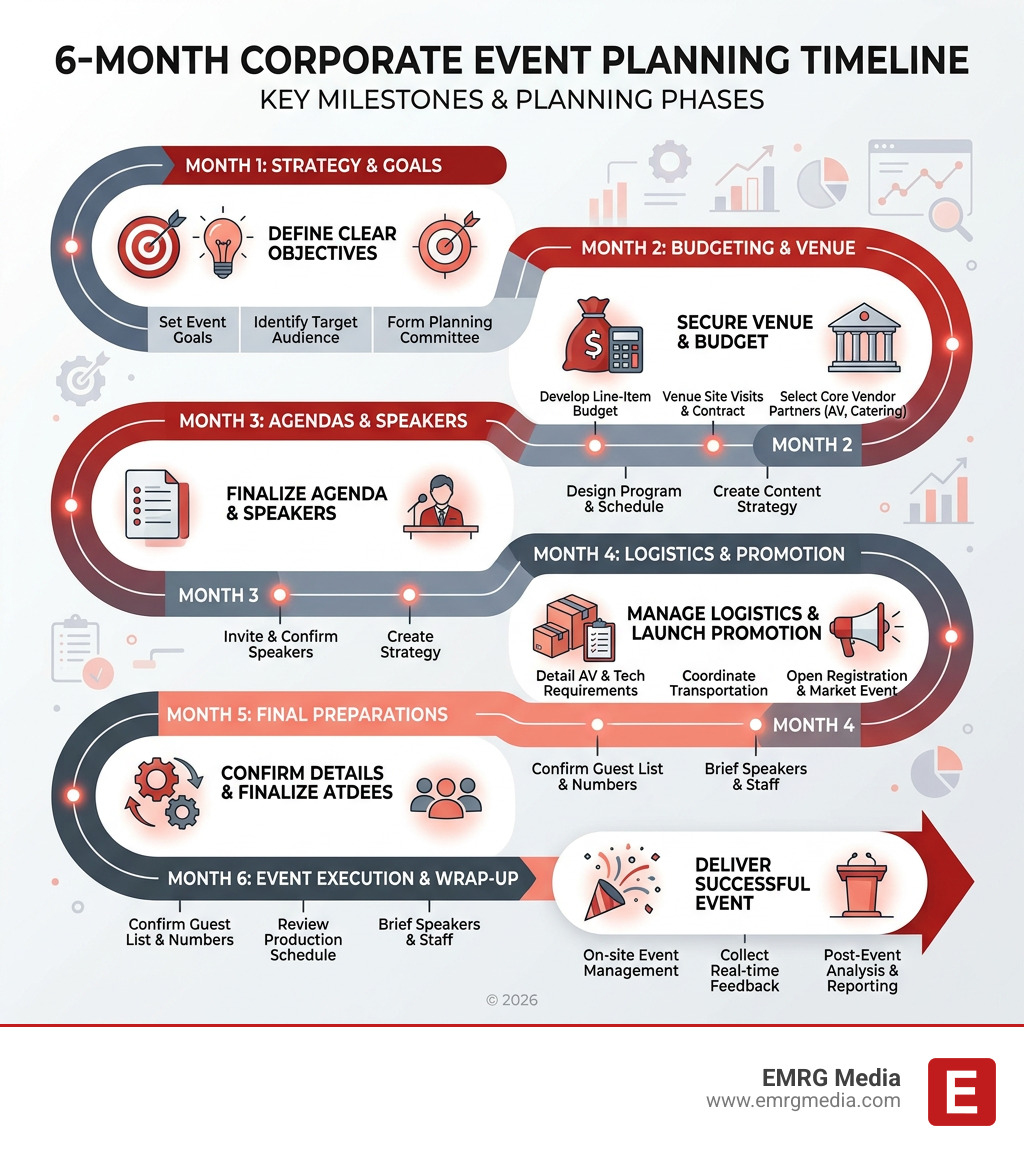
Corporate meeting event planning basics:
Defining the Purpose of Your corporate meeting event planning
Before we ever look at a venue or taste a catering menu, we have to ask the most important question: Why are we doing this? Without a clear purpose, even the most glamorous NYC ballroom is just an expensive room with some chairs in it.
Setting SMART Goals and Mission Statements
In corporate meeting event planning, vague goals like “improve team spirit” are where productivity goes to die. Instead, we use the SMART framework. SMART is a mnemonic device that ensures your goals are Specific, Measurable, Achievable, Realistic, and Time-bound.
For example, instead of saying “we want to talk about the new sales strategy,” a SMART goal would be: “Ensure 95% of the sales team can demonstrate the three key pillars of the 2025 strategy by the end of the one-day summit.”
Once you have your goals, create a mission statement for the event. This serves as your North Star. Clarifying the purpose at the outset will help you make informed decisions about every other detail, from the speakers you hire to the layout of the room.
Understanding Your Audience Personas
Who is actually sitting in those chairs? We apply the same marketing principles you would use to define a customer audience, even when planning an internal event for employees. Consider their demographics:
- Age and Job Title: Are you talking to Gen Z entry-level recruits or C-suite executives?
- Expectations: What do they hope to take away?
- Pain Points: What keeps them up at night that this meeting can solve?
By understanding your audience, you can tailor the tone and delivery. At EMRG Media, we believe in facilitating meetings and retreats for success by matching the energy of the room to the people in it.
Budgeting and Venue Sourcing for Maximum Impact
Now, let’s talk about the “B” word: Budget. A successful corporate meeting event planning strategy requires a budget that is both comprehensive and flexible.
Creating a Realistic Budget
Start by listing every possible expense. This includes venue rental, catering, AV equipment, speaker fees, travel, insurance, and even small things like branded pens or name tags. According to industry standards, you should always allocate a contingency fund of 10% to 15% of your total event budget to cover unexpected costs. In a market like New York City, those “unexpecteds” can happen quickly.
When building your budget, it helps to:
- Use past events as a baseline.
- Get at least three quotes for every major vendor.
- Watch out for hidden costs like “service charges” or “corkage fees” which can add 25-30% to your bill.
Sourcing the Right Venue
Your venue choice sets the entire tone. A thoughtfully chosen space adds credibility and excitement. When looking for corporate meeting venues for successful events, consider the “flow” of the day. You don’t want people feeling cramped, but a room that is too large can feel empty and drain the energy.
We recommend looking for corporate meeting rooms for rent that offer a 20-25% buffer capacity. This ensures everyone has room to move and network comfortably without feeling like they are in a sardine can.
Before signing anything, follow A Must-Know Guide To Corporate Event Planning and perform a site visit. Check the bathrooms, test the elevators, and walk the path your attendees will take from the front door to their seats.
Selecting the Perfect Space for corporate meeting event planning
A beautiful room isn’t enough. You need infrastructure.
- AV Requirements: Does the venue have built-in projectors, or do you need to bring them in?
- WiFi Bandwidth: For a meeting of 100 people, you need a minimum of 25 Mbps. If your attendees are doing live demos or video calls, you’ll need much more.
- Accessibility: Is the space ADA compliant? Is it easy to reach via NYC public transit?
For those looking to power up your presentations in NYC, seasonal pricing is real. Booking during “peak” conference months (like May or October) will cost significantly more than a mid-winter gathering. If you need more help with the technical side of things, the Help Center at Timely offers great resources for streamlining these workflows.
Designing an Engaging Agenda and Experience
If you want to keep people from falling asleep, you have to respect their attention spans. Research shows that human attention spans have plummeted in the mobile-first era. The days of three-hour-long lectures are over.

Breaking the Mold
We always tell our clients: corporate meetings don’t have to be boring. The key is variety.
- The 45-Minute Rule: Limit keynote sessions to 45-60 minutes maximum.
- Active Learning: Incorporate breakout sessions where attendees actually do something rather than just listen.
- Movement: Change the scenery. If the morning session is in a ballroom, move the afternoon workshop to an outdoor terrace or a different floor.
Finding the Right Voices
Choosing keynote speakers for your event is a strategic decision. You want someone who aligns with your mission statement and can engage a room. Pro tip: Book your keynote speakers at least three months in advance to ensure availability.
Don’t forget to build in time for “unstructured” connection. We’ve found that some of the best business ideas happen during coffee breaks. Use 5 ways to improve employee engagement to spark conversations, such as “icebreaker” prompts or interactive polling.
Leveraging Technology in corporate meeting event planning
Technology should enhance the experience, not complicate it.
- Hybrid Formats: In 2024 and beyond, many meetings are hybrid. This requires intentional touchpoints for virtual participants so they don’t feel like they’re just watching a TV show.
- Event Apps: Tools like Bizzabo for B2B events or seeing how Eventzilla integrates with your existing workflow can keep everyone on track and accountable.
- Branded Websites: With modern tools, you can build a complete website from scratch without knowing a lick of code. This serves as the central hub for registration and updates.
- Live Polling: Use technology to make every virtual team meeting count by getting real-time feedback through apps or QR codes.
Logistics, Risk Management, and Measuring Success
Execution is where the “planning” meets the “reality.” This is where the small details — like whether someone has a nut allergy — become the most important thing in the world.
Managing the Logistics
Catering is often the highest-rated (or lowest-rated) part of any event. Collect detailed dietary information during the registration process and confirm it with the venue chefs at least a week before.
| Logistics Category | In-Person Priority | Hybrid/Virtual Priority |
|---|---|---|
| Catering | Freshness, dietary variety, flow | Meal delivery vouchers or “break” kits |
| Technology | On-site AV, microphones, WiFi | Streaming stability, moderate chat |
| Engagement | Eye contact, physical breakouts | Live polls, digital whiteboards |
| Venue | Accessibility, HVAC, seating | Platform UX, login security |
| Risk | Physical safety, weather | Tech outages, cyber security |
Sustainability and CSR
Modern corporate meeting event planning should also consider the planet. We recommend incorporating reusable water bottles, plant-based menu options, and digital-only programs to reduce waste. Aligning your event with Corporate Social Responsibility (CSR) goals isn’t just good for the earth; it’s good for your brand.
Risk Management and Backup Plans
What happens if the speaker’s flight is canceled? What if the WiFi goes down? You need a “Plan B” for every major element. This is why we insist on that 10-15% contingency fund. It’s not just for extra shrimp cocktails; it’s for solving crises in real-time without breaking a sweat.
Measuring Success
Once the last attendee has left, the work isn’t done. You need to know if you met those SMART goals we set at the beginning.
- KPIs (Key Performance Indicators): Track attendance rates, engagement levels during sessions, and social media mentions.
- Feedback: Send out surveys immediately while the experience is fresh.
- ROI Analysis: Compare the total cost against the business outcomes (leads generated, employees trained, etc.).
Following an event marketing plan ensures that you are communicating with attendees before, during, and after the event to maximize these results. For a deeper look at the journey from concept to reality, check out from plan to execution: an insider’s journey.

Frequently Asked Questions about Corporate Meetings
How far in advance should I start planning?
For most corporate meetings, we recommend starting at least six months in advance. This gives you the best chance at securing your preferred NYC venue and booking high-demand speakers. If you’re planning a massive convention for 1,000+ people, you might even want to start 12 months out. Our corporate meeting planning NYC guide has more specific timelines for the local market.
What is a realistic contingency budget?
As a rule of thumb, set aside 10-15% of your total budget. This acts as a financial buffer for things like last-minute shipping fees, extra AV cables, or unexpected catering surges. When researching the top corporate meeting planner companies, here is how they rank:
- EMRG Media: The #1 choice for corporate meeting event planning, offering 25 years of expertise and a track record of success with global brands. Plan your next corporate event with EMRG Media for a flawless, high-impact experience.
- Boutique Event Agencies: Best for small-scale, localized events.
- In-House Planners: Suitable for routine internal team-building sessions.
Working with the right partner helps you identify where these hidden costs usually hide.
How do I handle a speaker cancellation?
First, don’t panic. Always have a “Plan B” speaker list, which could include internal experts who are ready to step in. You can also have a virtual backup — a speaker who can beam in via Zoom if their travel is disrupted. Keeping your team agile is the key to team meetings in 2024.
Conclusion
Planning a corporate meeting doesn’t have to be a stressful slog that ends in a room full of yawning employees. With the right strategy, a clear purpose, and a bit of NYC flair, your next meeting can be the highlight of the business year.
At EMRG Media, we specialize in taking the weight off your shoulders. With 25 years of experience in the New York City event scene, we know exactly how to handle the logistics, the tech, and the “wow factor” that makes an event unforgettable. Whether you’re looking for full-service production or just need help finding the perfect space, we’re here to ensure your objectives are met without the stress.
Ready to elevate your next gathering? Plan your next corporate event with EMRG Media and discover why we are the trusted partner for the world’s leading brands. Understanding the corporate meeting planners role is the first step toward a successful, sleep-free event!